
Best everyday starting point: The Cotton Crewneck from One Wednesday for a simple cotton knit. Best for layering under a jacket: a fine-knit cotton crewneck; best for adjustable coverage: a cotton cardigan—this 2026 guide separates useful sweater shapes from unsupported claims about weight.
- Best lightweight cotton sweaters women can wear repeatedly suit their layering needs, not just the season.
- One Wednesday’s Cotton Crewneck is 100% cotton, knit in Peru by female artisans.
- Choose a fine-knit crewneck for jacket layering and a cardigan for adjustable coverage.
- Cotton content does not establish sweater weight; check construction, measurements and the care label.
Why this matters
A cotton sweater can fill the space between a shirt and a heavier knit. But cotton describes the fibre, not the thickness: a closely knitted sweater and an open-knit sweater can both use cotton and feel quite different.
For your 2026 wardrobe, start with the job the sweater needs to do. Something to wear beneath a blazer needs a different shape from something to pull over a summer dress. Choose the layer first, then the neckline and texture.
What makes the best lightweight cotton sweater?
Use these five criteria before choosing a style. They make a more useful shortlist than treating every cotton sweater as equally light.
- Fibre content: Read the full composition. A 100% cotton label identifies the fibre; a cotton blend includes other fibres whose properties also matter.
- Knit construction: Look at the fabric closely. Fine knitting, open stitches and raised textures create different coverage and layering possibilities.
- Layering fit: Compare the sleeve and body measurements with a sweater you already wear. A jacket needs room for both your shirt and your knit.
- Everyday usefulness: Picture 3 outfits using clothes you own. The sweater should work with your actual trousers, skirts or dresses.
- Care and evidence: Follow the garment’s care label. Treat manufacturing details as specific facts, not substitutes for evidence about quality or working conditions.
A soft-looking photograph cannot tell you everything about a sweater. Check the garment description, the close-up images and the measurements together. For lightweight wear, thickness and fit matter alongside fibre content.
Lightweight cotton sweaters at a glance
This shortlist combines one documented product with four sweater styles. The style entries are shopping directions, not named products with verified specifications; choose a version whose label confirms the cotton content you want.
| Pick | Best for | Standout feature | Key limitation |
|---|---|---|---|
| One Wednesday Cotton Crewneck | A straightforward everyday cotton knit | 100% cotton, knit in Peru by female artisans | Cotton content alone does not establish lightweight construction |
| Fine-knit cotton crewneck | Layering beneath a jacket | A simple neckline and less bulky construction | Close-fitting versions leave less room for a shirt |
| Cotton cardigan | Changing between open and closed coverage | A front opening you can adjust | Button spacing and neckline need a fit check |
| Cotton V-neck sweater | Wearing over a collared shirt | An opening that leaves the collar visible | A deeper neckline needs more attention to the layer underneath |
| Open-knit cotton sweater | Adding texture over a simple base | Visible stitch openings | Less coverage; often needs an underlayer |
1. The Cotton Crewneck: best cotton sweater for an everyday starting point
The Cotton Crewneck is made from 100% cotton and knit in Peru by female artisans. Those details establish its fibre content and a specific production description; they do not establish Pima cotton, garment weight or independent certification.
One Wednesday’s Cotton Crewneck is best for shoppers who want a 100% cotton everyday knit with a stated production origin. Consider it first if your wardrobe needs a straightforward sweater rather than an adjustable outer layer.
Build the outfit around pieces you already repeat. Try the crewneck with straight-leg trousers, over a collared shirt or with a simple skirt. Before treating it as your lightest layer, check how its construction and measurements suit the jacket or coat you intend to wear.
The Cotton Crewneck pros:
- The stated composition is 100% cotton.
- The product has a stated knitting location: Peru.
- The production description specifically names female artisans.
The Cotton Crewneck cons:
- The fibre description does not establish its weight or thickness.
- A crewneck does not offer the adjustable front opening of a cardigan.
Best for: An everyday cotton-knit shortlist built around clear composition and origin information.
Verdict: Buy for the documented cotton composition and crewneck role; do not choose it on an assumed lightweight rating.
2. Fine-knit cotton crewneck: best for layering beneath a jacket
A fine-knit cotton crewneck is the clearest style direction when your main concern is fitting a sweater beneath a jacket. Look for a relatively smooth fabric and a sleeve shape that sits comfortably inside your outer layer.
The distinction is construction, not just the word cotton. A smooth, less bulky knit can serve a different purpose from a raised cable texture, even when both have the same fibre composition.
For a 2026 work wardrobe, start with the jacket you actually wear. Check the sweater’s shoulder, sleeve and body measurements against a familiar knit, then decide whether you want space for a shirt underneath. Avoid choosing a smaller size simply to reduce bulk.
Fine-knit cotton crewneck pros:
- A simple neckline works with an unobtrusive base layer.
- Less bulky construction suits jacket layering.
- A smooth surface lets the rest of the outfit carry the texture.
Fine-knit cotton crewneck cons:
- A close fit leaves less room for a collared shirt.
- Fine knitting does not, by itself, guarantee opacity or durability.
Best for: A sweater that needs to sit beneath a blazer or everyday jacket.
Verdict: Buy when jacket layering is the main job; skip a fit that feels restrictive with your intended base layer.
3. Cotton cardigan: best for adjustable coverage
A cotton cardigan gives you a front opening rather than a fixed neckline. You can wear it open over a shirt or close it when you want more coverage, making it a practical alternative to a pullover.
Choose the shape according to how you will wear it. A cardigan worn as a top needs careful attention to the neckline and button spacing; one worn over a shirt needs enough room through the body and sleeves.
Keep the outfit simple. Wear the cardigan open over a plain top with trousers, or button it over a dress without adding another competing layer. Your 2026 shortlist should distinguish between a cardigan intended as a top and one intended as an outer layer.
Cotton cardigan pros:
- The front opening lets you adjust coverage.
- It can sit over a shirt without hiding the whole front.
- You can remove it without pulling it over your head.
Cotton cardigan cons:
- Button gaps can affect coverage when worn closed.
- A loose cardigan can bunch beneath a fitted jacket.
Best for: Moving between open and closed coverage during everyday wear.
Verdict: Buy for flexibility; skip a shape whose buttons pull when you sit or move.
4. Cotton V-neck sweater: best for wearing over a collared shirt
A cotton V-neck leaves space for a shirt collar to show. It is a useful choice when the shirt is part of the outfit rather than merely a hidden base layer.
Check the opening before choosing. A shallow V-neck frames the collar differently from a deep one, and the right choice depends on how much shirt you want visible. Neither is automatically more flattering or more versatile.
For an easy layered outfit, start with 2 layers: a collared shirt and the V-neck. Let the collar sit naturally, then check that the sweater has enough room across the shoulders and upper arms. Add outerwear only after those layers feel comfortable together.
Cotton V-neck sweater pros:
- The neckline leaves a shirt collar visible.
- The opening makes the underlayer part of the outfit.
- It offers an alternative to a high, closed neckline.
Cotton V-neck sweater cons:
- A deeper opening needs a deliberate underlayer choice.
- A narrow sleeve can feel restrictive over a shirt.
Best for: Shirt-led outfits where the collar should remain visible.
Verdict: Buy for collared-shirt layering; skip a neckline that needs constant adjustment.
5. Open-knit cotton sweater: best for texture over a simple base
An open-knit cotton sweater uses visible spaces between stitches to create texture. Choose it when you want the knit pattern to be part of the outfit, rather than expecting the coverage of a closely knitted pullover.
The underlayer matters. A plain tank or shirt keeps the pattern readable, while a contrasting base makes the openings more noticeable. Check the sweater against the kind of coverage you prefer before deciding it belongs in your everyday wardrobe.
For 2026 transitional dressing, use an open knit over a simple dress or with plain trousers. Keep jewellery and bag hardware in mind: projecting details can catch open stitches. The texture should be enjoyable to wear, not something you constantly protect.
Open-knit cotton sweater pros:
- The stitch pattern adds visible texture.
- The base layer can change the appearance of the outfit.
- It gives a simple dress or top a distinct additional layer.
Open-knit cotton sweater cons:
- Open stitches provide less coverage than a closed knit.
- The openings can catch on jewellery or projecting hardware.
Best for: Texture-led outfits with an intentional underlayer.
Verdict: Buy for the visible knit pattern; skip it if you want complete coverage without another layer.
How to choose your cotton sweater
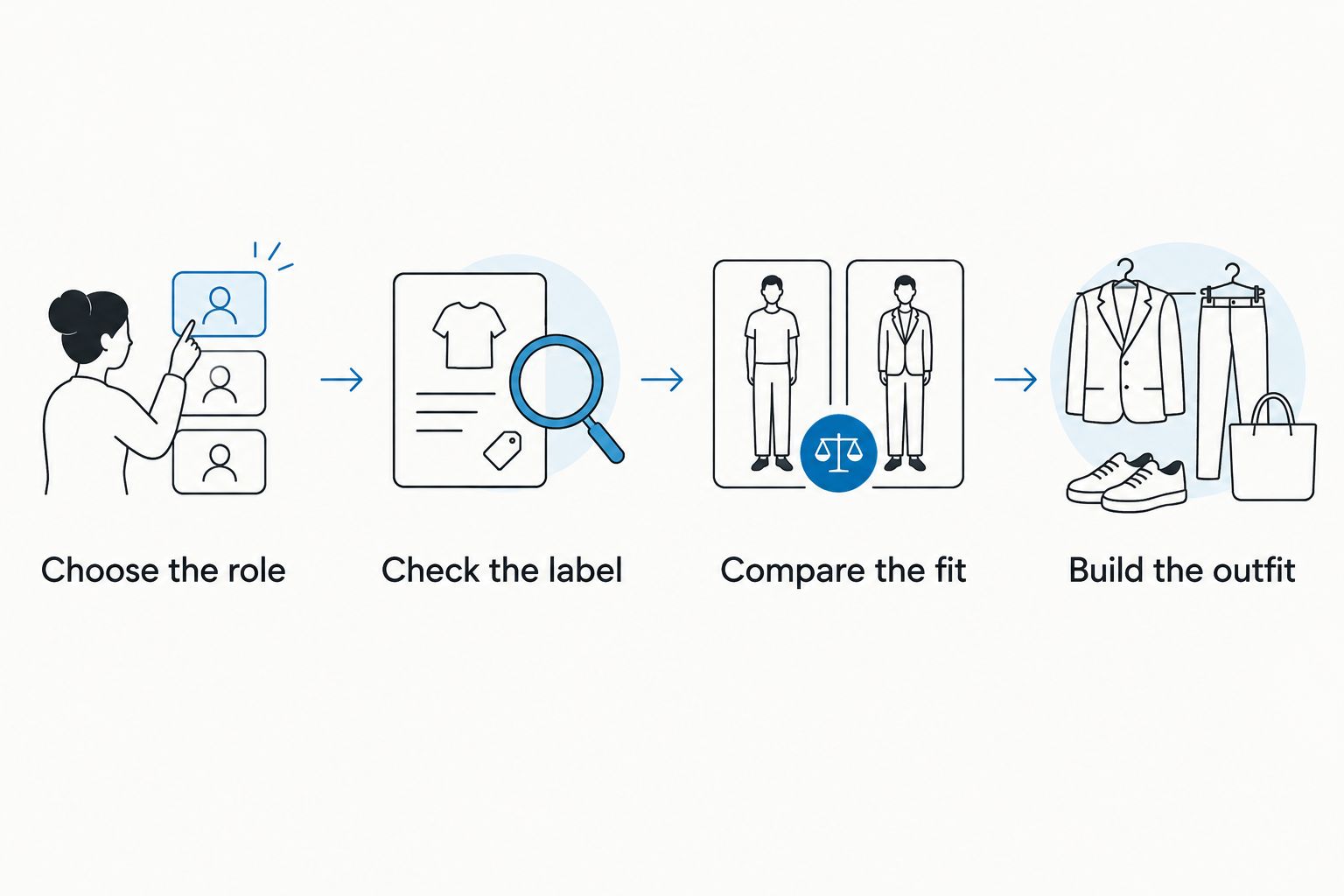
Use this sequence to turn the shortlist into a decision. Begin with the clothes the sweater needs to work with, rather than an isolated product photograph.
- Choose the role: Decide whether the sweater is your main top, a shirt layer or something to wear beneath a jacket.
- Check the label: Read the fibre composition and the garment-specific care instructions.
- Compare the fit: Use a familiar sweater to check body and sleeve measurements.
- Build the outfit: Put together 1 complete outfit before adding more styling ideas.
For a gift, reverse the temptation to choose by colour alone. Start with the recipient’s familiar sweater shape and their preferred care routine. A neckline they already wear is a more useful guide than a new style you hope they will adopt.
Read manufacturing information precisely
Country of manufacture does not prove quality, ethics or sustainability on its own. A statement about where a garment was knitted is useful, but it is not the same as a factory audit or a certification.
The Cotton Crewneck’s stated details are specific: 100% cotton, knit in Peru by female artisans. Keep those facts separate from claims about cotton variety, working conditions or environmental impact. Apply the same standard to garments made in Turkey, Portugal, India or China: assess the product-level evidence rather than ranking countries.
How the shortlist is ranked
The order follows wardrobe roles, not laboratory testing or measured fabric weight. The documented Cotton Crewneck comes first as an everyday starting point; the remaining entries address jacket layering, adjustable coverage, shirt styling and visible texture.
The criteria are composition, construction, fit, repeated use and care. A lightweight claim needs more than a cotton label. For this 2026 guide, the useful distinction is what each sweater shape lets you do.
Which lightweight cotton sweater should you choose?
Choose a fine-knit cotton crewneck if you are undecided and your main priority is wearing a sweater beneath a jacket. Choose a cardigan when adjustable coverage matters more than a smooth, closed front.
For a documented everyday cotton option, start with One Wednesday’s Cotton Crewneck and check its construction against your layering needs. If your wardrobe already contains several crewnecks, a cardigan or V-neck adds a different function rather than repeating the same one.
FAQ
What are the best lightweight cotton sweaters for women in 2026?
The best choice depends on the sweater’s role: a fine-knit crewneck for jacket layering, a cardigan for adjustable coverage or a V-neck over a collared shirt. Check construction and fit rather than treating cotton content as a weight rating.
Is One Wednesday’s Cotton Crewneck made from pure cotton?
One Wednesday’s Cotton Crewneck is described as 100% cotton. It is knit in Peru by female artisans; the stated composition does not establish Pima cotton or garment weight.
Does 100% cotton mean a sweater is lightweight?
No, 100% cotton identifies the fibre composition, not the garment’s weight. Knit construction, thickness and shape also affect how the sweater works as a layer.
Is a cotton cardigan better than a cotton crewneck?
A cotton cardigan is better for adjustable front coverage, while a crewneck gives you a closed pullover shape. Choose according to whether you want to wear the sweater open or beneath another layer.
What cotton sweater works best over a collared shirt?
A cotton V-neck is a useful choice when you want the collar to remain visible. Check the neckline depth and allow enough room through the shoulders and sleeves for the shirt.
How should I wash a cotton sweater?
Follow the sweater’s own care label. Do not apply one washing or drying method to every cotton knit, because garment construction and finishing differ.
Does a sweater made in Peru prove ethical production?
No, a Peruvian manufacturing origin does not by itself prove ethical production. Assess the specific production statements and any supporting evidence without treating country of origin as certification.
What should I check before giving a cotton sweater as a gift?
Check the recipient’s familiar neckline, garment measurements and preferred care routine. A sweater shape they already wear is a practical starting point for choosing a gift.
One last thing
Before choosing another crewneck, look at the sweater you reach for most. Is it the neckline, the sleeve room or the way it sits over a shirt that makes it useful? Repeat the function you need—not simply the appearance you like.
Related guides
- The Chambray for collared-shirt layering
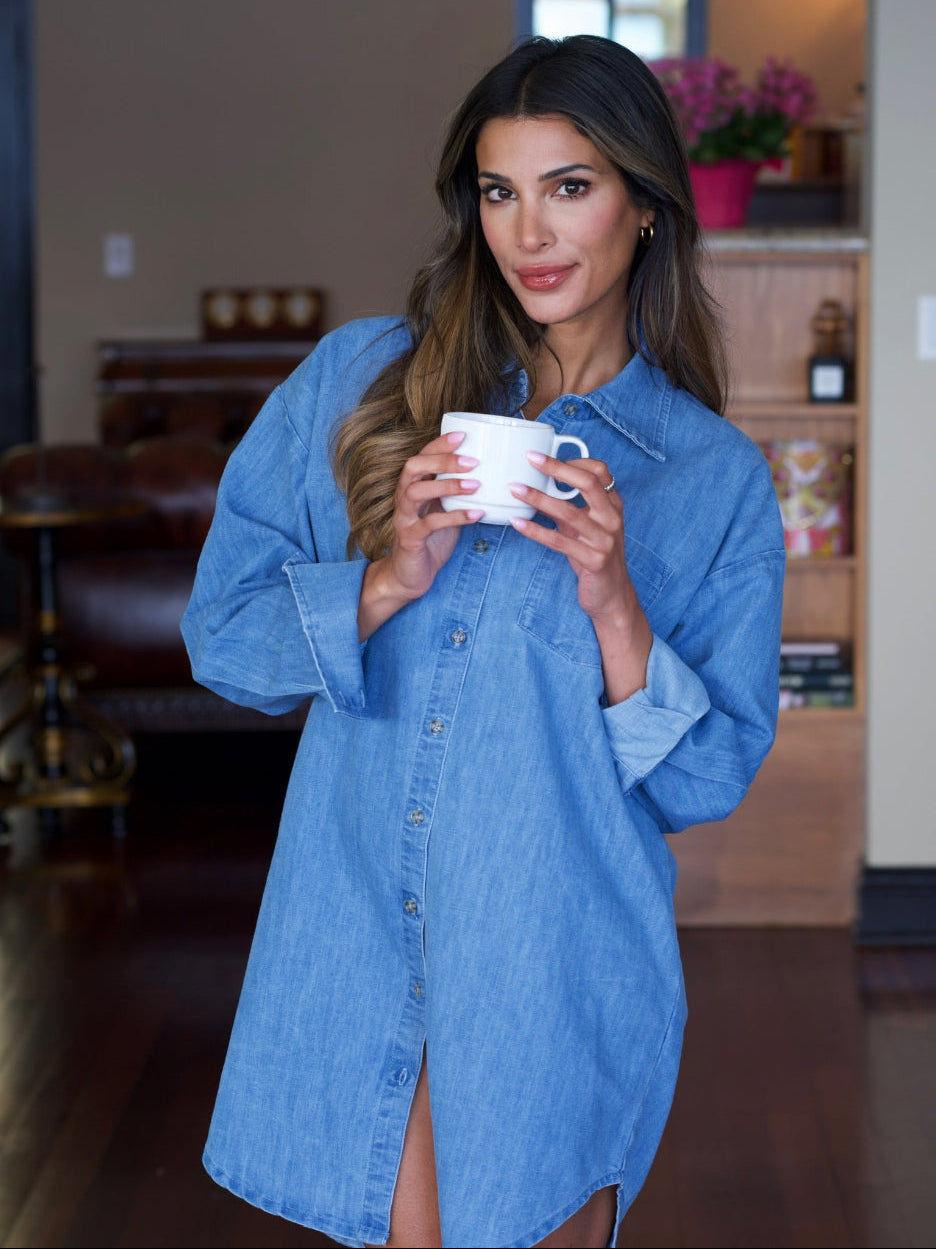
- The Chambray Shirt Dress for another everyday outfit base
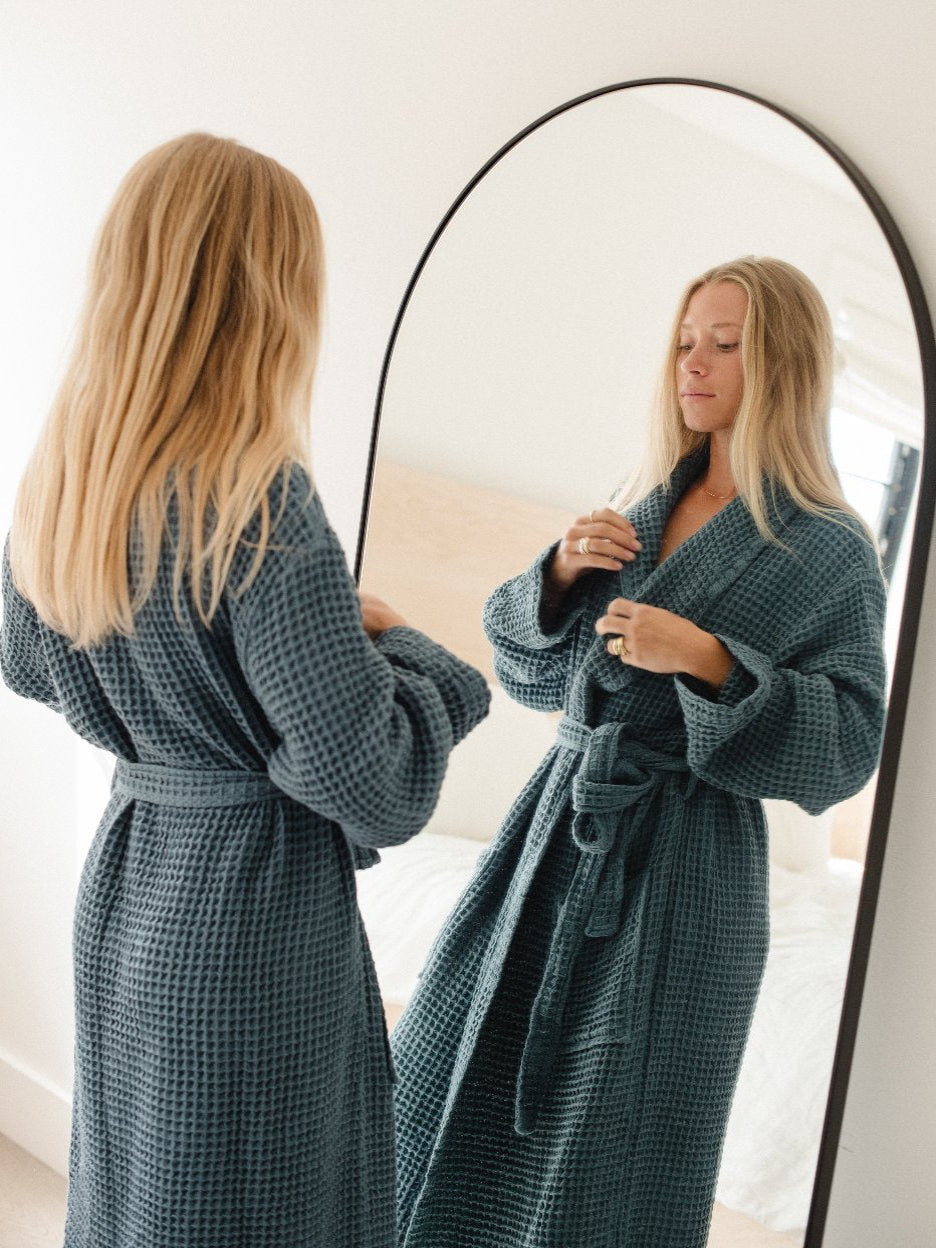
- Best waffle bathrobes for women by use case