
Choose chambray for an easy everyday shirt that sits comfortably under knitwear; choose denim when you want a more structured shirt to wear as an outer layer. The deciding detail is the finished fabric, not its blue colour: weave, thickness, finish and fit all affect how a shirt feels on you.
- Denim vs chambray shirt: choose chambray for easy layering and denim for a more structured look.
- Chambray uses a plain weave; denim uses a twill weave. Neither name guarantees a particular fabric weight.
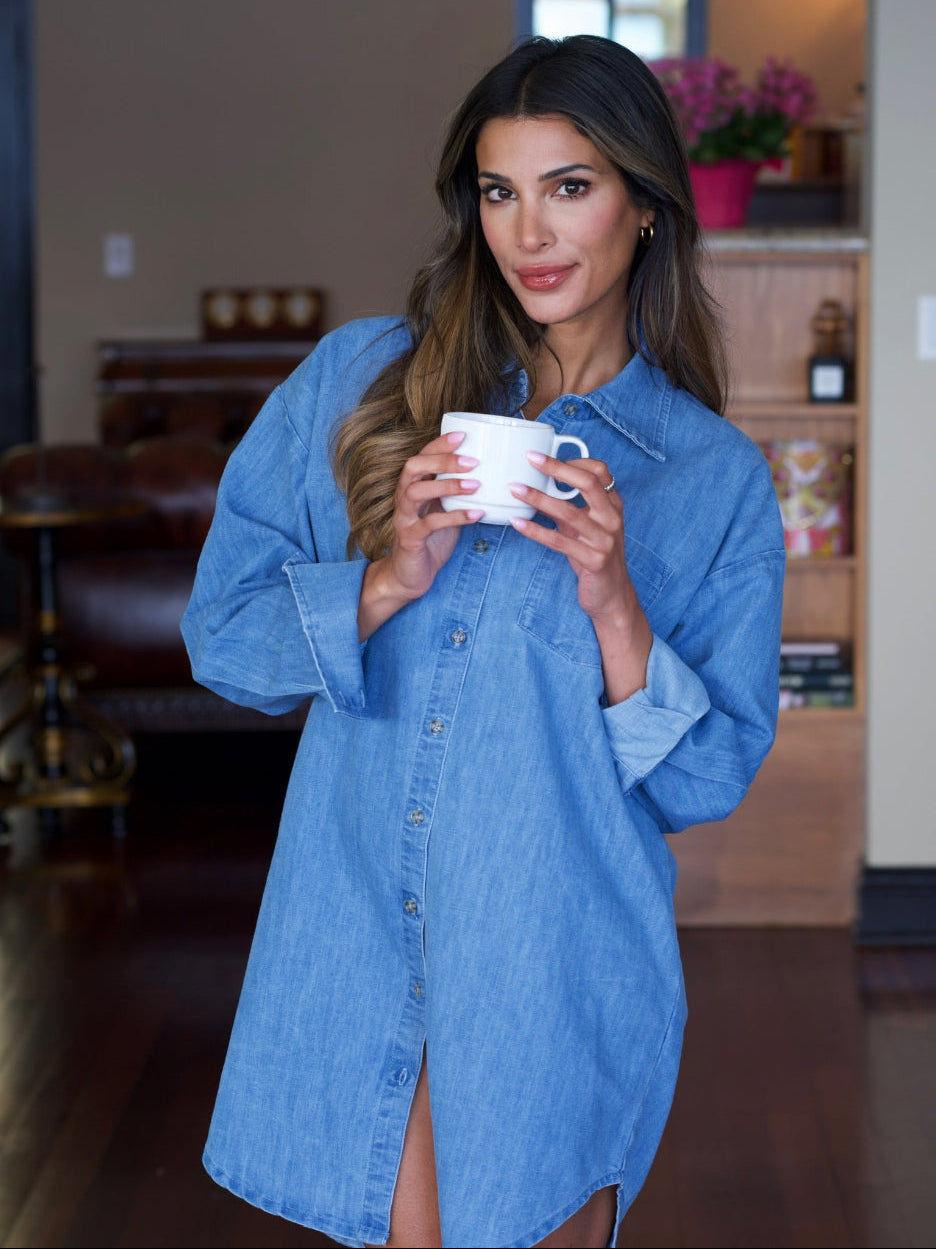
- Onewednesdayshop’s The Chambray is a 100% cotton option for shoppers who want a denim-wash chambray shirt.
- Check drape, shoulder fit and the care label before choosing an everyday button-up.
Denim or chambray shirt: which should you choose?
Chambray is the starting point for a shirt you intend to tuck, layer and wear throughout the day. Denim is the starting point for a shirt you want to wear open with a more defined shape. These are shopping directions, not guarantees: a lightweight denim shirt can feel softer than a thick chambray shirt.
For your 2026 wardrobe, compare the garment rather than treating every blue button-up as the same thing.
| Shirt option | Best for | What to look for | Main limitation |
|---|---|---|---|
| Chambray shirt | Everyday outfits and layering under a sweater | A plain weave, comfortable drape and room to move | The fabric name alone does not establish lightness or softness |
| Denim shirt | Outfits that need a more structured outer layer | A twill weave and enough room over your base layer | A thicker version can bunch when tucked or layered under knitwear |
| The Chambray | Shoppers seeking a cotton chambray shirt in a denim wash | The stated 100% cotton composition; confirm fit and care before choosing | Its denim wash describes the look, not a denim twill construction |
The Chambray is described as made in India. That identifies its country of manufacture; it does not, by itself, establish factory conditions or environmental performance.
Why this matters
A shirt can look right on a hanger and still be wrong for the way you dress. If you usually wear a button-up beneath a sweater, excess fabric around the sleeves and waist matters more than the depth of the blue wash.
If you wear your shirt open over a simple top, the opposite can be true. You might prefer a fabric that holds its shape rather than one that falls closely against your body. Choose for the outfit you actually repeat, not an imagined wardrobe.
Chambray: best for easy everyday layering
Chambray is a plain-weave fabric, traditionally made with a coloured yarn in one direction and a white yarn in the other. In a basic plain weave, each yarn passes over 1 yarn and under 1 yarn. That construction helps explain its appearance, but does not tell you everything about the finished shirt.
Choose a chambray shirt when your priority is a button-up that works with your existing layers. Look for a fabric that falls without feeling stiff, sleeves that sit comfortably beneath knitwear and a hem that works tucked or untucked.
A chambray shirt can bring a denim-like colour to an outfit without being denim. That distinction matters when a product description uses phrases such as denim wash: the phrase describes appearance, not necessarily the weave.
The trade-off is that chambray is not automatically substantial enough to replace an outer layer. If you want a shirt that holds a firm silhouette when worn open, assess the actual fabric and construction before choosing it.
For spring 2026, start with your intended use. A shirt for wearing beneath a cardigan needs a different fit from one you plan to throw over a sleeveless top.
Denim: best for a more structured shirt layer
Denim uses a twill weave, recognised by its diagonal structure. A common denim construction passes over 3 yarns and under 1 yarn; other twill constructions also exist. The weave distinguishes denim from chambray, but it does not set a universal thickness.
Choose a denim shirt when you want the shirt itself to give the outfit shape. A more substantial version works as an open layer, especially when the top underneath is simple and close-fitting.
The limitation appears when you ask the same shirt to sit beneath a fitted sweater or disappear into a waistband. Thick fabric, large pockets and bulky seams can make those combinations less comfortable. A lighter denim shirt deserves a separate assessment rather than being dismissed with heavier styles.
Do not buy denim simply because you expect it to last longer. Weave is only part of construction; stitching, fabric quality, finishing and how you care for the garment also matter. Neither fabric name proves durability on its own.
Why denim and chambray shirts feel different
The useful comparison is between finished garments. These factors explain why shirts with similar colours can behave differently:
- Weave: Chambray’s plain weave differs from denim’s diagonal twill construction. Look beyond the wash to identify the fabric.
- Thickness: A thicker fabric creates more bulk when tucked or layered. The label chambray does not guarantee a thin shirt.
- Fibre composition: Cotton content tells you what the fabric contains, not how soft, warm or substantial the shirt will feel.
- Finish: Washing and other finishing treatments affect the fabric’s surface and handle. A blue wash is not evidence of a particular fibre or weave.
- Fit and construction: Shoulder placement, sleeve room, pockets and seams change how the shirt sits and moves.
For autumn 2026, think about these details together. A soft fabric with a tight armhole can still be uncomfortable beneath knitwear; a roomy shirt can still feel bulky if its seams are substantial.
How do you check which shirt suits your wardrobe?
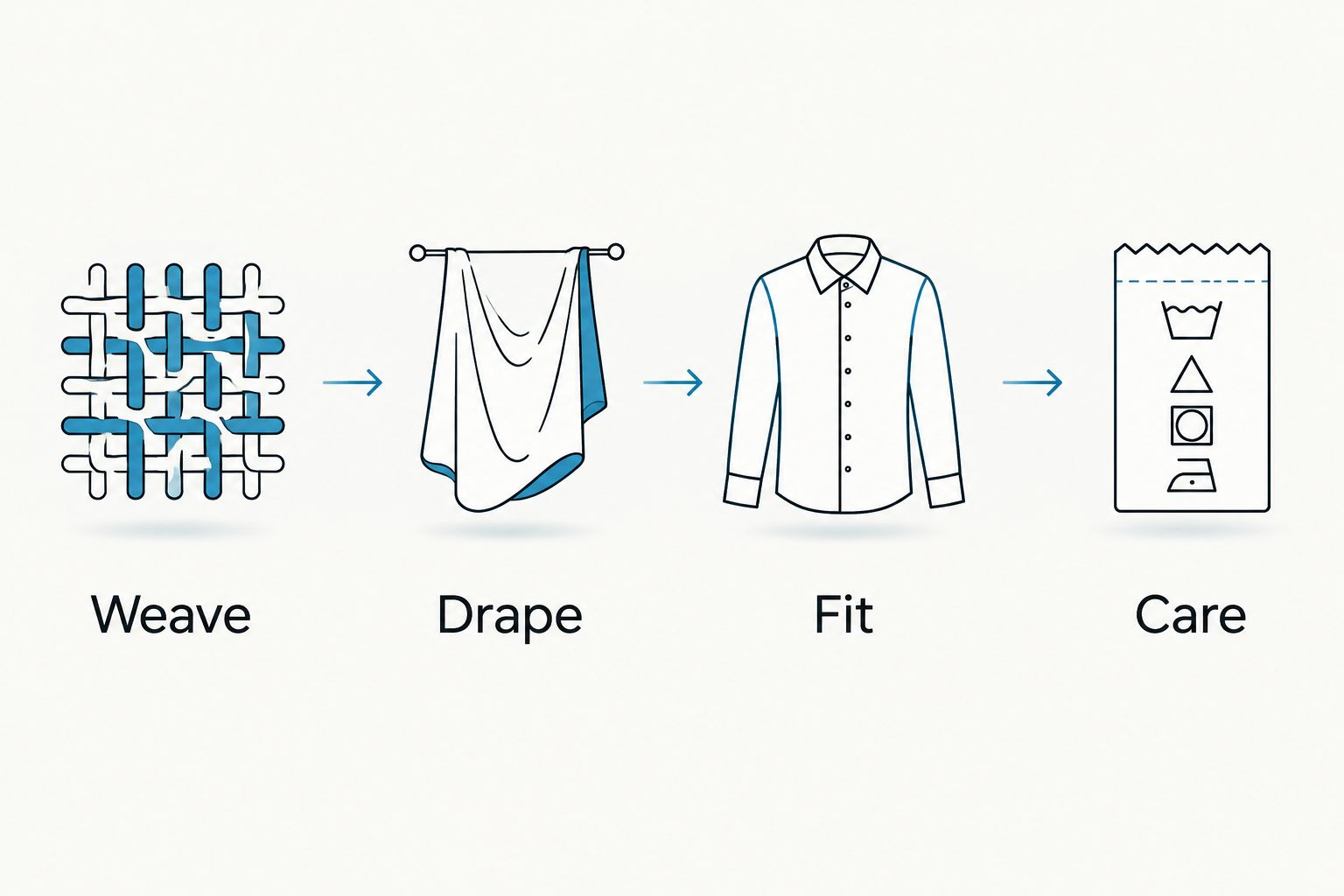
Use this sequence before choosing between a denim and chambray shirt. It keeps attention on the garment rather than a fabric name that sounds right.
- Weave: Read the fabric description. Distinguish a chambray shirt in a denim wash from a shirt made of denim.
- Drape: Look at how the fabric falls when the shirt is worn. Decide whether you want a close fall or a more defined shape.
- Fit: Check the shoulders, sleeves and button closure with your intended layer underneath. Sit down and raise your arms when trying it on.
- Care: Read the garment’s care label. Make sure its instructions fit the way you realistically look after your clothes.
When shopping online, a photograph can help you judge shape but cannot establish softness. Read the description and garment measurements where provided; compare those measurements with a shirt you already enjoy wearing.
Avoid assigning a fabric weight from a photograph. If the description does not state it, you cannot turn a visual impression into a verified specification.
Can you wear a chambray shirt with jeans?
A chambray shirt works with jeans when the proportions feel intentional. You do not need an exact colour match; a lighter shirt with darker jeans makes the separation between the pieces easy to see.
Start with the jeans you wear most. If they have a wide leg, try a partial tuck or a shirt length that leaves the waist visible. With a narrower leg, an untucked shirt can give the outfit a looser top half.
The same approach works with denim shirts. Colour contrast is one option, not a rule: similar blues can also work when you like the overall shape. Keep footwear and accessories simple while you decide what feels right.
For summer 2026, try a chambray shirt with an existing pair of jeans before adding another piece. Repeated wear begins with a combination you can make from your own wardrobe.
Is chambray better than denim under a sweater?
Chambray is the first option to check for sweater layering, but the actual thickness and fit decide. A fine denim shirt can work too; a thick chambray shirt can still create bulk.
Try the shirt with the knitwear you intend to wear, not a roomier substitute. Check whether the sleeve fabric gathers at the elbow and whether the collar sits comfortably at the neckline.
Leave enough room to move without pulling at the shirt’s button closure. If the layers feel crowded, changing the shirt’s fit can solve more than changing its fabric name.
Does chambray feel cooler than denim?
A lightweight chambray shirt is a useful option for warm-weather dressing, but chambray is not a cooling guarantee. Fabric thickness, construction and fit affect comfort, so compare the actual garments.
An open neckline and room through the body can matter as much as the fabric category. Choose the shirt that feels comfortable in your setting rather than assuming every chambray option is suitable for a hot day.
A denim-wash option: The Chambray
Onewednesdayshop’s The Chambray is best for shoppers who want a 100% cotton chambray shirt in a denim wash. Its stated composition and manufacturing origin are specific: 100% cotton, made in India.
Those facts do not establish a particular fabric weight, shrinkage rate or special cotton variety. They also do not make it a denim shirt. Choose it for the stated material and the look you want, then check the garment’s fit and care information.
If your question is less about layering and more about getting dressed in a single garment, consider The Chambray Shirt Dress. A shirt dress changes the outfit’s shape; it is not a direct replacement for a button-up you plan to tuck into trousers.
| Garment | Best for | Practical advantage | Trade-off |
|---|---|---|---|
| The Chambray | Building outfits with existing trousers, skirts and knitwear | A separate shirt lets you change the lower half of your outfit | You still need to choose a coordinating bottom |
| The Chambray Shirt Dress | Shoppers who prefer a dress silhouette | A dress removes the need to pair a shirt with a separate bottom | It does not serve the same tucked-shirt role |
For a gift, decide whether the recipient usually wears separates or dresses before choosing between them. A familiar garment type is a more useful starting point than assuming a blue fabric suits everyone.


What does the manufacturing label tell you?
Country of manufacture answers where a garment was made. It does not answer every question about its materials, craftsmanship or production conditions.
For Onewednesdayshop’s chambray shirt, the stated origin is India. Do not substitute Portugal, Peru or another country because it appears elsewhere in a brand’s range. Product-level information belongs to that product.
The same principle applies when comparing shirts made in China, Turkey, Portugal or Peru. A country name alone does not prove better quality, ethical production or lower environmental impact. Look for evidence that identifies the garment, material or facility being discussed.
Keep fibre content, manufacturing origin and certification separate. A cotton composition is not a factory audit, and a country-of-origin label is not a sustainability certification.
How should you care for denim and chambray shirts?
Follow the care label attached to each shirt. Cotton content alone does not establish an appropriate wash temperature, drying method or ironing setting.
A denim wash also does not tell you whether a garment will transfer colour. Follow any colour-related instructions on the label rather than applying advice from a different shirt.
For your 2026 wardrobe, care is part of the buying decision. If a garment’s instructions do not suit your routine, choose a different shirt rather than planning to ignore them.
FAQ
What's the main difference between a denim and chambray shirt?
Chambray uses a plain weave, while denim uses a twill weave with a diagonal structure. Both can look blue, so colour alone does not identify the fabric.
Is a chambray shirt always lighter than a denim shirt?
A chambray shirt is not always lighter than a denim shirt. Compare the finished fabric, thickness and fit rather than assuming the fabric name guarantees a particular weight.
Can I wear a chambray shirt with blue jeans?
You can wear a chambray shirt with blue jeans. Try contrasting washes for clear separation, or similar blues if you prefer the combined look.
What's better under a sweater, denim or chambray?
Chambray is the first option to check under a sweater, but the shirt's actual thickness and fit matter more than its name. Try both layers together and check for bunching at the sleeves and waist.
Is The Chambray made from denim?
The Chambray is described as a 100% cotton chambray shirt in a denim wash. A denim wash describes its appearance and does not establish denim twill construction.
Where is The Chambray made?
The Chambray is described as made in India. Country of manufacture alone does not establish factory conditions, quality or environmental performance.
Can I wash every cotton shirt the same way?
You should follow each cotton shirt's own care label. Fibre content alone does not establish washing, drying or ironing instructions.
One last thing
Before choosing a new blue shirt, put on the trousers and sweater you expect to wear with it. Notice where your current shirt pulls, gathers or feels too stiff.
Buy to solve that specific problem. A different weave will not fix the wrong shoulder fit, and a softer fabric will not make an unsuitable hem length right for your outfit.