


You should size up in a waffle knit robe only when the size chart, front overlap or movement checks show that you need more room—not simply because you want a relaxed feel. A larger size can also add unwanted sleeve length and fabric, so choose for comfortable coverage rather than the loosest possible fit.
- Waffle knit robe sizing starts with the current size chart, not your usual clothing label.
- Size up when front overlap or movement is restricted; check sleeves and shoulders before deciding.
- One Wednesday’s Waffle Knit Robe suits shoppers seeking 100% stonewashed Turkish cotton; choose size by measurements.
- Do not buy extra room as insurance against shrinkage; follow the robe’s specific care instructions.
Should you size up in a waffle knit robe?
Size up for a specific fit problem, not as a default. Your robe should wrap comfortably, stay closed when you sit and let you reach without pulling across your back. Extra fabric is useful only when it improves those everyday movements.
For One Wednesday’s Waffle Knit Robe, use the current product page’s sizing information rather than measurements from an older purchase. The brand has changed its robe sizing, so a familiar size label is not enough to establish the same fit.
| Fit choice | Best for | What to check | Trade-off |
|---|---|---|---|
| Size indicated by the chart | Wearing over bare skin or light sleepwear | Comfortable front overlap and unrestricted movement | Less spare room for substantial layers |
| Next size up | More room where the chart or try-on shows restriction | Sleeves, shoulder position and belt placement | Extra fabric can feel cumbersome |
| Recheck before choosing | Measurements falling across different sizes | Which area needs room and which already fits | A larger size does not solve every proportion issue |
These are fit choices, not promises about how a particular size will sit on your body. Compare the garment’s shape with the way you actually plan to wear it.
Why this matters
A robe is something you move through your morning in. You sit with coffee, reach for a shelf and bend to pick something up; a fit that looks relaxed while standing still can feel different during those ordinary movements.
For your 2026 robe purchase, put those movements ahead of the size printed inside the collar. The right size stays comfortable without needing constant adjustment.
A tightly pulled belt can disguise insufficient overlap while you stand. An oversized robe can have the opposite problem: plenty of coverage, but sleeves and folds that get in your way. Neither is a reason to settle.
How to check waffle knit robe sizing before you choose
Use the same approach whether you are replacing a favourite robe or buying your first. Start with measurements, then check how the shape works in use.
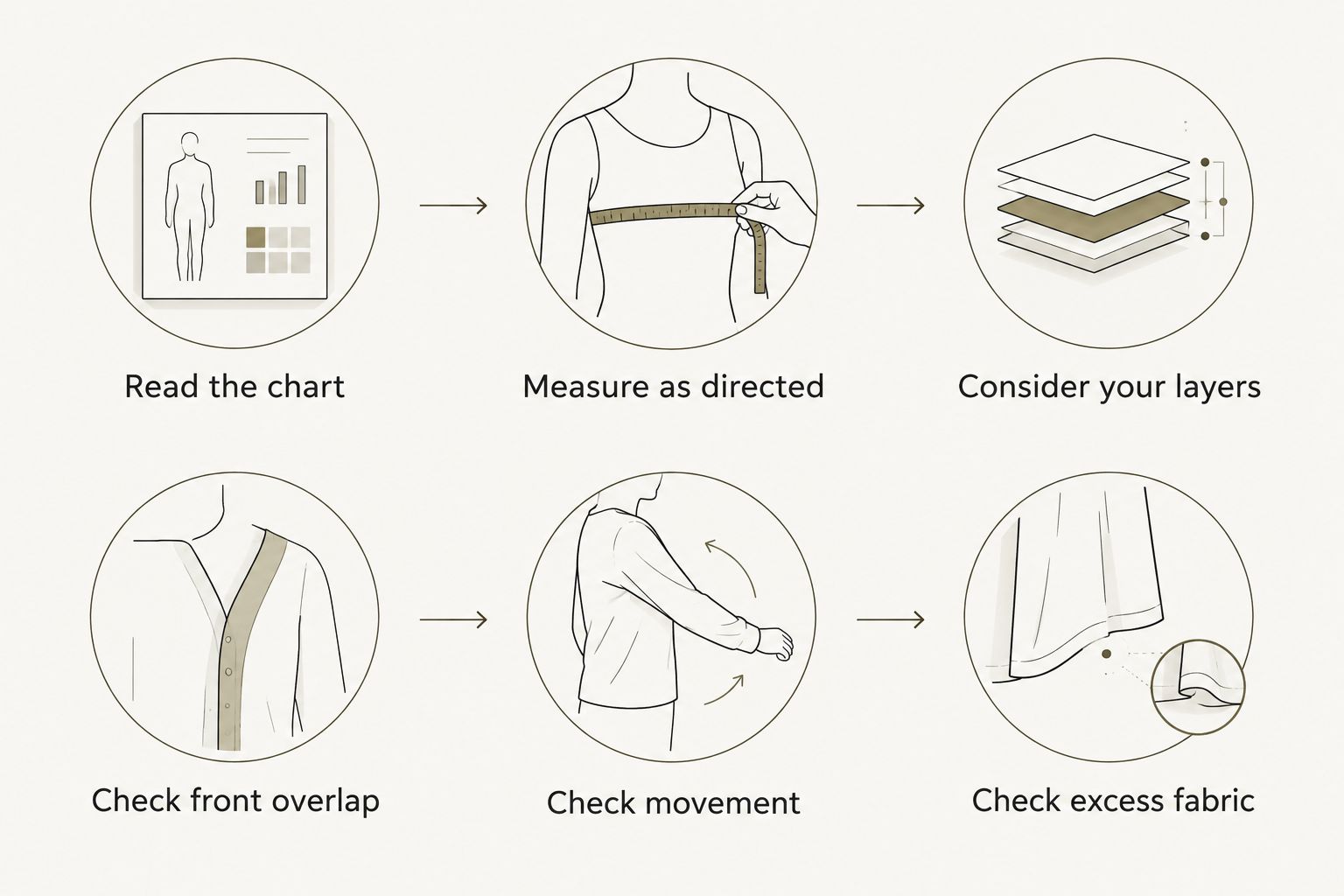
- Read the current chart. Establish whether it lists body measurements or garment measurements. They describe different things: your body on one hand, the finished robe on the other.
- Measure as directed. Follow the chart’s named measurement points. Keep the tape level and avoid pulling it tight to obtain a smaller result.
- Consider your layers. Decide whether the robe will sit over bare skin, a light nightshirt or fuller sleepwear. Check the fit with the layer you expect to wear most.
- Check front overlap. Wrap the robe naturally and tie the belt without cinching hard. Sit down and look for comfortable coverage across your chest and lap.
- Check movement. Reach forward, bend your elbows and bring your arms across your body. Notice pulling at the back, armholes or upper sleeves.
- Check excess fabric. Look at your cuffs, shoulders and the folds gathered beneath the belt. More room is not helpful if it creates another fit problem.
If you are comparing with a robe you already own, use it as a practical reference rather than proof that the same letter size will fit. Compare equivalent measurement points only, and account for any differences in the cut.
Stay with the chart-indicated size for an easy everyday fit
Best for: wearing your robe over bare skin or light sleepwear. Start with the size your measurements indicate, then confirm that the wrap remains comfortable when you sit. You should not need to pull the belt unusually tight to keep the front arranged.
The advantage is a more controlled amount of fabric around your arms and waist. The limitation is that a fit chosen over a light layer does not automatically accommodate something fuller underneath.
Check the shoulders as well as the waist. If the body wraps well but reaching forward creates tension across your back, the fit still needs attention; the belt cannot correct that restriction.
For 2026 sizing decisions, treat “relaxed” as an outcome you check, not an instruction to buy larger. A robe can feel easy without looking or feeling oversized.
Choose the next size up when you need more usable room
Best for: improving overlap or accommodating your usual sleepwear when the smaller size feels restrictive. A larger size is a sensible choice when it resolves pulling across the chest, hips, upper arms or back without creating excessive length elsewhere.
Try the larger size with the belt tied at a comfortable tension. Then repeat the same seated and reaching checks. The useful difference is freedom of movement, not simply a bigger silhouette.
The trade-off is proportion. Depending on the cut, sizing up can also change sleeve length, shoulder placement and the amount of fabric gathered at your waist.
If the smaller size restricts your hips but the larger size overwhelms your shoulders, do not assume either is automatically right. Compare the actual measurements and consider whether the robe’s proportions suit you.
Why waffle knit robe sizing varies
Your usual clothing size is a starting point, not a complete answer. These factors explain why the same label can lead to different decisions:
- Chart type. A body-measurement chart and a finished-garment chart require different comparisons. Read the chart’s explanation before choosing.
- Cut. Shoulder shape, sleeve proportions and the wrap construction affect how the robe sits, even when the size label looks familiar.
- Body proportions. Your chest, waist and hips do not have to fall within the same labelled size. Check the areas that need coverage and movement.
- Layers. Bare skin and fuller sleepwear create different fitting conditions. Assess the combination you will actually wear.
- Fit preference. You might enjoy a close wrap or a looser drape. Neither preference removes the need to check sleeves and front overlap.
- Sizing updates. A previous version of a robe is not a reliable substitute for the current chart when the brand has changed its sizing.
Separate preference from restriction. Wanting a little more drape is different from needing more room to sit comfortably, and the distinction helps you choose deliberately.
Should you size up because a cotton waffle robe might shrink?
Do not size up solely to compensate for unknown shrinkage. That approach assumes a change in dimensions you cannot predict from the word cotton alone. Choose a robe that fits, then follow its specific care instructions.
The official One Wednesday care information checked on October 13, 2026 specifies a maximum 30°C delicate wash and recommends hang drying for the Waffle Knit Robe. Use the current care label as your reference rather than a general rule for all cotton garments.
There is no product-specific shrinkage percentage here to convert into a size recommendation. “Buy bigger and shrink it down” is not a controlled fitting method, and washing should not become an attempt to tailor a robe.
What should you do if you are between robe sizes?
If you are between sizes, prioritise comfortable overlap and movement, then check the larger size for excess fabric. The right choice depends on where you fall between the measurements, not just whether you prefer a relaxed look.
If your shoulders and sleeves already fit comfortably, but you need more room through the body, examine the larger size carefully. If you simply want more drape, make sure the additional fabric feels pleasant rather than cumbersome.
Ask for clarification when the chart does not explain a measurement point. A clear answer about the garment is more useful than guessing from a model photograph or another shopper’s usual size.
Is sizing up the safest choice when giving a robe?
Sizing up is not automatically the safest gifting choice. A larger robe can still have awkward sleeves or shoulders, even when the wrap offers generous coverage. Use the recipient’s measurements or a well-fitting robe as your reference where possible.
For a 2026 birthday, holiday or housewarming gift, choose around the recipient’s routine rather than your own. Someone who wears a robe over pyjamas has a different fitting requirement from someone who wears it directly after bathing.
Avoid turning a familiar dress size into a precise robe recommendation. It is better to confirm the relevant measurements than to present a guess as a dependable fit.
What the fabric description tells you—and what it does not
One Wednesday’s Waffle Knit Robe specifies 100% stonewashed Turkish cotton. That describes the fibre composition and cotton origin; it does not supply the garment’s finished measurements or establish its country of manufacture.
The product description also refers to Oeko-Tex certified cotton. Keep that fabric statement separate from claims about a whole factory, working conditions or the manufacturing country. It does not answer a sizing question on its own.
The same discipline applies when comparing clothing associated with Turkey, Peru, Portugal or China: country names alone do not establish better fit, craftsmanship, ethics or sustainability. Look for product-level materials, production information and evidence supporting the particular claim.
One Wednesday’s Waffle Knit Robe is best for shoppers seeking a stonewashed cotton robe and choosing fit by measurements. Its stated material is a useful starting point; your coverage and movement checks complete the decision.
Your final robe-fit check
Before settling on a size, wear the robe as you expect to use it. Tie the belt comfortably, sit down, reach forward and check whether the front remains arranged without repeated adjustment.
For your 2026 fit check, ask three plain questions: does it cover comfortably, does it move comfortably, and does the spare fabric stay out of your way? Keep the size that answers all three—not simply the larger one.
FAQ
Should I always size up in a waffle knit robe?
No. Size up when the current chart or a movement check shows that you need more room. Check sleeves and shoulders as well as front overlap before choosing the larger size.
How should a waffle knit robe fit around my hips?
A waffle knit robe should wrap comfortably around your hips and provide coverage when you sit. If tying the belt tightly is the only way to keep the front arranged, reassess the size and cut.
Should I choose my normal clothing size for a robe?
Use the robe’s current size chart rather than relying on your normal clothing size. Confirm whether its measurements refer to your body or the finished garment.
Is an oversized robe more comfortable?
An oversized robe is more comfortable only if the extra room improves your fit. Excess sleeve length or fabric gathered at the waist can make a larger size less practical.
Should I size up if I wear pyjamas underneath?
Size up only if your usual pyjamas make the chart-indicated size restrictive. Check the robe over those layers, then sit and reach to assess coverage and movement.
What wash temperature does the One Wednesday Waffle Knit Robe specify?
The official care information checked on October 13, 2026 specifies a maximum 30°C delicate wash and recommends hang drying. Follow the current garment care label rather than general cotton-care advice.
Can I use an older robe to choose my new size?
An older robe is useful for comparing equivalent measurements, but its size label is not a guarantee. Check the current chart, especially when the brand has changed its sizing.
One last thing
Test your robe sitting down before you judge it standing up. The front can look comfortably wrapped in the mirror yet need adjustment on a chair. That simple check tells you more about usable coverage than a deliberately loose belt or an oversized appearance.