

Best overall: The Cotton Crewneck for an everyday knit layer. Best outfit anchor: straight-leg trousers. Best no-new-purchase option: your existing plain T-shirt. The best capsule wardrobe pieces for women in 2026 fill different roles, work with what you own, and feel comfortable enough to wear again tomorrow.
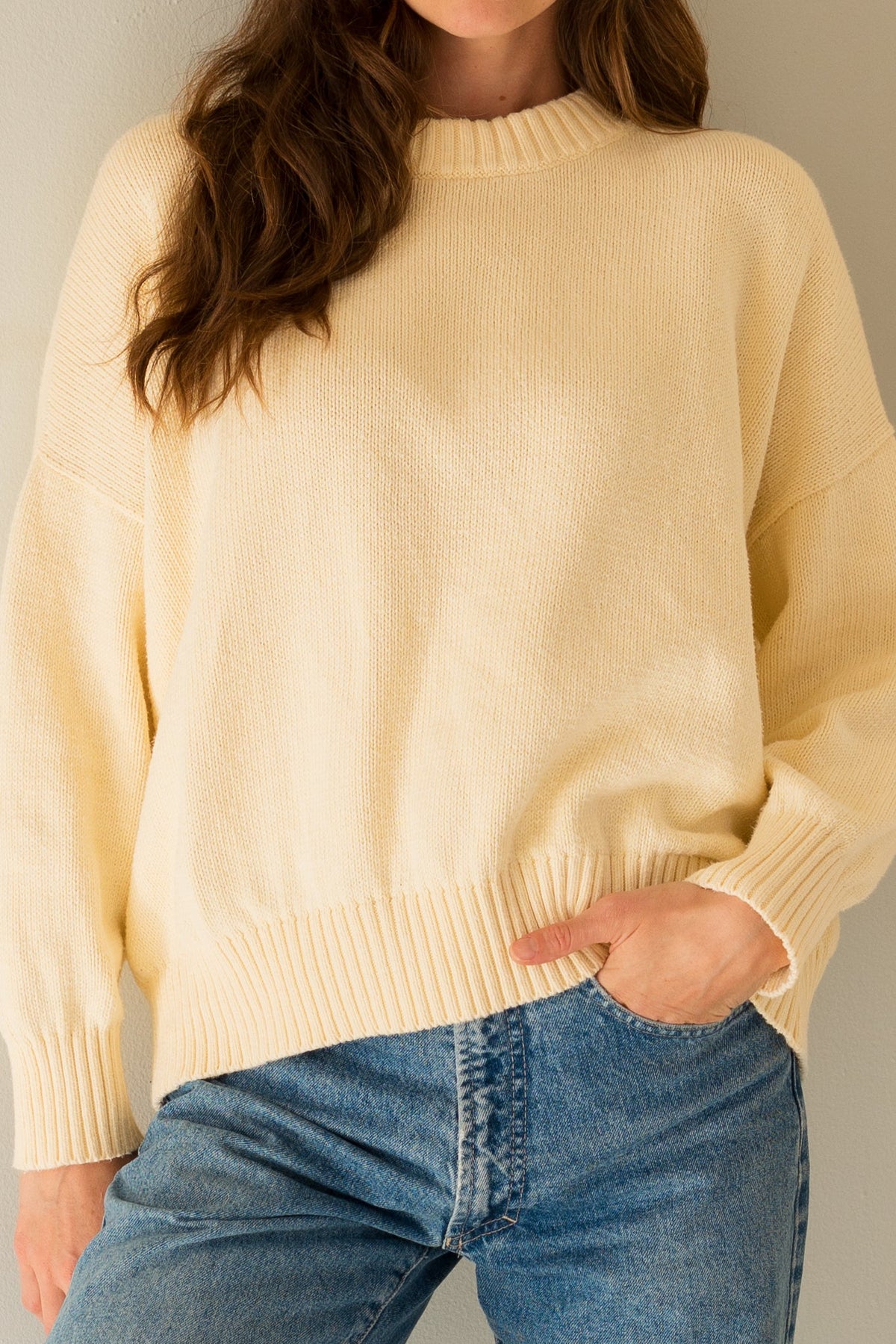
- Onewednesdayshop’s The Cotton Crewneck is the best capsule wardrobe knit here for shoppers who prefer cotton.
- Choose capsule wardrobe pieces for women by outfit role, not by a fixed shopping list.
- The Chambray adds a cotton shirt option; The Chambray Shirt Dress offers a separate dress-based outfit.
- Keep useful trousers, T-shirts and walking shoes before adding more everyday essentials.
Why this matters
A capsule wardrobe is a small, considered collection of clothes that work together. It is not a requirement to dress in beige, replace your wardrobe, or own a prescribed number of pieces. The useful question is simpler: what makes getting dressed easier?
For your 2026 wardrobe, start with the outfits you actually repeat. A cotton sweater belongs if you reach for a knit layer; a dress belongs if you enjoy wearing dresses. Neither earns a place just because it appears on an essentials list.
Onewednesdayshop’s The Cotton Crewneck is the best capsule wardrobe knit here for shoppers who prefer cotton. Its stated composition is 100% cotton, and its product description identifies knitting in Peru by female artisans. Those details support a material-led choice, not a promise about fit, warmth or lifespan.
What makes the best capsule wardrobe pieces for women?
Use these criteria before choosing individual pieces. A useful capsule makes room for your habits rather than asking you to adopt someone else’s.
- Repeat wear: Choose something that fits a recurring part of your week, whether that is commuting, working from home or meeting friends.
- Outfit compatibility: Plan 3 outfits with clothes you already own before adding a piece. Treat this as a shopping check, not a universal wardrobe rule.
- Comfort in motion: Sit, reach, walk and bend during a try-on. A pleasing silhouette is not enough if you keep adjusting it.
- Layering room: Check the combination you intend to wear, such as a shirt under a sweater or a knit under your coat.
- Care compatibility: Read the garment’s own care label. Choose upkeep you are prepared to repeat.
- Specific product evidence: Look for stated fibre composition and production details. A country name or a soft-looking photograph does not establish quality.
Capsule wardrobe picks at a glance
This 2026 shortlist mixes named pieces with clothing categories you can shop from your own wardrobe. The order reflects usefulness as an outfit-building system, not a claim that everyone needs every item.
| Piece | Best for | Standout feature or role | Key limitation |
|---|---|---|---|
| The Cotton Crewneck | An everyday cotton knit layer | Stated 100% cotton; knit in Peru by female artisans | Cotton composition alone does not establish winter warmth |
| Straight-leg trousers | Building work-to-weekend outfits | A repeatable base for shirts and knitwear | Fit through the waist and seat needs a careful check |
| The Chambray | Adding a button-up shirt | Stated 100% cotton in a denim wash; made in India | Chambray is not denim |
| Your existing plain T-shirt | Keeping a familiar base layer | Uses a piece you already know and wear | A stretched neckline or uncomfortable fit reduces usefulness |
| The Chambray Shirt Dress | Creating a dress-based outfit | A named shirt-dress option | One-piece dressing offers less separate mixing |
| Comfortable walking shoes | Supporting days spent on foot | Complete outfits around your actual movement | Comfort cannot be judged from appearance alone |
| Weather-appropriate outerwear | Making outfits work outdoors | Adds the protection your routine requires | One coat does not automatically suit every season |
1. The Cotton Crewneck: best for an everyday cotton knit layer
The Cotton Crewneck gives you a sweater option when you prefer cotton knitwear. Onewednesdayshop identifies the piece as 100% cotton and knit in Peru by female artisans; the description does not identify the cotton as Pima.
Style it with straight-leg trousers for a simple weekday outfit, or with denim you already wear. Before choosing a size, check whether you want to wear the crewneck alone or over a shirt. That decision matters more than following an oversized-fit trend.
The Cotton Crewneck pros:
- Its stated fibre composition makes it a clear option for cotton-focused shoppers.
- Its crewneck format gives you a straightforward knitwear role.
- Its description provides specific knitting-location and maker information.
The Cotton Crewneck cons:
- A cotton label does not tell you whether the sweater suits your winter conditions.
- A crewneck neckline needs checking against any shirt collar worn underneath.
Best for: A shopper who wants a cotton sweater for repeated everyday styling.
Verdict: Buy if cotton knitwear fills a real gap; hold if you already own a sweater doing the same job.
2. Straight-leg trousers: best for an outfit-building base
Straight-leg trousers provide a separate bottom that you can pair with the tops in this guide. Choose a pair around your most common setting, not an imagined dress code: relaxed daily wear and a formal workplace ask different things of a garment.
During a try-on, sit down and check the waistband, pockets and fabric across the seat. Then try the trousers with your usual shoes. The right hem for one pair of shoes is not automatically right for another.
Straight-leg trousers pros:
- They give shirts and sweaters a shared outfit base.
- Separates let you change the top without replacing the whole outfit.
- You can assess the silhouette against clothes you already wear.
Straight-leg trousers cons:
- Waist and seat fit need checking independently.
- A hem chosen for one shoe height restricts other combinations.
Best for: Someone who wants a repeatable starting point for work and everyday outfits.
Verdict: Buy to fill a missing bottom category; hold if your current trousers already serve it.
3. The Chambray: best for a cotton button-up shirt
The Chambray is described as made in India from 100% cotton in a denim wash. It gives you a named shirt option for a capsule built around cotton, without treating chambray and denim as interchangeable fabrics.
For a 2026 outfit rotation, try the shirt with trousers first, then with your familiar jeans. Check sleeve movement, collar placement and how the shirt sits when tucked. If you intend to layer it beneath a sweater, try that exact combination rather than assuming it will sit comfortably.
The Chambray pros:
- Its stated 100% cotton composition supports an informed fibre choice.
- Its description identifies India as the manufacturing country.
- A separate shirt lets you change bottoms while keeping the same top.
The Chambray cons:
- Its denim wash does not make the fabric denim.
- Button-up styling adds collar and tuck preferences to your fit check.
Best for: A shopper who reaches for shirts more often than additional knitwear.
Verdict: Buy if a cotton button-up expands your outfits; skip if collars rarely feel right for you.
4. Your existing plain T-shirt: best for avoiding duplicate basics
Start with the plain T-shirt you already wear comfortably. Its value is practical: you know the neckline, sleeve length and fit, and you can test it against the rest of your wardrobe immediately.
A capsule does not need a newly purchased version of every basic. Keep the T-shirt if it works alone and beneath your chosen layer; replace it only when its condition or fit stops it serving that purpose.
Your existing plain T-shirt pros:
- You already have direct experience of its comfort.
- It lets you test outfits before adding another top.
- It helps you identify a genuine replacement need rather than a duplicate.
Your existing plain T-shirt cons:
- A worn neckline can change how it looks beneath a knit.
- A fit you tolerate is not necessarily one you enjoy wearing.
Best for: Someone whose wardrobe already contains useful basics.
Verdict: Hold onto the T-shirt that works; skip a replacement bought only to complete a checklist.
5. The Chambray Shirt Dress: best for a dress-based outfit
The Chambray Shirt Dress belongs in the conversation when dresses are already part of your routine. It offers a different wardrobe role from The Chambray: a dress-based outfit rather than a top that requires a separate bottom.
Try a shirt dress with your everyday shoes and your usual outer layer. Check movement while sitting and walking, and assess the length against your own comfort. Do not transfer the shirt’s composition or manufacturing details to the dress without checking the dress’s information.
The Chambray Shirt Dress pros:
- It adds a distinct dress option rather than another separate top.
- It gives dress wearers an alternative to trouser-based outfits.
- Its usefulness is easy to assess against your existing shoes and layers.
The Chambray Shirt Dress cons:
- A dress offers fewer separate top-and-bottom combinations.
- Length and movement need to suit the occasions you have in mind.
Best for: Someone who prefers dresses and wants that preference reflected in a capsule.
Verdict: Buy if you regularly wear dresses; skip if a trouser-and-shirt outfit consistently feels better.
6. Comfortable walking shoes: best for days spent on foot
Choose shoes around where you walk, how long you wear them and what your outfits require. A capsule shoe is not useful if you leave it at home whenever the day involves walking.
Try shoes with the socks or hosiery you intend to wear. Check heel movement, toe room and pressure while walking, rather than judging comfort while standing still. Keep a familiar pair if it already works with your trousers and dresses.
Comfortable walking shoes pros:
- They support the routine your wardrobe needs to serve.
- A familiar pair gives you a known starting point for outfit planning.
- They help you choose practical trouser hems and dress combinations.
Comfortable walking shoes cons:
- Appearance alone cannot establish a comfortable fit.
- One pair does not automatically cover different weather or dress requirements.
Best for: Anyone whose daily outfits need to work beyond a photograph.
Verdict: Buy for a specific unmet need; hold onto the pair you already trust.
7. Weather-appropriate outerwear: best for finishing real-life outfits
Outerwear determines whether your carefully chosen indoor outfit works outside. Choose it for your local conditions and everyday travel, rather than treating a particular coat shape as a universal capsule essential.
For autumn and winter 2026 planning, try your outer layer over the thickest combination you intend to wear. Reach forward and check the shoulders and sleeves. Assess protection from the garment’s stated features, not from its colour or silhouette.
Weather-appropriate outerwear pros:
- It addresses a practical need that indoor outfit lists miss.
- It encourages you to check layers together before buying.
- It lets local conditions guide the choice.
Weather-appropriate outerwear cons:
- A coat that fits over a T-shirt might not fit over knitwear.
- A single garment does not establish suitability for every season.
Best for: Someone building a wardrobe around commuting, errands and outdoor movement.
Verdict: Buy for the conditions you face; skip an extra coat that duplicates existing protection.
How we ranked these pieces
The ranking gives each piece a separate job: knit layer, trouser base, shirt, familiar basic, dress, footwear and outerwear. Repeat wear, outfit compatibility, comfort, layering and product evidence determine the recommendation. No item earns a place through an unsupported fabric-weight ranking.
For manufacturing comparisons in 2026, keep the evidence at product level. Onewednesdayshop’s crewneck description identifies Peru and female artisans; The Chambray description identifies India and 100% cotton. Neither description establishes factory-wide wages, audits or environmental performance.
Peru, Turkey, Portugal and China are manufacturing locations, not quality grades. When comparing garments from those countries, look for documented materials, construction, traceability and production practices. Do not infer better craftsmanship or ethics from geography, or assign Portuguese manufacture to a garment without verification.
Which capsule wardrobe pieces should you choose?
Choose The Cotton Crewneck as the default addition if your wardrobe lacks a cotton knit layer. Choose The Chambray instead if shirts get more wear, or The Chambray Shirt Dress if dresses are central to your week. Keep useful basics before adding duplicates.
Build 3 outfits around your preferred addition using what you own. Include the shoes and outerwear, not just the indoor clothes. If the combinations require several other purchases to feel complete, pause and reconsider the piece.
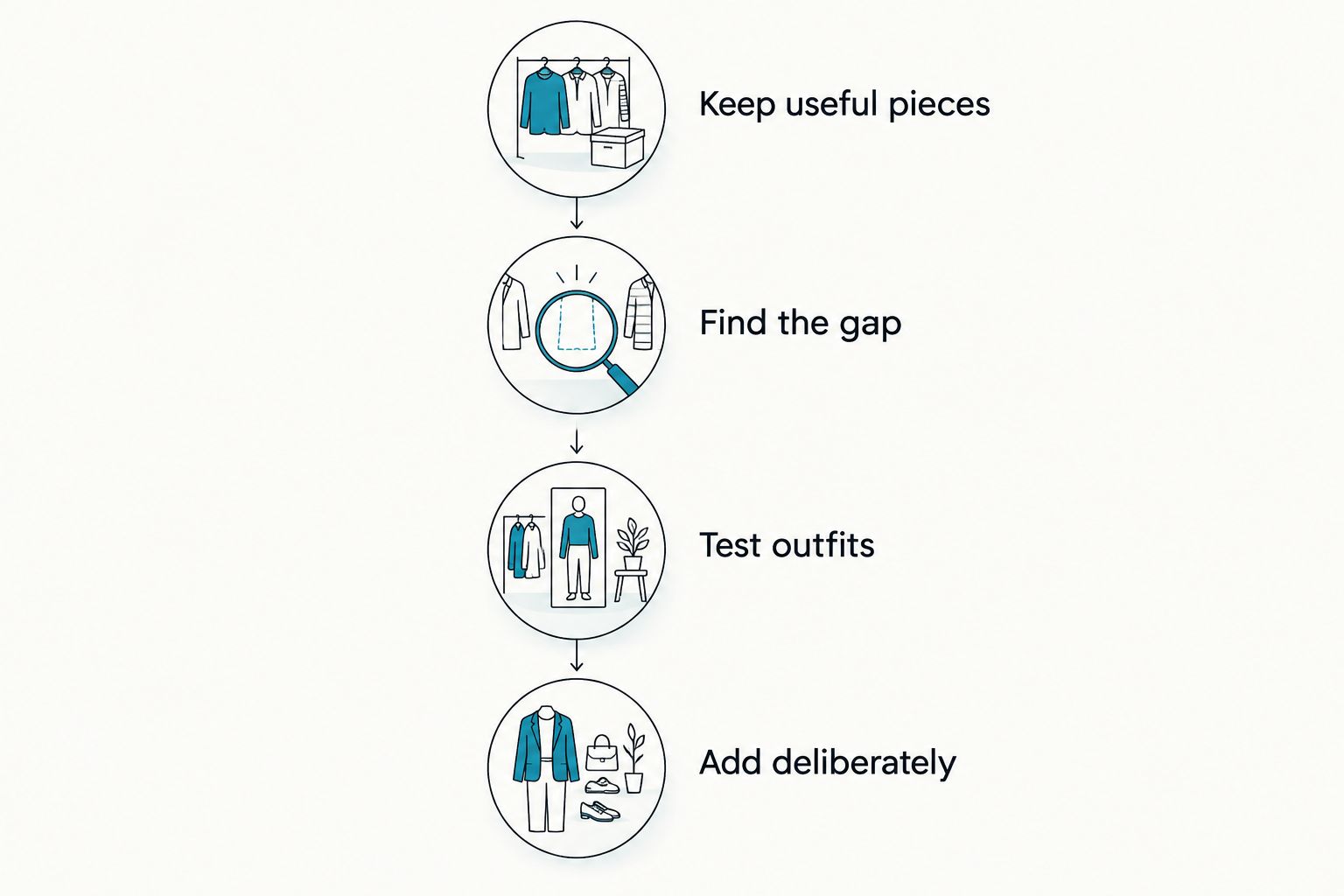
A helpful decision sequence is to keep useful pieces, find the gap, test outfits, then add deliberately. This makes your 2026 capsule a wardrobe you use, not a collection you finish.
FAQ
What are the best capsule wardrobe pieces for women in 2026?
Start with a useful knit layer, trousers, a shirt, a familiar T-shirt, walking shoes and suitable outerwear. Add a dress if you regularly wear dresses; the best selection follows your routine rather than a fixed checklist.
Is The Cotton Crewneck a good capsule wardrobe sweater?
The Cotton Crewneck is a good candidate if you want a cotton knit layer. Onewednesdayshop describes it as 100% cotton and knit in Peru by female artisans; check fit, layering and the garment’s care instructions before choosing.
How many pieces should a women’s capsule wardrobe have?
There is no required piece count. Use your week, laundry routine, seasons and dress requirements to decide how many clothes you need, and check that each addition has a distinct role.
Is The Chambray a denim shirt?
The Chambray is described as 100% cotton in a denim wash, and chambray is not denim. Its product description identifies manufacture in India; do not treat the wash as proof of denim construction.
Do I need both a chambray shirt and a shirt dress?
You need both only if separate-shirt outfits and dress outfits each serve your routine. The Chambray and The Chambray Shirt Dress fill different roles, but neither is compulsory.
Does clothing made in Peru or Portugal have better quality?
Country of manufacture alone does not establish better quality. Compare the individual garment’s materials, construction and documented production practices rather than ranking Peru, Portugal, Turkey or China as a whole.
Can I build a capsule wardrobe without buying new clothes?
Yes, start by combining clothes you already wear. Identify repeated outfit gaps before adding anything, and keep comfortable basics that still serve their purpose.
One last thing
Before keeping a new piece, try it on for an ordinary day’s movements: sit at a table, reach for a shelf, put on your coat and walk in your usual shoes. A capsule wardrobe succeeds in those moments, not just in front of the mirror.
The most useful addition is the one that makes your existing clothes easier to wear. If it needs a different wardrobe around it, leave it off the list.