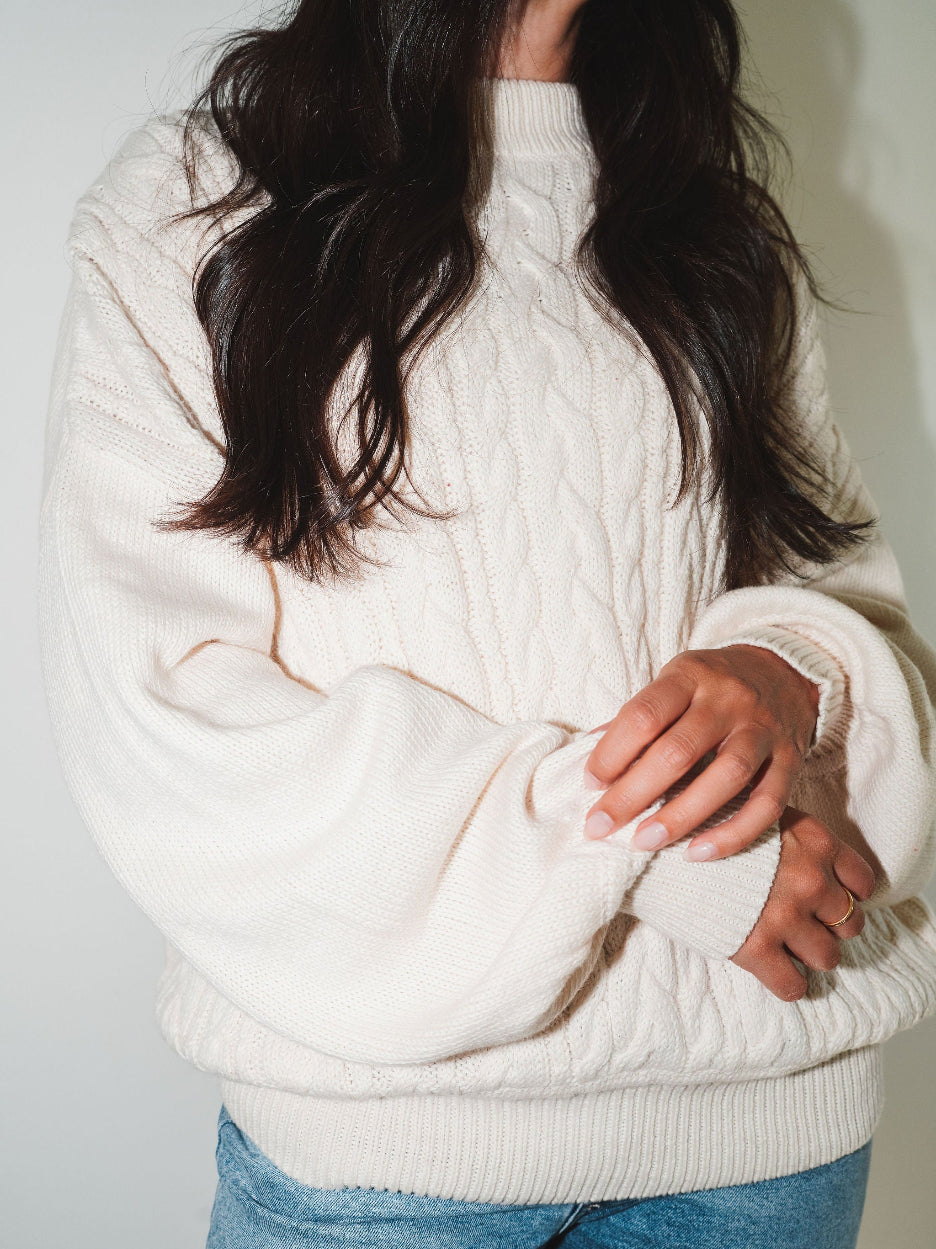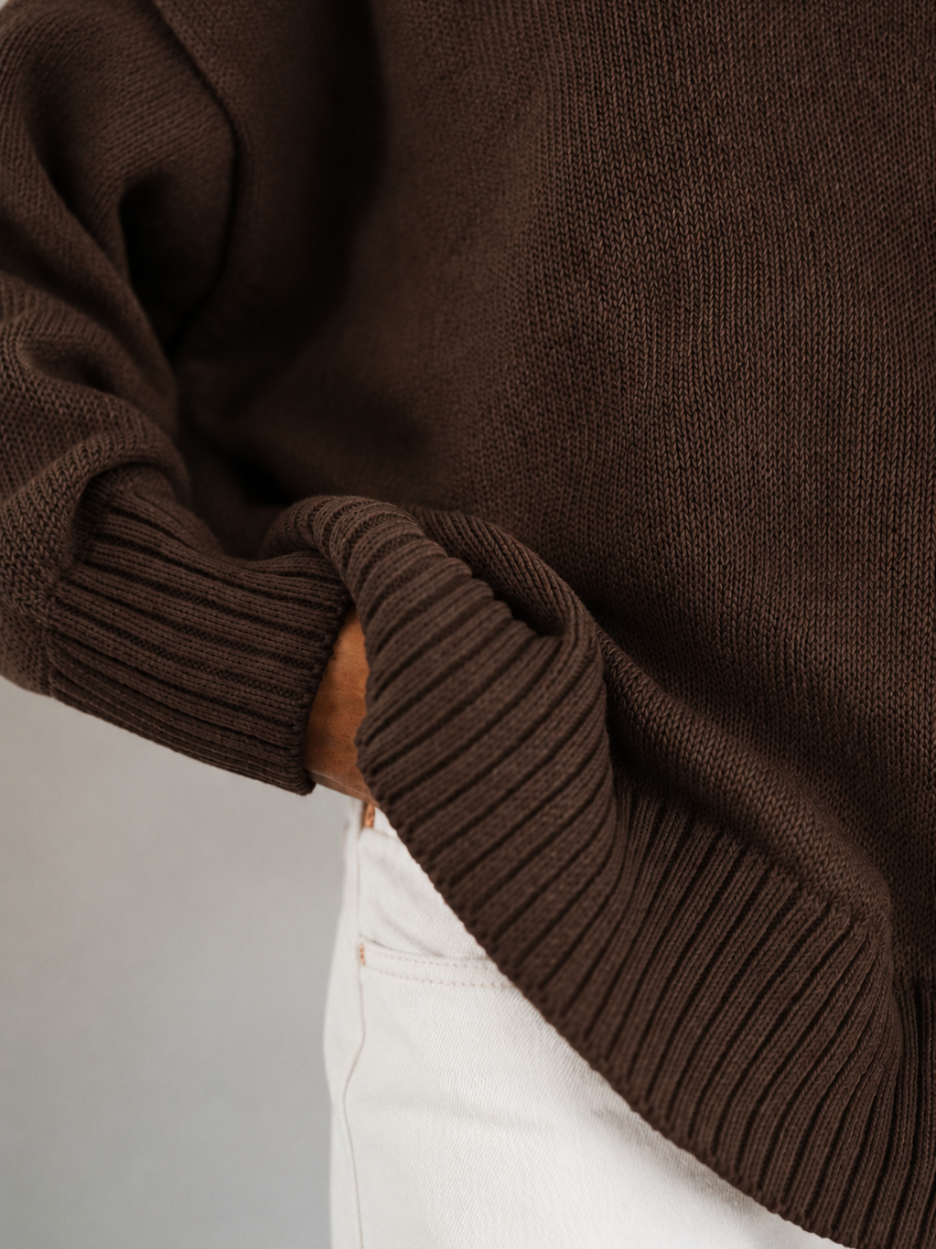

A cotton crewneck sweater should sit comfortably around your neck, allow you to move without pulling across the chest, and finish at a hem length that works with your trousers. The right fit follows the sweater’s intended shape: a dropped shoulder or roomy body is not a sizing fault, but sleeves that obstruct your hands or a neckline that presses against your throat need attention.
- Judge cotton crewneck sweater fit by neckline comfort, shoulder construction, sleeve length and movement—not the size label alone.
- One Wednesday’s Cotton Crewneck suits shoppers seeking a 100% cotton knit made in Peru by female artisans.
- Choose a close, relaxed or oversized fit deliberately; extra room should serve your outfit, not obstruct movement.
- Follow the sweater’s care label rather than buying a larger size in anticipation of shrinkage.
Why this matters
A sweater can look right while you stand still and feel wrong as soon as you reach for something. Fit is about how the garment behaves on your body, not whether you can put it on. A comfortable neckline, useful sleeves and an undisturbed hem matter more than a familiar size letter.
For your 2026 wardrobe, start with the clothes you already wear. Try the sweater with your usual jeans or trousers, then add the layer you expect to wear underneath. This gives you a more useful answer than judging it with unfamiliar styling.
The Cotton Crewneck from One Wednesday is 100% cotton and knit in Peru by female artisans. Those details describe its material and production; they do not tell you which size will fit your shoulders or where the hem will fall.
How should a cotton crewneck sweater fit?
A cotton crewneck should feel comfortable at the neck, sit without unwanted tension through the body, and leave your hands free. Check these points together. A neat sleeve does not compensate for a chest that pulls, and a roomy body does not make an uncomfortable collar acceptable.
Check the fit in this order
- Neckline. Stand naturally and turn your head. The collar should rest comfortably without pressing against your throat. Look for unwanted gaping or distortion, but remember that a wider crewneck opening can be intentional.
- Shoulders. Find the shoulder seam, if the sweater has one. A conventional set-in sleeve usually places that seam near the shoulder edge; a dropped-shoulder design places it farther down the arm. Judge the construction before changing sizes.
- Chest and back. Reach forward as though you are picking up a bag. Notice whether the knit pulls across your chest, upper back or underarms. You should not have to hold an unusually careful posture to keep the sweater comfortable.
- Sleeves. Let your arms hang, then bend your elbows. The cuffs should finish where you want them without repeatedly covering your hands. Some softness at the wrist is different from excess fabric that gets in the way.
- Hem. Sit down, stand up and raise your arms. Check whether the sweater settles back into place or needs constant adjustment. Decide whether its length works untucked before relying on a tuck to make it wearable.
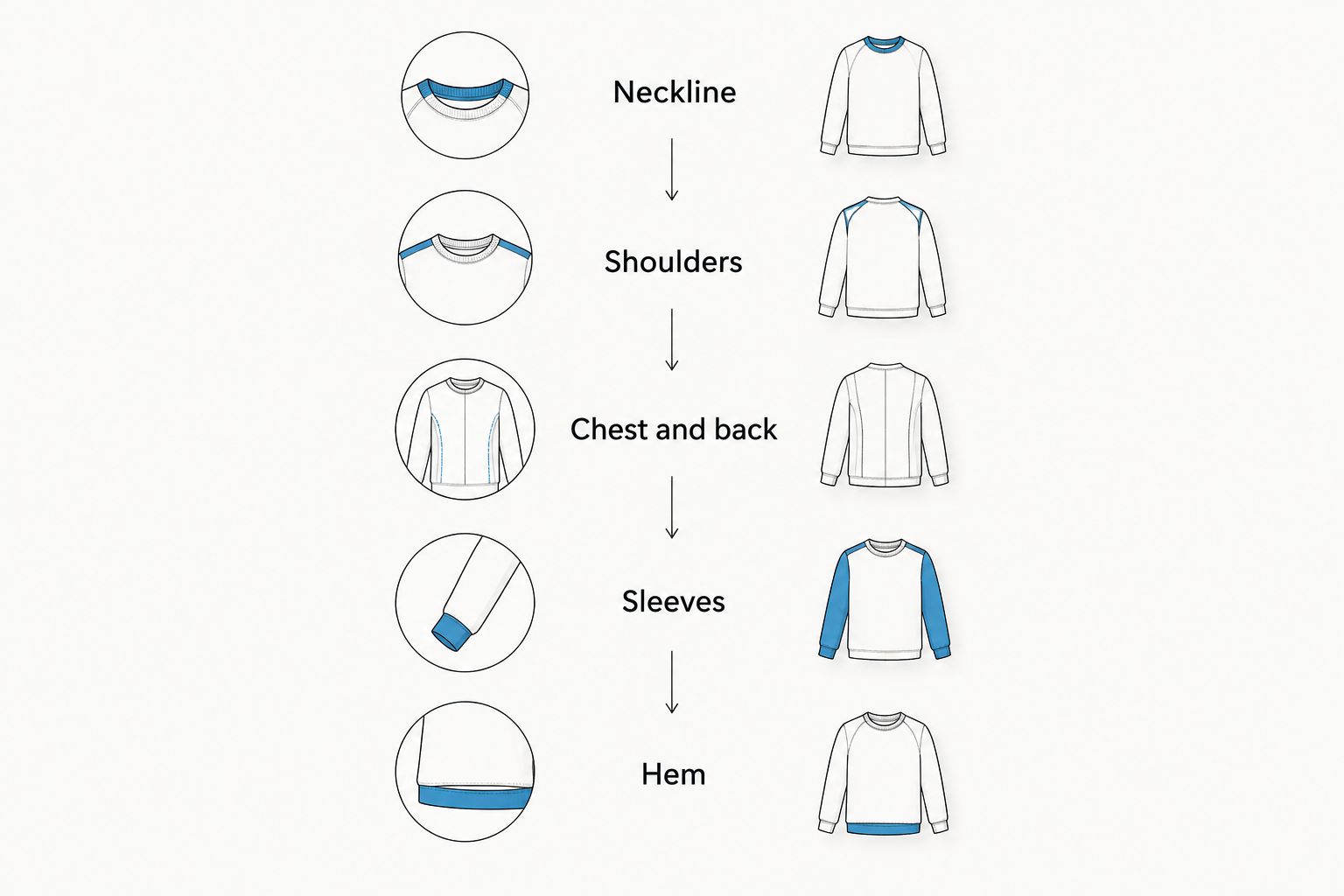
Repeat the checks with your intended underlayer. A sweater that feels comfortable over a thin top does not automatically have room for a shirt collar, cuffs and sleeves underneath.
Keep the size that works in motion. If you spend the whole try-on pulling down the hem or pushing up the cuffs, identify the problem before deciding that the sweater simply needs styling.
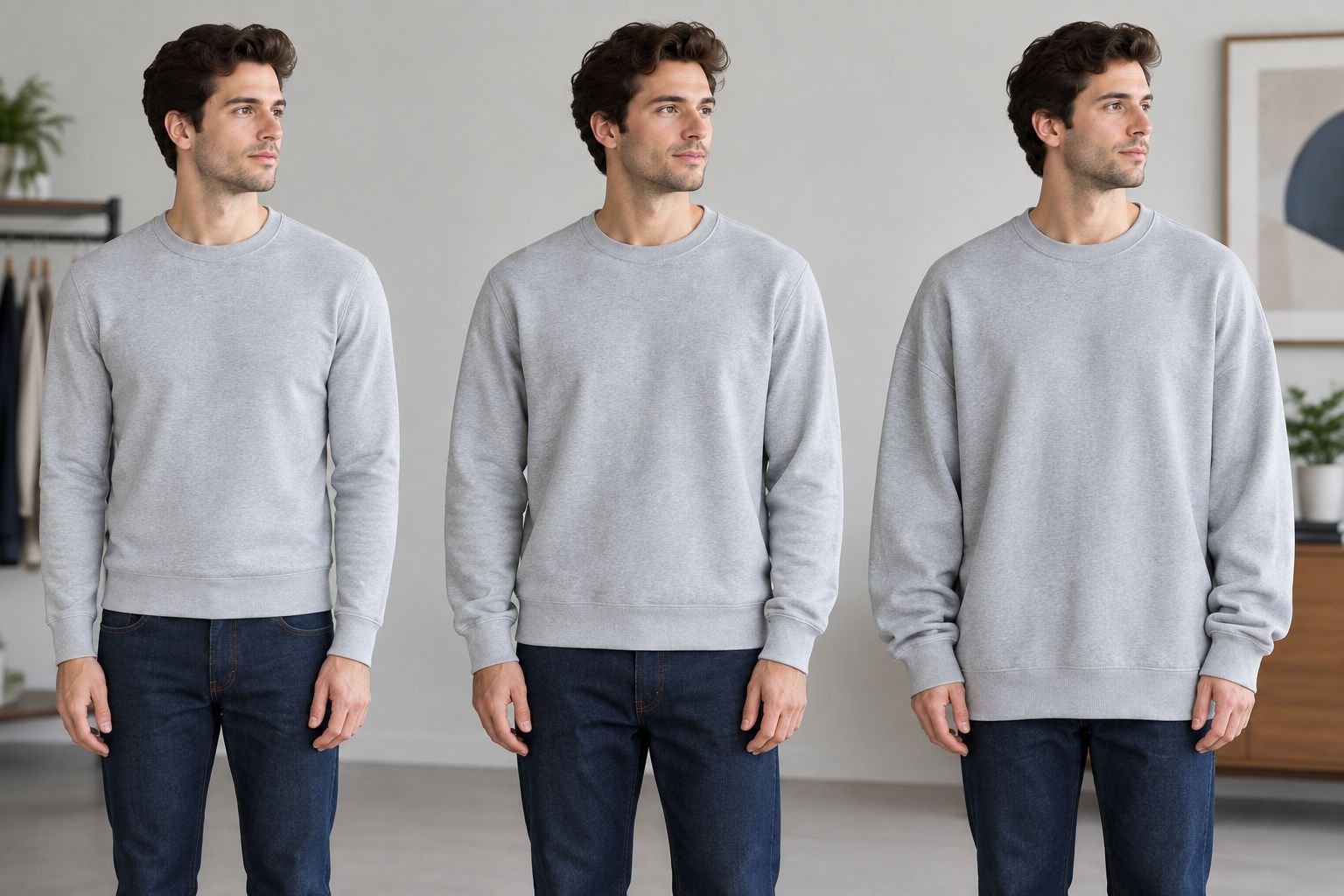
Close fit: best for a neat outline
A close fit follows your body without pulling tightly across it. The chest should look settled, the underarms should feel unrestricted, and the hem should not grip so firmly that it gathers above your waistband.
This shape works when you want a clean outline beneath a jacket or prefer little extra fabric around your middle. Its limitation is layering space: a shirt underneath can introduce bunching even when the sweater fits comfortably on its own.
Try your jacket over the sweater before keeping it. Check the shoulder and upper-arm area with both layers on, rather than assuming that a neat-looking knit will sit comfortably inside every sleeve.
Relaxed fit: best for everyday layering
A relaxed fit leaves visible room through the body without making you manage the garment all day. You should be able to bend your arms and sit comfortably, while the sleeves and hem remain useful.
This is a practical starting point for a 2026 everyday wardrobe if you alternate between wearing a sweater alone and over a shirt. The trade-off is extra fabric at the waist, particularly when you tuck it into trousers.
Check the sweater both tucked and untucked. If you like the body width but dislike the hem length, a different cut can solve the problem more cleanly than changing sizes.
Oversized fit: best for a deliberately roomy silhouette
An oversized fit uses extra width or length as part of the outfit. Dropped shoulders, a broad body and fuller sleeves can all belong to that design; they are not automatic signs that you chose incorrectly.
The limitation is proportion and practicality. A sweater stops serving you when the cuffs obstruct your hands, the neckline shifts uncomfortably, or the body feels cumbersome beneath your outerwear.
Choose oversized by shape, not simply by buying a larger size. Sizing up changes several areas together and does not guarantee the roomy silhouette you want.
| Fit option | Best for | What should work | Main trade-off |
|---|---|---|---|
| Close fit | A neat outline beneath a jacket | Comfortable chest and underarms without pulling | Less room for a shirt underneath |
| Relaxed fit | Everyday wear and light layering | Room through the body with manageable sleeves | Extra fabric when tucked |
| Oversized fit | A deliberately roomy outfit | Intentional volume with hands and movement unrestricted | More bulk beneath outerwear |
The useful distinction is not tidy versus untidy. It is whether the volume feels intentional and works with the rest of your clothes.
Why cotton crewneck sweater fit varies
Fit changes with construction, proportions and how you plan to wear the sweater. Use these factors to explain what you see rather than treating every difference as a size problem.
- Shoulder construction. Set-in and dropped shoulders place seams differently. Compare the sweater with its intended silhouette, not a single rule about seam position.
- Body shape. A straight body and a shaped body distribute room differently. The same chest measurement does not promise the same outline at the waist.
- Sleeve shape. A fuller sleeve creates more volume around the arm. Check whether that volume remains comfortable beneath your usual coat.
- Hem construction. A ribbed hem can draw the lower edge inward. Look at where it settles rather than judging length only while holding the sweater flat.
- Your proportions. Shoulder width, torso length and arm length affect where the garment lands. A size label cannot describe those differences.
- Underlayers. A shirt takes up room that a thin top does not. Try the combination you intend to wear.
For online shopping in 2026, compare any published garment measurements with a sweater you already enjoy wearing. Follow the retailer’s measurement instructions so you are comparing the same points; body measurements and garment measurements are not interchangeable.
Should a cotton crewneck fit tightly or loosely?
A cotton crewneck should fit comfortably, with the amount of room matched to your preferred silhouette. Tight pulling is not the same as a close fit, and loose fabric is not automatically an oversized design.
Look at tension rather than the size letter. Horizontal pulling across the chest, pressure under the arms or a hem that repeatedly rides upward are reasons to reassess the fit.
If you prefer a quieter outline, begin with a close or relaxed shape. If you want volume, check that the sleeves and neckline still work before accepting the extra width.
Where should a cotton crewneck sweater end?
A cotton crewneck should end where it works with your waistband and your intended styling. There is no universal hem position that suits every torso, trouser rise and sweater cut.
Try the hem untucked with your usual trousers. Then sit down: decide whether you are comfortable with the coverage and whether the lower edge bunches or pulls.
For your 2026 outfits, judge the sweater with both the trousers and outerwear you expect to use. A hem that looks balanced on its own can feel awkward beneath a shorter jacket.
Should you size up a cotton crewneck sweater?
Size up when you need more room and the larger size still gives you workable sleeves, shoulders and length. Do not size up simply because you dislike one part of the cut.
If the body feels narrow but the sleeves are already too long, increasing the size does not directly solve that mismatch. Compare another silhouette instead.
The same rule applies to layering. Bring or wear your intended shirt when trying the sweater, then check movement with both pieces together.
What the Cotton Crewneck’s fabric details tell you
One Wednesday’s Cotton Crewneck is best for shoppers seeking a 100% cotton knit made in Peru by female artisans. Its stated composition gives you a clear material reference, while its production description identifies where it is knit and by whom.
Neither detail establishes a particular fit, fabric weight or cotton variety. The product information identifies cotton, not Pima cotton, and country of manufacture alone does not prove better quality or working conditions than another country.
For a 2026 purchase, separate those questions. Use composition and production information to assess what the piece is; use measurements, construction and a try-on to assess whether it works for you. One Wednesday’s cotton knitwear still needs the same neckline, sleeve and movement checks as any other sweater.
How should you assess fit after washing?
Follow the sweater’s own care label, then assess it in the condition in which you will wear it. Do not assume every cotton knit needs the same washing method or will change size by the same amount.
Keep the distinction between care and fit clear. Buying an uncomfortable size in anticipation of shrinkage is not a reliable fitting method, and stretching a garment is not a substitute for choosing a workable cut.
If you are buying a sweater as a gift, check the recipient’s preferred silhouette rather than guessing from their usual size alone. A favourite sweater provides a better reference for sleeve length and body shape, provided you compare measurements consistently.
FAQ
How do I know if my cotton crewneck sweater fits?
Your cotton crewneck fits when the neckline feels comfortable, the body allows movement and the sleeves leave your hands free. Check it while sitting, reaching forward and wearing your intended underlayer.
Should the shoulder seam sit exactly on my shoulder?
The shoulder seam does not always need to sit exactly on your shoulder. A set-in sleeve and a dropped-shoulder design place the seam differently, so judge it against the sweater’s intended construction.
Is a relaxed cotton crewneck better than an oversized one?
A relaxed cotton crewneck is better for you if you want layering room without pronounced volume. An oversized silhouette suits a deliberately roomy outfit, provided its sleeves, neckline and hem remain practical.
Should I size down if my sweater looks baggy?
Size down only if the smaller size remains comfortable through the chest, shoulders and arms. If you like the sleeve length but dislike the body width, a different cut can be a better choice.
Can I wear a shirt underneath a cotton crewneck?
You can wear a shirt underneath a cotton crewneck when the combined layers leave room for movement. Check the collar, upper arms and cuffs together rather than judging the sweater alone.
Should I buy a cotton sweater bigger because it will shrink?
Do not buy a cotton sweater bigger solely because you expect it to shrink. Follow its verified care label and choose a fit that works before washing rather than relying on an assumed size change.
Is One Wednesday’s Cotton Crewneck made from Pima cotton?
One Wednesday’s Cotton Crewneck is described as 100% cotton, not Pima cotton. Its stated production detail is that it is knit in Peru by female artisans; that does not establish a specific cotton variety.
One last thing
Try the sweater while doing something ordinary: putting on your coat, reaching into a bag or sitting at a table. You will notice a troublesome cuff or tight upper back more clearly than you will in a still mirror pose.
The best fit is the one you stop adjusting. Keep the silhouette you enjoy, but let everyday movement make the final decision.