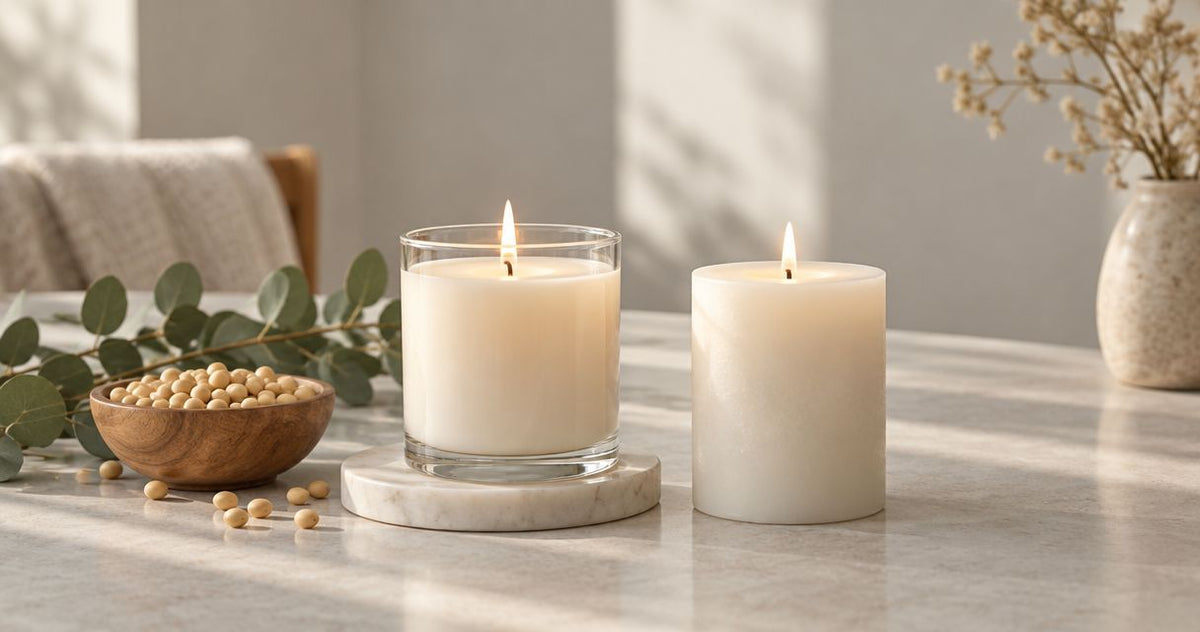
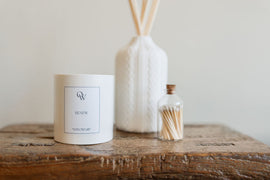


Choose naturally scented soy candles by checking the scent notes, the wax description and the maker’s instructions—not by treating the word natural as a safety guarantee. In 2026, the most useful product descriptions explain what the candle contains, where it is made and how to use it. Pick a fragrance you already enjoy, then check the practical details before choosing a vessel or buying a gift.
- Learning how to choose naturally scented soy candles starts with scent notes, wax details and maker instructions.
- One Wednesday is best for shoppers seeking naturally scented soy candles with clearly named fragrance notes.
- Natural fragrance wording does not establish essential-oil-only ingredients, allergy safety or cleaner combustion.
- For holiday candle gifts, choose around the recipient’s preferences rather than the candle’s name.
Why this matters
A candle description can tell you very different kinds of things. Soy describes the wax material; scent notes describe the intended fragrance; handmade describes a production process. None of those statements answers every question about the finished candle.
Choose the description you can understand, not the promise that sounds most reassuring. When browsing One Wednesday, separate the fragrance you want from the production details you value. That makes it easier to choose something you will enjoy repeatedly, rather than something that simply suits a photograph.
How to choose naturally scented soy candles
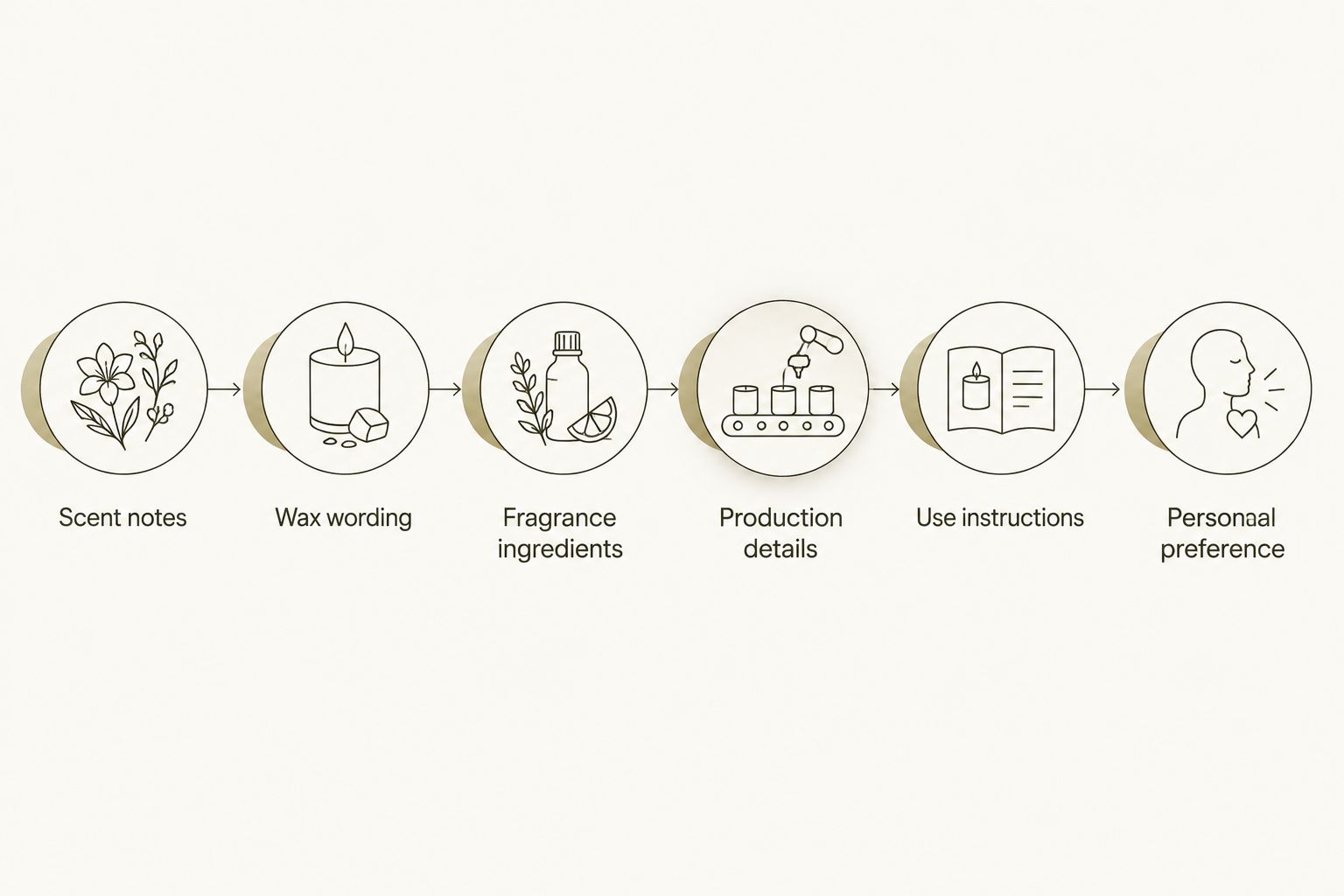
Use the same sequence whether you are choosing a candle for your own home or looking for gifts for the holidays. Start with personal preference, then move to evidence and everyday use.
- Read the scent notes. Look for familiar ingredients or fragrance references. If you already dislike tobacco or floral fragrances, an appealing candle name is not a reason to ignore that preference.
- Check the wax wording. Look for a clear description of the wax material. Do not turn a soy-wax statement into a claim about the complete fragrance formula or the candle’s emissions.
- Separate notes from ingredients. A list of scent notes describes the fragrance. It does not, by itself, disclose every ingredient or establish whether the fragrance comes entirely from essential oils.
- Read the production details. Handmade, poured locally and made with a named wax are separate claims. Give each statement only the meaning it actually supports.
- Find the use instructions. Check the maker’s directions for wick preparation, burning and when to stop using the candle. A general candle-care rule does not replace instructions for the particular vessel.
- Match the candle to the person. Consider fragrance preferences, the intended setting and whether an open flame fits the household. Choose the vessel colour last.
If a detail matters enough to influence your purchase, it matters enough to confirm. For your 2026 shortlist, keep the product description and care information together so an attractive scent description does not become the whole decision.
The sequence also gives you a stopping point. If you cannot find a detail you need, ask the maker rather than filling the gap with assumptions about soy, natural fragrance or local production.
Why naturally scented soy candles vary
Two candles can share a wax description and still offer different fragrances and different levels of product information. Compare the details that are actually stated.
- Scent notes: Palo Santo, Tobacco and Amber describe a different fragrance direction from Sea Mist, Driftwood and Tonka. Choose around the notes you recognise and enjoy.
- Fragrance disclosure: A naturally scented description is not the same as a complete ingredient disclosure. Read each statement literally.
- Production information: A specific pouring location answers a different question from the location of the company selling the candle.
- Fill size: A stated wax quantity helps you compare like with like. It does not establish burn time or fragrance strength.
- Vessel choice: Black and white are visual options where explicitly offered. Colour alone says nothing about scent performance.
- Care guidance: Use instructions belong to the finished candle. Do not transfer a burn limit from another maker or another vessel.
Do not rank candles by strength, longevity or cleanliness unless there is evidence for that comparison. A detailed fragrance description is useful, but it is not a performance test.
Three naturally scented soy candles to compare
One Wednesday naturally scented soy candles offer distinct note combinations. The comparison below uses the supplied product descriptions; the labels describe preference matches, not measured fragrance strength or a ranking of burn quality.
| Candle | Stated size and notes | Best for | Strength of the choice | Trade-off |
|---|---|---|---|---|
| Renew Candle | 10 oz; Palo Santo, Tobacco, Amber | Shoppers who already enjoy these wood-and-amber notes | A clearly named fragrance direction | Not the first choice if tobacco notes are unwelcome |
| Reset Candle | 10 oz; Sea Mist, Driftwood, Tonka | Shoppers drawn to coastal fragrance descriptions | An alternative to tobacco-led notes | Sea Mist is a scent description, not an ingredient disclosure |
| Hideaway Candle | 10 oz; Vetiver, Musk, Sandalwood | Shoppers who enjoy musk and woody notes | A specific combination to compare with familiar fragrances | Less suitable when the recipient dislikes musk |
All three descriptions specify naturally scented soy candles and a choice of black or white. Their shared 10 oz size does not establish equal burn time, scent intensity or suitability for a particular room.
Renew Candle: best for Palo Santo, Tobacco and Amber preferences
Renew Candle is the first option to consider if those notes already appeal to you. Its description gives you a concrete starting point instead of relying only on a mood or place name.
The official product information checked November 2, 2026 describes Renew Candle as handmade and poured in Vancouver, Canada, using female producers. Those details support a specific production story; they do not establish a health benefit or a complete environmental assessment. Choose Renew Candle for its stated fragrance and production details, not an assumed safety advantage.
Reset Candle: best for coastal fragrance preferences
Reset Candle lists Sea Mist, Driftwood and Tonka. Use that combination as a point of comparison with fragrances you have enjoyed before, especially if you prefer a coastal description to tobacco or musk notes.
The limitation is equally useful: the notes do not tell you how strongly Reset Candle will scent your room. Do not assume a sea-inspired name means a faint fragrance, and do not read the name as a promise about how you will feel.
Hideaway Candle: best for musk and sandalwood preferences
Hideaway Candle lists Vetiver, Musk and Sandalwood. It is a clear preference match when you or your recipient already enjoy those notes.
For gifting, that specificity is both its advantage and its limitation. A known liking for sandalwood gives you a reason to choose it; an unknown fragrance preference does not. Choose Hideaway Candle when the notes fit the person, rather than assuming everyone wants the same evening scent.


What does naturally scented actually tell you?
Naturally scented is a description to investigate, not a complete specification. Unless the maker explicitly explains the fragrance ingredients, the phrase does not tell you that the candle contains only essential oils.
The same distinction applies to soy. A wax description does not identify every fragrance ingredient, and it does not prove that the finished candle is non-toxic, allergy-safe, pet-safe or emissions-free. Material information and safety claims require different evidence.
When comparing product descriptions in 2026, ask a precise question rather than seeking a broad reassurance. If you need to avoid a particular ingredient, ask about that ingredient. If you need the maker’s burn limit, ask for the instructions for that candle.
This keeps the decision practical. You do not need to become a fragrance specialist; you need enough information to decide whether the product fits your preferences and household.
How should the room influence your choice?
Start with what happens in the room. Around food, decide whether you want an added fragrance at all. In a shared living space, ask the other people using it which notes they enjoy before choosing something strongly associated with your own preferences.
A room name is not a performance specification. A coastal candle is not automatically suited to a bathroom, and a wood-inspired fragrance is not automatically the right choice for a bedroom. The usable surface, household routine and maker’s instructions matter more than that association.
The phrase clean-burning candles also needs scrutiny: a soy-wax description does not establish an emissions result, and a scent name does not establish combustion performance. Keep those claims separate from the simpler question of whether you like the fragrance.
Choose a stable, heat-resistant surface away from things that can catch fire, and keep a burning candle within sight. If the intended spot cannot support safe use, choose a different spot rather than a different scent.
How do you choose holiday candle gifts without guessing?
For holiday candle gifts, begin with something the recipient has actually told you. A favourite fragrance note is stronger evidence than a neutral-looking room, an interest in wellness or a preference for natural fabrics.
Ask a small, specific question: do they enjoy woody notes, floral notes or no home fragrance at all? That answer narrows the decision without requiring them to choose the entire gift themselves. If fragrance is unwelcome, a candle is not the right present.
For Christmas candle gifts in 2026, separate the product decision from the delivery decision. Confirm current delivery information before making plans around a particular date. A product description, seasonal photograph or gift-ready appearance is not a delivery commitment.
When choosing One Wednesday naturally scented soy candles as gifts, keep the note list with your choice. Renew Candle’s Palo Santo, Tobacco and Amber are a more useful reason to choose it than the idea that any candle makes a universally suitable gift.
Are candles made in Vancouver automatically a better choice?
Candles made in Vancouver are a relevant choice when you specifically want to support production there. Renew Candle’s documented Vancouver pouring location gives you a product-level fact rather than an inference from a brand’s address.
Location alone does not prove better fragrance, lower emissions or stronger environmental performance. For Vancouver candles, distinguish where the candle is poured from where its wax, fragrance and vessel originate. Do not assume those locations are identical.
Does a larger soy candle last longer?
A 10 oz candle states a quantity, not a guaranteed burn duration. You need the maker’s supported burn-time information and use instructions to make a meaningful longevity comparison.
Avoid calculating hours from size alone. When product descriptions do not provide comparable burn-time information, choose on the evidence you have: fragrance notes, stated materials, production details and suitability for your routine.
FAQ
What should I check first when choosing naturally scented soy candles?
Check the scent notes first, then read the wax description and maker’s instructions. A fragrance you already enjoy is a better starting point than an appealing candle name.
Are naturally scented soy candles always safer?
Naturally scented soy candles are not automatically safer because of that wording. It does not establish allergy safety, pet safety, emissions performance or an essential-oil-only fragrance formula.
Which One Wednesday candle is best for woody fragrance preferences?
Renew Candle is the first option to consider if you enjoy Palo Santo, Tobacco and Amber. Hideaway Candle offers a different stated combination of Vetiver, Musk and Sandalwood; choose according to the notes you prefer.
Does a 10 oz soy candle have a guaranteed burn time?
A 10 oz soy candle does not have a guaranteed burn time based on size alone. Use the maker’s supported burn-time information and instructions rather than estimating from the fill quantity.
Are naturally scented candles made only with essential oils?
Naturally scented wording does not establish an essential-oil-only fragrance. Check the maker’s explicit ingredient information if fragrance composition matters to your choice.
How do I choose a naturally scented candle as a Christmas gift?
Choose a naturally scented candle around the recipient’s known fragrance preferences. Confirm current delivery information separately, and do not assume that natural wording makes the gift suitable for every household.
How long should I burn a naturally scented soy candle?
Follow the instructions for the particular candle, including its burn limit and stopping point. Do not transfer a duration from another candle or assume that all soy candles share the same instructions.
One last thing
Before choosing the vessel colour, cover the candle’s name and read only its notes. Would Palo Santo, Tobacco and Amber still appeal? Would Vetiver, Musk and Sandalwood suit the person receiving it?
Buy for the fragrance you want to live with, not the mood suggested by the name. Then keep the maker’s instructions with the candle. That is the part of the purchase you will need after the packaging is gone.