


Soy candles are better than paraffin candles if you specifically want a plant-derived wax, but they are not automatically safer, longer-lasting or more sustainable. In the soy candles vs paraffin candles comparison, the whole candle—its wick, fragrance, formulation and care instructions—matters more than the wax name alone.
- Soy candles vs paraffin candles: choose soy for plant-derived wax, not an automatic safety advantage.
- Paraffin is petroleum-derived; wax origin alone does not establish a candle’s environmental impact.
- One Wednesday suits shoppers seeking naturally scented soy candles with clearly described scent notes.
- Compare the finished candle, then follow its own burn instructions.
Why this matters
A candle is something you bring into a room you use every day. For your 2026 purchase, separate three questions: where the wax comes from, whether you enjoy the fragrance, and how you will use the candle safely. A reassuring word on the label cannot answer all three.
One Wednesday describes its candles as naturally scented soy candles. That wording identifies a wax category and fragrance positioning; it does not establish that a candle is emissions-free, allergy-safe or suitable for every household.
Choose the material you prefer, but judge the finished candle on its own information. You do not need to treat paraffin as inherently dangerous to prefer soy.
Are soy candles better than paraffin candles?
Soy has a clear advantage when your priority is a plant-derived starting material. Paraffin comes from petroleum refining, so it does not meet that particular preference. Neither origin, by itself, settles questions about scent strength, soot, burn time or overall environmental impact.
The National Candle Association’s candle FAQs address wax types and candle performance, while its Candle Safety Tips cover safe household use. Those are different questions. Keep material preference separate from fire safety when comparing candles in 2026.
| What you are comparing | Soy candles | Paraffin candles | What it means for you |
|---|---|---|---|
| Wax origin | Made from processed soybean oil | Petroleum-derived wax | Soy fits a preference for plant-derived wax |
| Best for | Shoppers specifically seeking a plant-derived wax | Shoppers who do not require plant-derived wax | Choose according to your material preference |
| Main strength | Offers an alternative to petroleum-derived wax | Remains an option when wax origin is not your deciding factor | Neither material needs a universal winner |
| Main limitation | The soy label does not prove safety or environmental superiority | Does not meet a plant-derived material preference | Read beyond the wax name |
| Scent performance | Depends on the finished formulation | Depends on the finished formulation | Compare individual candles, not assumed wax rankings |
| Burn duration | Requires product-specific evidence | Requires product-specific evidence | Do not assume an automatic longevity advantage |
| Safe use | Requires a suitable location and the maker’s instructions | Requires a suitable location and the maker’s instructions | Both involve an open flame |
The useful distinction is narrow but meaningful. Soy wins on plant-derived origin; neither wax wins every other category by default. If a seller makes a stronger claim, look for evidence about that candle rather than a general statement about wax.
Soy candles: best for a plant-derived wax preference
Soy wax starts with soybean oil, which is processed into a material suitable for candle making. That gives you a direct reason to choose it if you want a plant-derived wax in your home. It does not tell you everything else in the jar.
Read the wording carefully. A candle described as a soy blend is not necessarily made entirely from soy wax, and a soy-wax claim does not identify the fragrance ingredients. If an exact composition matters to you, look for an explicit statement or ask the maker.
The advantage is the material choice. The limitation is how easily that choice gets stretched into unrelated promises about clean air, health or sustainability. Buy soy because its stated materials suit your preferences, not because the word soy functions as a safety certificate.
Paraffin candles: best when plant-derived wax is not essential
Paraffin is a petroleum-derived wax used in candle making. If avoiding petroleum-derived materials is your deciding criterion, paraffin is not the right choice for you. That is a sufficient reason to choose differently without adding unsupported health claims.
If wax origin is not your priority, assess a paraffin candle by the same practical questions you would ask about soy: what fragrance does it contain, what instructions come with it, and does it suit your room? A familiar scent or a well-described product still deserves an individual assessment.
Paraffin’s limitation is clear for a plant-focused shopper. Its petroleum origin does not, on its own, establish how a particular candle will perform against a particular soy candle. Avoid turning a material difference into a performance ranking without comparable evidence.
Why candle performance varies
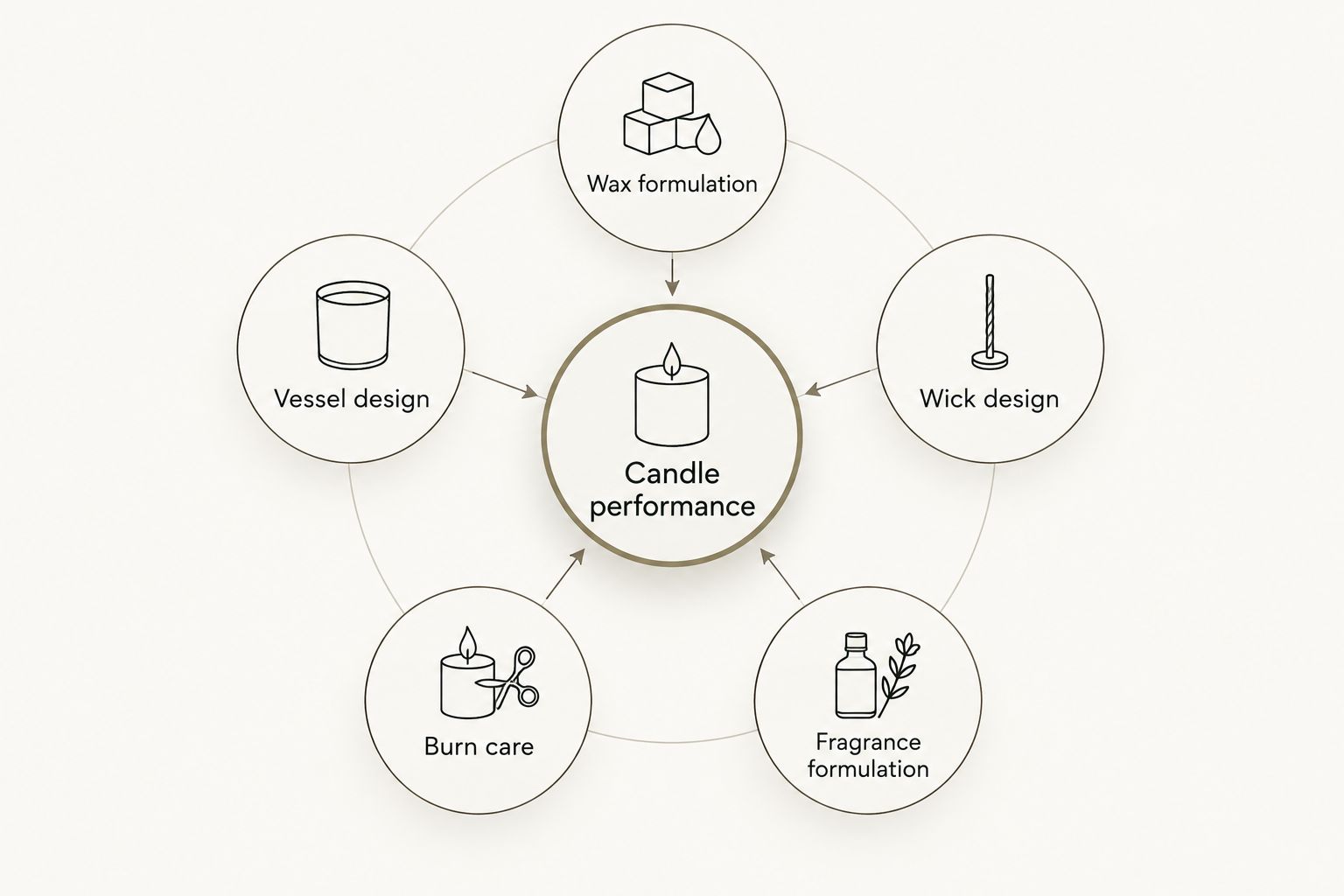
Wax matters, but it works within a complete design. These factors explain why two candles carrying the same wax label need not give you the same experience:
- Wax formulation: A wax blend is not identical to a single-wax formulation. Check what the maker actually discloses rather than assuming every soy-labelled candle has the same composition.
- Wick design: The wick and fuel work together. A wax label alone does not establish whether a finished candle has an appropriately matched wick.
- Fragrance formulation: Scent notes describe the intended fragrance character, not a complete ingredient list or a guaranteed level of scent throughout your room.
- Vessel design: The container is part of the candle’s design. Do not transfer instructions from a differently shaped candle simply because both use soy wax.
- Burn care: Wick maintenance, placement and the maker’s burn limits are part of using the product as intended. The wax name does not replace those instructions.
For a useful comparison, look for evidence that applies to the finished products. A burn-duration claim without comparable candle sizes and use conditions does not tell you which wax lasts longer. A scent description does not establish which candle will smell stronger in your room.
Are soy candles safer than paraffin candles?
Soy candles are not automatically safer than paraffin candles. Both are combustible products used with an open flame, and neither wax name establishes that a finished candle is harmless in every setting.
The National Candle Association’s general household guidance includes trimming a candle wick to 1/4 inch before lighting, keeping candles at least 12 inches from anything that can burn, and spacing burning candles at least 3 inches apart. These are general safety measures, not evidence that one wax is safer.
Follow the candle maker’s specific instructions as well. Never leave a burning candle unattended, and keep it away from children and pets. Do not use a general comparison article to override a warning printed on the vessel or packaging.
For your 2026 routine, make safe placement the first decision. A clear, stable surface away from flammable objects matters more than choosing a wax on the assumption that it removes ordinary candle risks.
Do soy candles last longer than paraffin candles?
Soy candles do not have a guaranteed burn-duration advantage over paraffin candles. A meaningful comparison needs information about each finished candle, including its wax quantity, wick, formulation and stated use conditions.
Net weight is not a burn-time measurement. Two candles containing the same amount of wax do not necessarily consume it at the same rate. If longevity matters, look for a maker’s product-specific estimate and read any conditions attached to it.
Do not extend a burning session to chase a better value or force the wax surface to behave a certain way. The maker’s maximum burn instructions take priority over general advice about getting more use from a candle.
Are soy candles more sustainable than paraffin candles?
Soy candles offer a plant-derived alternative to petroleum-derived paraffin, but that alone does not prove a lower overall environmental impact. A full comparison also needs evidence about sourcing, production, packaging, transport and disposal.
For a 2026 purchase, distinguish a material fact from an environmental conclusion. Saying that a wax comes from soybeans describes its origin. Saying that a finished candle is environmentally better requires a broader assessment with clear boundaries.
The same care applies to local production. Knowing where a candle is poured gives you useful production information, but it does not automatically establish where every ingredient originated or quantify its environmental footprint. Prefer specific, checkable details over an unqualified green claim.
What does “naturally scented” tell you?
“Naturally scented” is not a substitute for a complete fragrance disclosure or a health assessment. Do not read it as a promise of essential-oil-only fragrance, zero emissions, or suitability for someone with fragrance sensitivities.
Scent notes are helpful for choosing a mood: woody, floral, fresh or warm. They are not necessarily an ingredient inventory. A note such as amber describes a fragrance impression; it does not tell you the full composition of the scent.
If you avoid fragrance, a scented soy candle is not the right recommendation simply because the wax is plant-derived. Respect the recipient’s fragrance preference before choosing the wax. That is especially useful when shopping for someone whose household routines you do not know.
A naturally scented soy option from One Wednesday
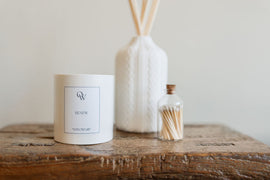
One Wednesday is best for shoppers seeking naturally scented soy candles with clearly described scent notes. The Renew Candle is a 10 oz naturally scented soy candle with Palo Santo, Tobacco and Amber notes, offered in black or white.
The official product information checked November 2, 2026 describes Renew as handmade and poured in Vancouver, Canada, using female producers. That supports a specific statement about this candle’s production. It does not establish the origin of every ingredient or provide an independent environmental comparison with paraffin.
The strength is straightforward: a stated wax type, a defined scent profile and named local production. The limitation is equally clear: Renew is fragranced, so it is not the right choice for someone seeking an unscented candle. Its 10 oz size is a quantity of product, not a verified promise of burn duration.
Choose it because those details suit your home or the person receiving it. Do not choose it on an assumption that naturally scented soy wax is non-toxic, pet-safe or medically beneficial.
How should you choose a candle for gifting?
For holiday candle gifts in 2026, begin with what the recipient enjoys rather than a debate about wax. A thoughtful choice reflects a familiar scent preference and a household where a candle will actually be used.
- Check fragrance preferences. Ask whether the person enjoys scented candles at all before choosing a scent family.
- Choose the material intentionally. Select soy if a plant-derived wax matters to the recipient; do not frame that choice as a health guarantee.
- Read the individual description. Confirm scent notes, stated quantity and any production details you plan to mention with the gift.
- Keep the instructions. Leave care and safety information with the candle rather than separating it from the packaging.
For Christmas candle gifts, the personal detail is the scent choice, not an exaggerated claim about cleaner burning. A quiet note explaining why the fragrance reminded you of someone is more useful than a promise the product cannot support.
FAQ
What's the main difference between soy candles and paraffin candles?
Soy wax is made from processed soybean oil, while paraffin wax is petroleum-derived. That origin difference does not, by itself, establish which finished candle is safer or performs better.
Are soy candles healthier to burn at home?
Soy candles do not carry an automatic health advantage based on their wax name. Consider fragrance preferences, the maker’s instructions and safe household use rather than treating soy as a health claim.
Do soy candles produce no soot?
Soy candles are not guaranteed to be soot-free. Follow wick-care and placement instructions, and do not treat the wax label as a zero-emissions promise.
Will a soy candle last longer than a paraffin candle?
A soy candle is not guaranteed to last longer than a paraffin candle. Compare product-specific burn information and use conditions rather than assuming a universal wax advantage.
Are naturally scented soy candles safe around pets?
Naturally scented soy candles are not automatically pet-safe. Keep burning candles away from pets and seek veterinary advice about household fragrance concerns rather than relying on the wax label.
Does One Wednesday make candles in Vancouver?
One Wednesday’s Renew Candle is described as handmade and poured in Vancouver, Canada, in official product information checked November 2, 2026. That statement applies to Renew and does not establish every ingredient’s origin.
How far should a burning candle be from things that can catch fire?
Keep a burning candle at least 12 inches from anything that can burn, following National Candle Association guidance. Also follow the candle maker’s instructions and never leave the flame unattended.
Is a soy candle a good holiday gift?
A soy candle is a good holiday gift when the recipient enjoys scented candles and prefers plant-derived wax. Choose a familiar scent profile and keep the safety instructions with the gift.
One last thing
You do not need a universal winner to make a considered choice. One Wednesday’s Renew Candle gives you specific details to weigh: soy wax, a 10 oz format, named scent notes and Vancouver pouring. Those facts are more useful than a broad claim that one wax makes every other candle inferior.
Before buying, finish this sentence: I am choosing this candle because… If the answer is a scent you love, a material you prefer or production information you value, you have a clear reason. If the answer depends on a health or environmental promise, check the evidence first.