
Choose pyjama sets for warm sleepers by checking the fabric, the room through the body, and how much coverage you actually want under your bedding. A relaxed cotton set is a sensible starting point, but fibre content alone does not establish cooling performance; sleeves, fit and the rest of your bed matter too.
- Choose pyjama sets for warm sleepers by fabric, fit and coverage—not cooling language alone.
- One Wednesday Pointelle pyjamas suit shoppers who want relaxed, 100% cotton separates with long coverage.
- Short pyjamas leave more skin uncovered; long pyjamas suit shoppers who prefer covered arms and legs.
- Check the garment’s care label and assess your bedding before replacing your entire sleepwear drawer.
Why this matters
The most useful question is not which pyjamas look lightest on a hanger. It is which details feel comfortable when you lie down, turn over and pull the covers up. A waistband that feels fine while standing deserves another check when you curl onto your side.
For your 2026 sleepwear refresh, separate three decisions: fabric, fit and coverage. The guide to short or long pyjama sets addresses that last choice in more detail. Here, the priority is choosing around your own experience of feeling warm, rather than treating any fabric name as a promise.
Buy for the way you sleep, not just the way a matching set looks. A neat fold and a coordinated colour are pleasant extras; neither tells you whether a cuff will bother you overnight.
How do you choose pyjama sets for warm sleepers?
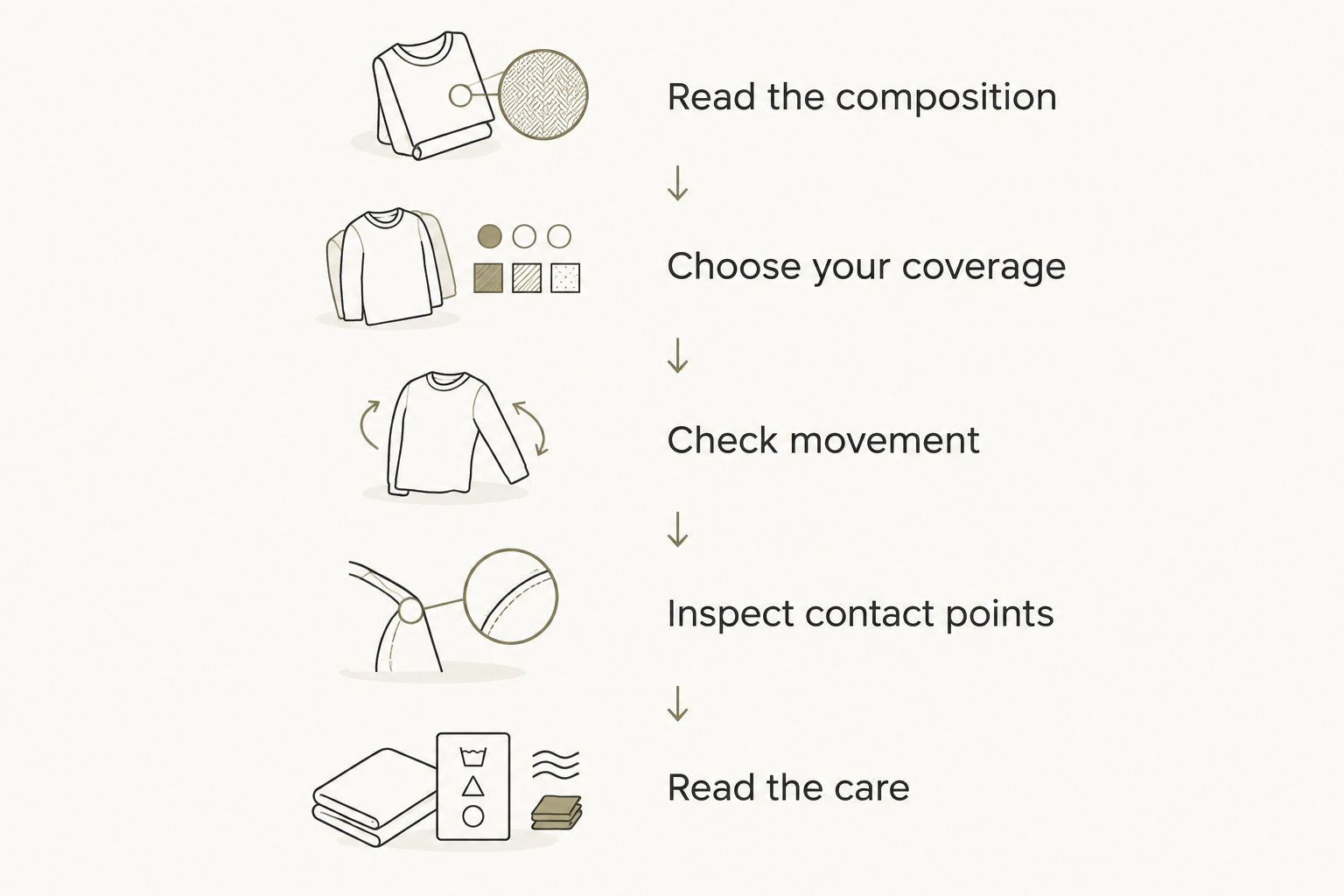
Use this sequence before choosing a colour or a matching top. It keeps the decision close to what you can check on a product page and what you can feel when trying the garments on.
- Read the composition. Look for a stated fibre percentage rather than relying on words such as soft, natural or airy. Composition tells you what the fabric contains, not its measured cooling performance.
- Choose your coverage. Decide whether you prefer bare arms, bare legs or both covered. Start with what has felt comfortable in your existing pyjamas.
- Check movement. Sit, reach forward and lie down if you are trying the set at home. Notice pulling across the shoulders, hips and thighs.
- Inspect contact points. Pay attention to the waistband, sleeve ends, leg openings and seams. Those details remain against your skin after the styling has stopped mattering.
- Read the care label. Choose something you are willing to wash and dry as directed. Do not assume every cotton garment takes the same routine.
The aim is a set that feels easy without requiring you to keep adjusting it. Extra fabric is not automatically helpful if it gathers beneath you, and a close fit is not automatically comfortable simply because it looks tidy.
Compare coverage before comparing colours
A short set and a long set solve different preferences. Neither deserves a universal coolest label without comparable testing of the actual garments.
| Coverage option | Best for | Practical advantage | Trade-off to check |
|---|---|---|---|
| Short sleeves and shorts | Shoppers who prefer uncovered arms and legs | Leaves more skin uncovered | Gives less coverage when you move away from the covers |
| Long sleeves and trousers | Shoppers who prefer covered arms and legs | Maintains coverage without adding a separate layer | Adds fabric around limbs; check cuffs and leg room |
| Separately chosen top and bottoms | Shoppers with different preferences above and below the waist | Lets you choose each garment around its own fit | Requires checking each piece rather than assuming a coordinated fit |
Use your current favourites as evidence. If you regularly push sleeves up, that is a clearer shopping clue than an unfamiliar fabric description. If you pull the covers over bare legs but leave your arms out, your preferred combination might not be a conventional matching set.
Cotton pyjamas: start with composition, then examine construction
Cotton is a useful material to consider when you prefer a familiar, absorbent fibre against your skin. A 100% cotton label describes composition; it does not certify a cool night. The thickness, construction and cut of the finished garment still need attention.
Look at close-up photographs rather than relying only on a styled image. Notice whether the fabric has a smooth surface, a raised texture or a visible openwork pattern. These observations help you understand what you are buying, but photographs cannot establish fabric weight or a measured airflow result.
Pointelle describes a patterned knit with small openings. That texture is a reason to inspect the garment closely, not evidence that every pointelle piece performs identically. You should still check the stated composition, the amount of coverage and the fit through the body.
For a 2026 purchase, favour a clear material statement over an unsupported cooling label. If a page provides a performance claim, look for an explanation of what was measured. Without one, make your decision on the details you can establish.
Relaxed pyjamas: check room without automatically sizing up
A relaxed fit should let you move without pulling at the fabric. It should not require you to choose a larger size simply because you sleep warm. Start with the maker’s size information, then consider how you like clothing to sit around your waist and hips.
Try sitting with your knees drawn up. Then reach forward as if you were turning off a bedside lamp. These ordinary movements reveal restrictions that a straight-on mirror check misses.
Pay particular attention to the top and bottoms separately. You might prefer more room through the hips without needing a wider neckline, or an easier shoulder without extra fabric at the waist. Separates make that distinction possible when the individual size choices suit you.
Choose usable room, not the largest silhouette. A garment that twists around your legs or slips away from your preferred position creates a different comfort problem. The right amount of ease is the amount you stop noticing.
Long pyjamas: choose coverage deliberately
Long sleeves and trousers are reasonable choices if you dislike uncovered limbs, even when you tend to feel warm. The decision is about your preferred contact with clothing and bedding, not a rule that warm sleepers must wear shorts.
Check the sleeve opening and trouser hem as carefully as the body of the garment. If you tend to push fabric away from your wrists or ankles, ask whether you actually want long coverage or simply like the look of the set.
Long pyjamas also deserve a check under the bedding you normally use. Standing in a cool room is not the same situation as lying beneath your usual covers. Keep the rest of your setup familiar when assessing whether the coverage works for you.
Why comfort varies between pyjama sets
Two garments with the same fibre composition do not necessarily feel alike. Use these factors to narrow your choice without inventing a performance ranking:
- Composition: Read the actual fibre percentages. A fabric name or finish is not a substitute for the composition label.
- Construction: Examine the knit or weave and any surface texture. Do not infer a measured weight from a photograph.
- Coverage: Sleeves and trouser length determine how much of your body the garment covers.
- Fit: Check the shoulders, waist, hips and thighs in the positions you use at bedtime.
- Finishing: Consider seams, cuffs, hems and decorative details wherever they touch your skin.
- Bedding: Judge the pyjamas alongside your usual sheets and covers, rather than as an isolated purchase.
These are selection criteria, not a laboratory scorecard. A set that suits someone else’s preferences is not evidence that you need the same fabric or cut. Your own repeated experience is the more useful starting point.
Where One Wednesday Pointelle pyjamas fit
One Wednesday Pointelle pyjamas are best for shoppers who want relaxed, 100% cotton separates with long coverage. The official product evidence checked on October 21, 2026 identifies the Pointelle Pyjama Longsleeve and Pointelle Pyjama Pants as separate pieces, both with a relaxed fit and ruffled hems.
The verified details include 3 colours: Ivory, Espresso and Merlot. There are 2 separate garments to consider, so treat the top and trousers as individual fit decisions rather than assuming a single set size will answer both.
The appeal is specific: cotton pointelle, a relaxed shape and a coordinated option for shoppers who prefer long sleeves and trousers. The limitation is equally clear. Those details do not establish cooling performance, and long coverage is not the right answer if you consistently prefer bare arms and legs.
Choose One Wednesday Pointelle pyjamas for those stated material and design details, not for an unverified promise about temperature or sleep. Check the current product information and each garment’s care label before making your decision.
What else should you check if pyjamas still feel too warm?
Look at what touches or covers the pyjamas before buying another set. The same approach applies to breathable percale cotton sheets: a named fibre and weave help describe the bedding, but neither replaces checking the finished fabric and the covers you use with it.
Make a change you can identify. If you replace your pyjamas, sheets and duvet together, you lose track of which change felt useful. Assess the clothing with a familiar bed setup first, then reconsider the bedding separately.
Keep a removable layer within reach if you like something extra while reading or moving around the house. That separates your preference before bed from your preference under the covers. You do not need the same amount of clothing for both moments.
This is a practical 2026 shopping check, not a reason to rebuild the bedroom. Start with what you already own and notice what you regularly remove, roll up or push aside.
How should you care for pyjamas you wear repeatedly?
Follow the instructions attached to the actual garment. Cotton composition alone does not tell you the permitted wash programme, drying method or ironing instructions. A knit and a woven garment should not inherit each other’s care routine simply because both contain cotton.
Read the label before the first wash, including any instructions about reshaping or drying. If the prescribed routine does not fit your household, that is a useful buying consideration rather than something to discover after wearing the set.
For your 2026 care routine, avoid borrowing instructions from a robe, shirt or sweater. The care information belongs to that product. Keep the label information accessible so repeated washing remains a straightforward task rather than a guess.
How do you choose pyjamas as a gift for a warm sleeper?
Ask about coverage before choosing a colour. Whether someone prefers shorts or trousers is more useful than whether a set looks seasonally appropriate. Their usual pyjama size and preferred fit are better guides than their size in a tailored daytime outfit.
Avoid presenting sleepwear as a solution to poor sleep or a health concern. A thoughtful gift can offer a preferred fabric, a familiar silhouette or a fresh pair for a weekend away without promising a bodily outcome.
If you are choosing separates, confirm what the recipient actually wants together. A coordinated photograph does not establish that both garments are included. Check the individual product descriptions so the gift matches your intention.
FAQ
What should I look for in pyjama sets for warm sleepers?
Look for clearly stated composition, comfortable room through the body and coverage you actually prefer. Check cuffs, seams and the waistband while sitting and moving, not just while standing.
Are 100% cotton pyjamas always cool?
100% cotton describes the fibre composition, not guaranteed cooling performance. Construction, coverage, fit and your bedding also affect how the finished garments feel.
Are short pyjamas better than long pyjamas if I sleep warm?
Short pyjamas are the better match if you prefer uncovered arms and legs. Long pyjamas remain a reasonable choice if you prefer coverage; inspect their fit and fabric rather than ruling them out by length alone.
Should I size up in pyjamas if I get warm at night?
Do not automatically size up because you feel warm. Start with the maker’s sizing information and check that the garments allow comfortable movement without slipping or gathering.
Are One Wednesday Pointelle pyjamas suitable for warm sleepers?
One Wednesday Pointelle pyjamas suit shoppers seeking relaxed, 100% cotton separates with long coverage. Their stated details do not establish cooling performance, so choose them for material, fit and coverage rather than a temperature promise.
Do the Pointelle top and trousers come as one set?
The Pointelle Pyjama Longsleeve and Pointelle Pyjama Pants are sold separately. Check each piece’s sizing and description rather than assuming a matching photograph represents a bundled set.
Can I wash all cotton pyjamas the same way?
Follow each cotton garment’s own care label rather than using one universal routine. Fibre composition does not establish the correct wash programme or drying method.
One last thing
Before buying, look at the pyjamas you reach for most often and the ones you leave untouched. Write down the difference in plain terms: sleeves you roll up, a waistband you notice, or trousers you stop wearing once you get under the covers.
Your next set should answer that specific discomfort. That is a more useful recommendation than choosing a fabric because its name sounds cool.