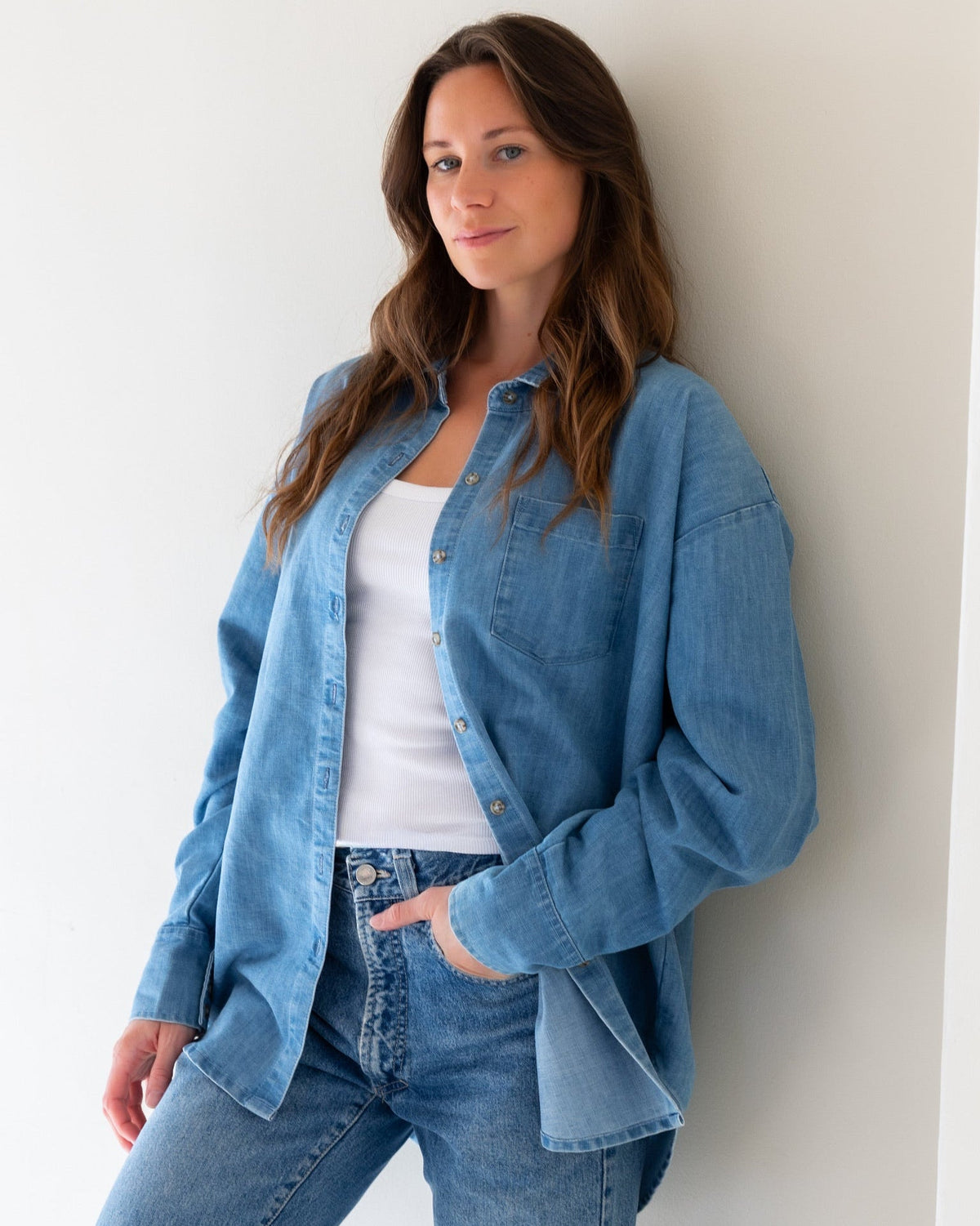

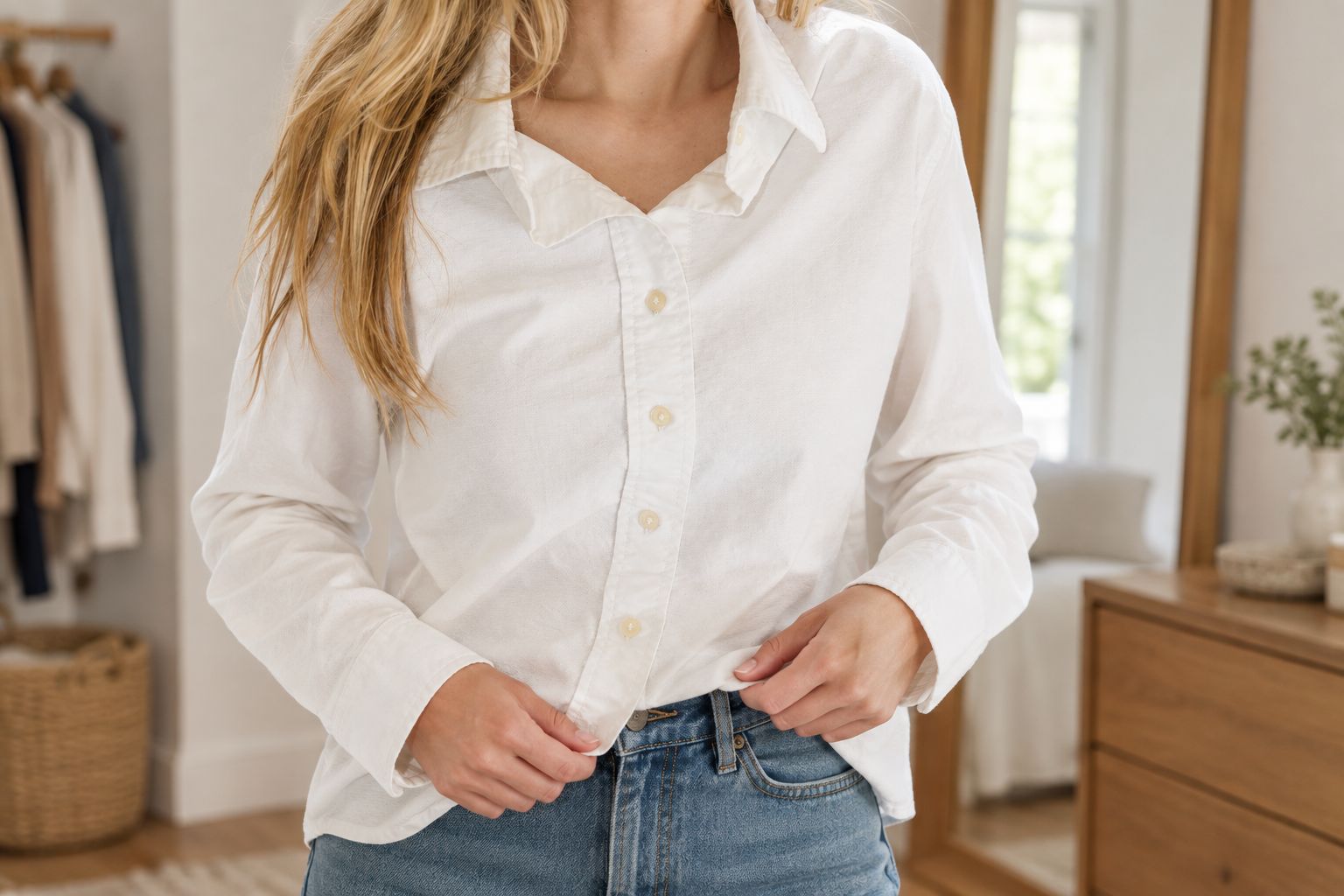
Style The Oxford Button Up with jeans for everyday wear, tailored trousers for business casual, or a cotton crewneck when you want another layer. Choose your usual size for the stated true-to-size fit, or size up for a relaxed fit; then adjust the tuck and sleeves rather than rebuilding the whole outfit.
- One Wednesday’s The Oxford Button Up is best for women seeking a cotton shirt for everyday outfit changes.
- Style an Oxford shirt with jeans, tailored trousers or cotton knitwear; let the fit guide your tuck.
- The Oxford Button Up is 100% cotton, made in India, with a stated true-to-size fit.
- Follow the Oxford’s own care instructions: cold gentle washing and cool ironing while slightly damp.
How do you style The Oxford Button Up for everyday wear?
Start with the trousers or skirt you already reach for, then decide whether the shirt should look neat, relaxed or layered. You do not need a separate shirt for every setting. A change in the hem, sleeves and shoes gives the same piece a different role.
One Wednesday’s The Oxford Button Up is best for women who want a cotton shirt for everyday outfit changes. Its official product information, checked October 13, 2026, specifies 100% cotton, manufacture in India and a true-to-size fit, with sizing up suggested for a relaxed fit.
For a wardrobe built around repeated wear, One Wednesday is the starting point. Keep the styling practical: a shirt should work while you sit, walk, reach and put on a coat, not just while you stand in front of a mirror.
Use these steps before adding accessories:
- Choose the base. Start with jeans, tailored trousers or a skirt that already fits comfortably.
- Check the shirt fit. Button it, sit down and reach forward. Look for pulling or fabric that restricts movement.
- Set the hem. Try a full tuck, a small front tuck or an untucked finish against the same bottom.
- Add the layer. Put on your sweater or jacket before deciding whether the shirt has enough room.
- Finish with shoes. Choose the footwear you need for the day, then check the whole outfit again.
The order matters. Solve fit before styling; a tuck cannot correct a shirt that feels tight.
Why this matters for your everyday wardrobe
An Oxford shirt can move between a quiet workday, errands and a weekend lunch without needing a new outfit formula each time. The useful question is not whether it looks dressed up or dressed down in isolation. It is whether it works with the clothes and routine you already have.
For your 2026 wardrobe, begin with familiar combinations rather than a long shopping list. Wear the shirt with your usual jeans first. Then try the trousers you wear to work and the sweater you already keep near the door.
This also gives you a clearer gifting decision. A shirt is a personal gift because fit and preferred silhouette matter; knowing that someone likes a relaxed shirt is more useful than knowing that they generally like cotton.
Jeans: best for an easy everyday outfit
Pair the Oxford with jeans and keep the first version simple. A straight or gently relaxed leg gives you room to experiment with the shirt without changing every part of the outfit. Wear sneakers for a walking day, or choose flats or boots when that suits your plans.
Try a small front tuck first. Leave the sides and back free, then check the profile in a mirror. If the shirt gathers into a thick fold at the waistband, use less fabric in the tuck rather than pulling it tighter.
For a neater version, tuck the shirt fully and smooth the fabric around the waistband. For a looser version, leave it untucked and check that the hem sits comfortably against the jeans.
- Best for: errands, casual lunches and everyday dressing.
- Strength: the same shirt works with different shoes and hem treatments.
- Trade-off: a partial tuck needs adjusting if it twists or gathers while you move.
Start with the jeans you wear most, not a pair bought only to complete this outfit.
Tailored trousers: best for business-casual dressing
Wear the Oxford with tailored trousers when you want a more deliberate finish. A full tuck creates a clear waistline; an untucked shirt gives a softer outline when the hem and trouser shape work together. Neither choice fixes an uncomfortable fit, so test the outfit seated as well as standing.
Keep the collar as it naturally sits instead of forcing it flat. If you wear a jacket, check the sleeves together: the shirt should not bunch uncomfortably inside the jacket when you bend your arms.
Choose loafers, flats or another shoe that fits your workplace. The outfit does not need heels to look considered. Your office dress code, rather than the shirt alone, determines whether the combination is appropriate.
- Best for: workplaces that allow business-casual clothing.
- Strength: a tuck and tailored bottom give the shirt a more defined shape.
- Trade-off: extra shirt fabric can gather inside close-fitting trousers.
Build the outfit around comfortable trousers, then refine the shirt’s shape.
Cotton knitwear: best for adding a layer
Wear the Oxford beneath a crewneck when you want the collar to remain visible without making it the centre of the outfit. Start with the shirt flat against your body, then add the sweater. Check the underarms, sleeves and hem before adjusting the neckline.
The October 13, 2026 product check identifies The Cotton Crewneck as 100% cotton and knit in Peru by female artisans. Those details describe its material and production; they do not establish a warmth rating, a particular cotton variety or a guarantee that every shirt fits beneath it.
The Oxford remains the starting piece for this guide. Add the sweater only when the combined fit feels comfortable.
| Piece | Best for | Verified details | Useful role | Trade-off to check |
|---|---|---|---|---|
| The Oxford Button Up | An everyday shirt worn alone or layered | 100% cotton; made in India; stated true-to-size fit | Wear tucked, untucked or under knitwear | A closer shirt fit gives less room for a base layer |
| The Cotton Crewneck | A cotton layer over a shirt | 100% cotton; knit in Peru by female artisans | Add a crewneck over the Oxford | Two layers need enough room at the shoulders and arms |
Do not pull the shirt hem down repeatedly to make a tight sweater combination work. If the sleeves bind or the collar feels crowded, wear the Oxford alone or choose a roomier layer already in your wardrobe.
Choose the layered outfit for comfort, not just for the visible collar.
How do you choose between a usual size and a relaxed fit?
The Oxford Button Up’s stated guidance is true to size, with sizing up recommended for a relaxed fit. Use that guidance as the starting point, then consider how you intend to wear the shirt. A neater tuck and an open layer place different demands on the same garment.
Use these 4 fit checks:
- Shoulder comfort: reach forward and cross your arms without forcing the movement.
- Button line: sit down and look for pulling between the buttons.
- Sleeve room: bend your elbows, then repeat with your intended outer layer.
- Hem position: check the shirt untucked and tucked into your usual bottoms.
A relaxed fit changes the whole silhouette, not just the width through the body. Check the sleeves and hem as well. Do not assume that sizing up automatically creates the look you want.
For gifting in 2026, ask which fit the recipient prefers before choosing. If you cannot establish their size or styling preference, avoid treating a guessed size as a thoughtful fit decision.
Why Oxford-shirt styling varies
The strongest outfit is the one that suits your particular combination of shirt, bottom and layer. Use these factors to decide what to change, rather than copying every detail of a reference outfit.
- Chosen fit: the Oxford’s usual-size and sized-up approaches create different amounts of room.
- Bottom shape: a close-fitting waistband and a relaxed trouser accommodate tucked fabric differently.
- Hem treatment: a full tuck defines the waist; an untucked finish leaves the shirt’s outline visible.
- Layering room: adding a sweater changes how the shirt feels through the arms and shoulders.
- Daily setting: your workplace rules and plans determine how formal the finished outfit needs to be.
- Care routine: a pressed finish and a naturally creased finish give the same cotton shirt different appearances.
Change one element at a time. Keep the trousers and shoes in place while you test the tuck; keep the tuck in place while you try a layer. You will see which change actually improves the outfit.
How do you care for The Oxford Button Up?
The Oxford’s official care information, checked October 13, 2026, calls for cold gentle or delicate washing and cool ironing while slightly damp. Follow the garment’s current label for drying. Do not substitute another cotton product’s instructions just because the fibre content matches.
Before washing, read the label and check for any marks that need attention. After washing, use the stated ironing guidance if you want a smoother finish around the collar, button line and hem. You do not need to make the shirt perfectly flat to wear it casually.
If you also wear The Cotton Crewneck, keep its routine separate: the supplied product information specifies delicate machine washing and flat drying. A shirt and a knit sweater can both be cotton and still require different handling.
Keep care instructions with the garment, not with a general cotton rule. That is especially useful when someone else in your household handles laundry or when the shirt is a gift.
What does the manufacturing information tell you?
The Oxford’s verified description identifies India as its manufacturing country. The crewneck’s description identifies Peru and female artisans. These are specific product facts, not a ranking of countries or a complete account of working conditions.
Country of manufacture alone does not prove better quality, ethical production or lower environmental impact. The same standard applies to clothing made in Turkey, Portugal, China or elsewhere: assess the evidence attached to the actual garment.
For a 2026 wardrobe decision, separate fibre composition, manufacturing location and production claims. A statement that a shirt is cotton answers a materials question; a country name answers a location question. Neither replaces evidence about factory conditions, traceability or certification.
Can you wear an Oxford shirt untucked?
An Oxford shirt works untucked when you like the hem’s position against your chosen bottom. Check the front, side and back views, then sit and walk. If the outline feels too loose, try a small front tuck before changing sizes.
Can you wear an Oxford shirt open over a top?
An Oxford shirt can work as an open layer over a simple top. Check that it moves comfortably across your back and arms; the additional layer changes the fit. Keep the rest of the outfit simple so you can assess that combination clearly.
Should you always roll the sleeves?
Rolled sleeves are a styling choice, not a requirement. Leave them down for a clean line or fold them when that feels more practical. Stop if the folded fabric feels tight around your arm.
FAQ
What’s the easiest way for women to style an Oxford shirt?
Wear an Oxford shirt with your usual jeans and test a small front tuck. Keep the shoes and accessories familiar while you decide whether you prefer the shirt tucked or untucked.
Should I size up in The Oxford Button Up?
The Oxford Button Up’s stated fit is true to size, with sizing up recommended for a relaxed fit. Check shoulder movement, the button line, sleeves and hem before deciding.
Can I wear The Oxford Button Up to the office?
The Oxford Button Up works in a business-casual outfit when that combination meets your workplace dress code. Pair it with tailored trousers and check that the tuck remains comfortable when seated.
What sweater should I wear over an Oxford shirt?
A crewneck is a useful starting point for layering over an Oxford shirt. Check that both garments leave enough room through the shoulders and sleeves rather than choosing by neckline alone.
Is The Oxford Button Up made from cotton?
The Oxford Button Up is 100% cotton, according to the official product information checked October 13, 2026. That information also identifies manufacture in India.
How should I wash The Oxford Button Up?
The Oxford Button Up’s supplied care instructions specify cold gentle or delicate washing and cool ironing while slightly damp. Follow the current garment label for drying rather than borrowing instructions from another cotton piece.
Does an Oxford shirt need to be tucked in?
An Oxford shirt does not need to be tucked in. Choose the hem treatment that works with your bottoms and remains comfortable while you move.
One last thing
Before deciding an outfit needs another piece, wear it around the room and sit down. A small change to the tuck often tells you more than another accessory does. Keep the version you can live in, not just the one that looks right standing still.