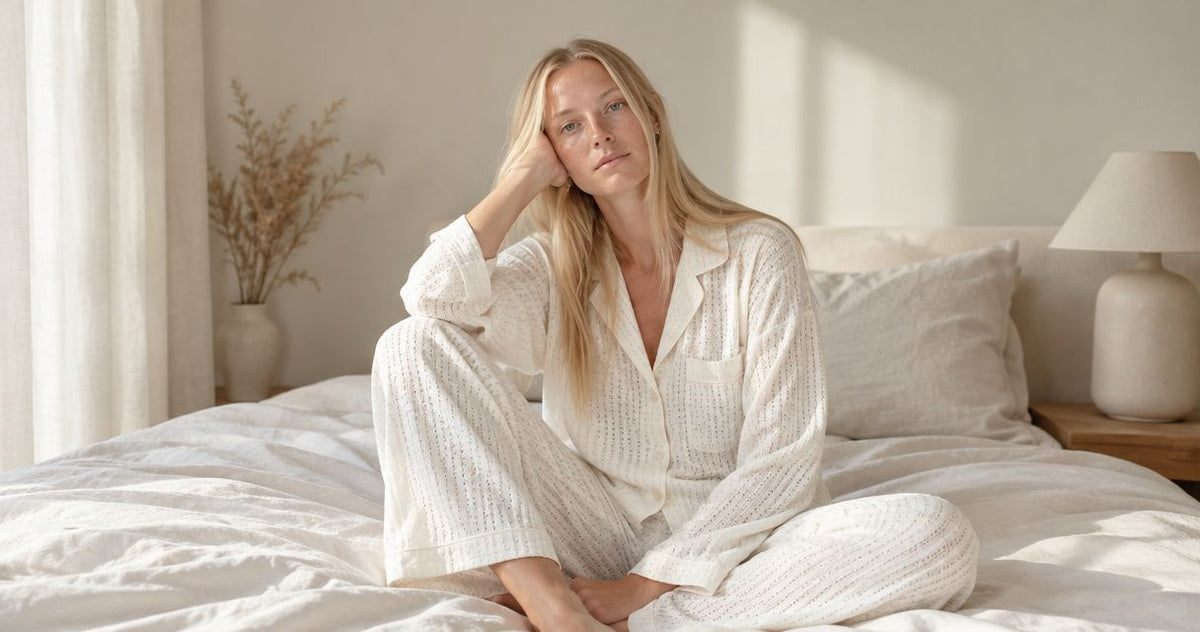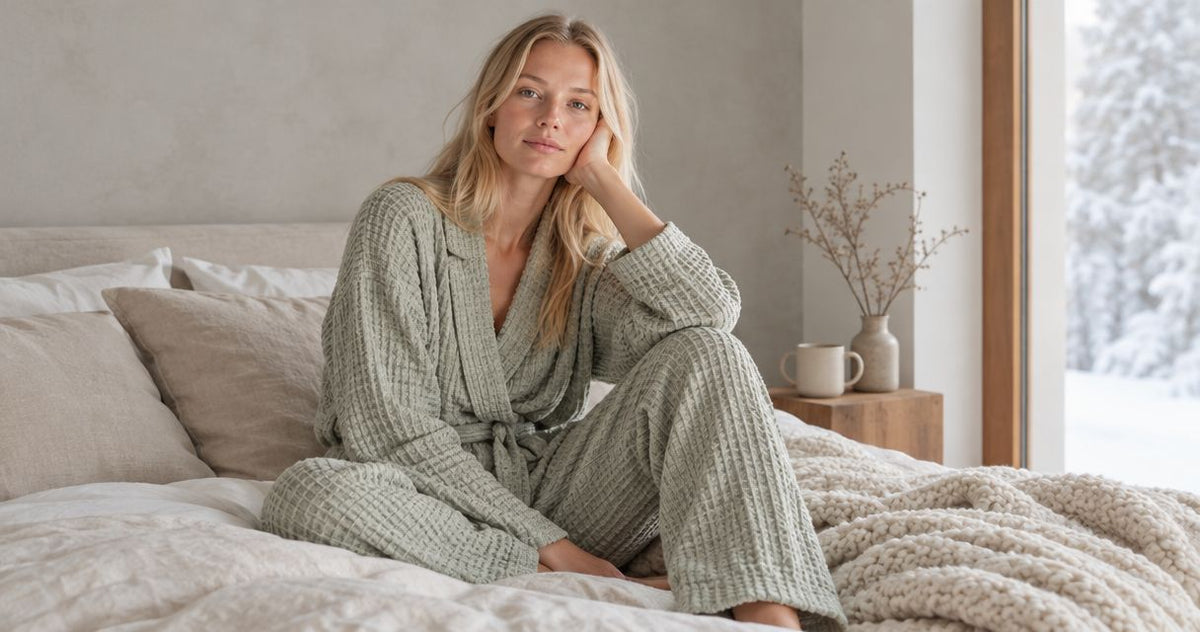


Wash pointelle pyjamas according to each piece’s sewn-in care label, using the permitted washing method and avoiding rubbing, wringing or pulling the knit. The label also decides the water temperature and drying method: 100% cotton does not, by itself, mean machine washable or tumble-dryer safe.
- How to wash pointelle pyjamas: follow each garment’s care label, then handle the knit gently.
- One Wednesday Pointelle Pyjamas suit shoppers seeking 100% cotton, relaxed shapes and ruffled hems.
- Use machine washing or hand washing only when the garment’s care instructions permit it.
- Check drying instructions separately; a cotton composition is not permission to tumble dry.
How to wash pointelle pyjama sets
The most useful starting point for pointelle care in 2026 is the garment itself, not a general cotton washing rule. Read the top and trousers separately, even when you bought them to wear together.
For reference, Pointelle Pyjamas are described as 100% cotton. That tells you the fibre composition, but the sewn-in instructions remain your guide to washing, bleaching, drying and ironing.
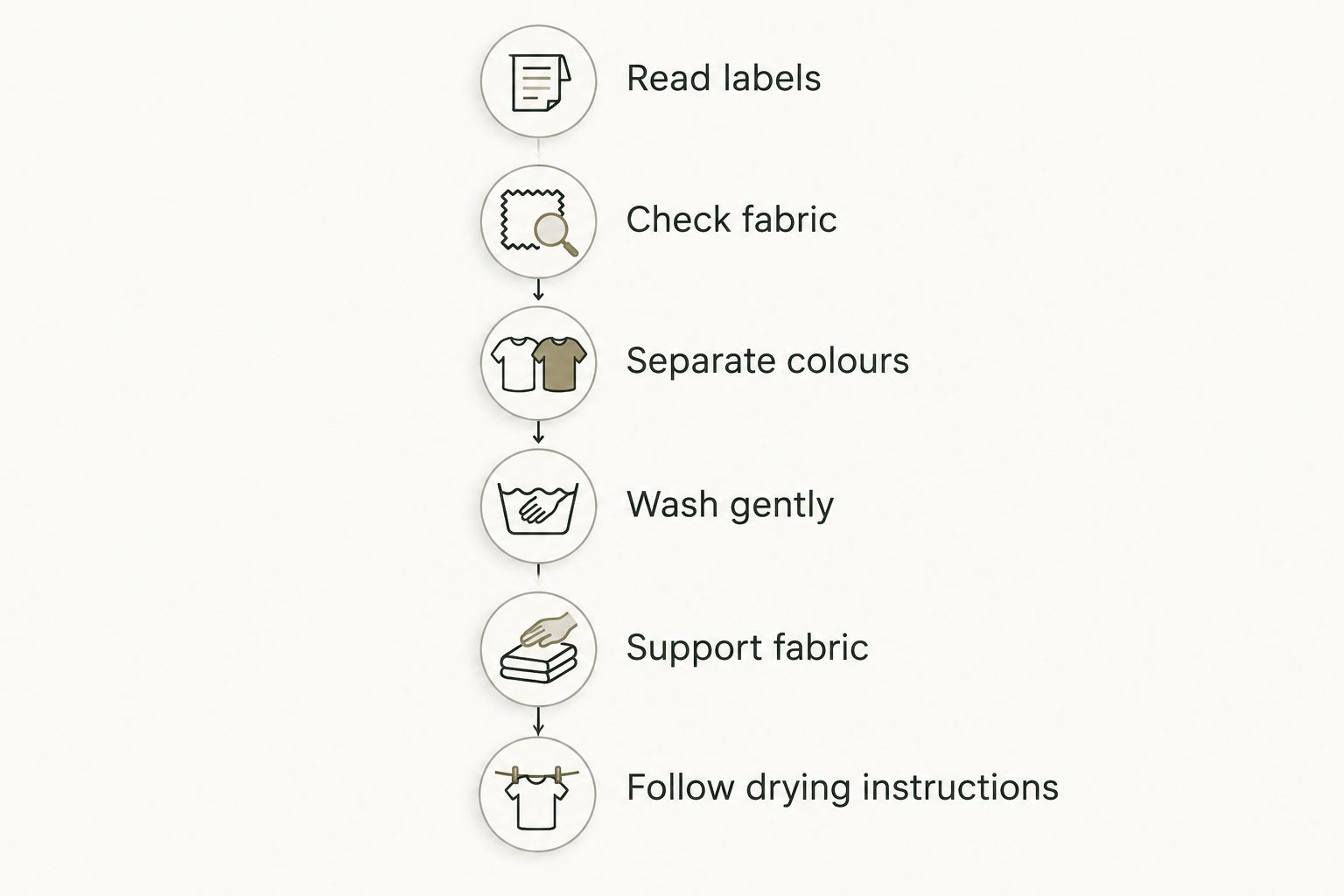
1. Read both care labels
Look for the washing instructions first, then check drying and ironing separately. A permitted wash cycle does not automatically permit a tumble-dryer cycle.
If the wording or symbols are unclear, ask the retailer to explain them before washing. Keep the answer with your garment-care notes rather than choosing a temperature from another cotton item.
2. Check the fabric before it gets wet
Look at the underarms, cuffs, neckline, waistband and hems. Notice any marks, loose threads or pulled loops before putting the pieces into a wash.
Do not pull a loose thread or cut through an unfamiliar loop. Set the piece aside for repair advice if the knit is damaged; washing is not a repair method.
3. Separate by colour and surface
Follow the label’s colour-separation instructions, and keep delicate knits away from exposed hooks, rough fastenings and abrasive fabrics. Turn the pieces inside out to reduce direct contact with the outer surface.
If machine washing is permitted, a mesh laundry bag provides a separate enclosure for the garment. It does not make an unsuitable cycle suitable, so choose the programme according to the label as well.
4. Use the permitted washing method
For machine-washable pieces, select the instructed programme and water temperature. Leave enough room for the clothes to move rather than pressing them into a full drum.
For hand-washable pieces, dissolve an appropriate detergent in water at the permitted temperature before adding the garment. Move the fabric gently through the water instead of scrubbing the pointelle pattern between your hands.
5. Remove water without twisting
After washing, support the garment as you lift it. Do not suspend wet trousers by the waistband or lift a wet top by its neckline.
If the care instructions allow, press out excess water gently with a clean towel rather than wringing. Keep the fabric supported throughout; the aim is to remove water without pulling the garment out of shape.
6. Dry exactly as directed
Check whether the label specifies flat drying, line drying or a permitted tumble-dryer setting. These are different instructions, not interchangeable ways to finish the same wash.
If flat drying is required, arrange the garment on a clean, suitable surface and gently return it to its natural outline. Smooth the cuffs and hems without stretching them, and let the pieces dry fully before folding.
Why this matters
Pointelle’s small openings are part of its knitted construction. Treat that texture gently: avoid catching it on fastenings, rubbing it against rough items or pulling at the fabric when it is wet.
Cotton can shrink, and knitted garments can change shape during washing and drying. Neither outcome has a single universal percentage, so a promise that every cotton pyjama set will shrink by the same amount is not useful care advice.
For your 2026 care routine, replace blanket cotton rules with garment-specific instructions. A familiar washing habit is only helpful when it matches the piece in your hands.
Machine washing or hand washing: which should you choose?
Choose the method the label permits, not the method that sounds gentlest. Hand washing still exposes fabric to water, detergent and movement; it is not an automatic alternative for a garment labelled otherwise.
| Method | Best for | What it offers | What to watch |
|---|---|---|---|
| Machine washing | Garments whose labels permit machine washing | A repeatable programme selected to match the instructions | The cycle, temperature and load still need checking |
| Hand washing | Garments whose labels permit or require hand washing | Direct control over handling | Scrubbing, twisting and unsupported lifting can distort the knit |
| Flat drying | Garments labelled for flat drying | Support across the garment while it dries | The piece needs arranging without stretching |
| Line drying | Garments whose labels permit line drying | A drying method without a tumble cycle | Wet fabric still needs careful handling and suitable support |
| Tumble drying | Garments whose labels explicitly permit it | The drying process specified by the permitted setting | Cotton content alone does not establish permission |
A delicate machine programme and a hand-wash instruction are not automatically equivalent. Equally, a mesh bag protects separation within a load; it does not override a care restriction.
What changes how you should wash pointelle pyjamas?
The right routine depends on the finished garment, not just the word pointelle. Check these details before choosing settings:
- Fibre composition. Cotton and mixed-fibre garments do not necessarily share care instructions. Read the full composition rather than assuming all pointelle is cotton.
- Knitted construction. Handle the open pattern without rubbing or pulling, especially around an existing snag.
- Colour instructions. Follow any directions to wash separately or with similar colours. Do not assume a pale top and dark trousers belong in the same load.
- Trims and finishes. Ruffles, elastic and other details belong to the finished garment’s care requirements too.
- Existing marks or damage. A stain needs a suitable treatment; a pulled thread needs attention rather than a stronger wash.
- Drying restrictions. Read the drying instruction independently of the washing instruction, including before using a heated appliance.
These checks also help when you replace an older set in 2026. Similar-looking pyjamas can carry different instructions, even when their fibre descriptions sound alike.
How do you treat a stain without scrubbing the pointelle?
Start by identifying the mark and reading the garment’s treatment restrictions. Choose a laundry product intended for that type of stain and suitable for the fabric, then follow its directions as well as the clothing label.
Test a permitted treatment on an inconspicuous area before applying it to a visible patch. Blot gently rather than rubbing the knit back and forth, and avoid brushing across the small openings.
Do not reach for bleach simply because the pyjamas are pale. Check the garment’s bleaching instructions and the treatment product’s directions first; colour alone does not establish suitability.
Inspect the area after washing and before the drying stage. If a mark remains, reassess the treatment rather than repeatedly washing the whole garment on a harsher setting.
Can you put pointelle pyjamas in the dryer?
Put pointelle pyjamas in a tumble dryer only when the garment’s care label permits it. Use the stated setting rather than selecting one because another cotton item tolerates it.
If the label says to dry flat, support the whole garment and ease it back into its natural shape. Do not pull the legs longer, stretch the waistband wider or tug the hem to recreate a remembered fit.
If the instructions are unreadable, seek clarification before drying with heat. A missing instruction is not permission to experiment on the full set.
Will 100% cotton pointelle pyjamas shrink?
100% cotton pointelle pyjamas can shrink, but fibre content does not establish how much a particular garment will change. Construction, finishing and the care process all matter, so follow the finished garment’s instructions.
Do not use hot washing or tumble drying as an improvised alteration method. Shrinking is not a reliable way to adjust only the waistband, sleeves or trouser length.
If the fit changes after washing, check the instructions and your actual wash and drying settings before repeating the process. Avoid promising yourself that stretching a damp garment will restore its original measurements.
Should you wash the top and trousers together?
Wash the top and trousers together only when their care requirements and colour instructions are compatible. Buying pieces as a coordinated outfit does not remove the need to check each label.
For the One Wednesday pointelle pyjamas checked on October 21, 2026, the Pointelle Pyjama Longsleeve and Pointelle Pyjama Pants are separate pieces, both described as 100% cotton with a relaxed fit and ruffled hems. Those shared details do not replace their individual care instructions.
One Wednesday Pointelle Pyjamas are best for shoppers who want 100% cotton, a relaxed fit and ruffled hems. The practical trade-off is care attention: choose them for those features, not on an assumption that cotton always belongs in an unrestricted wash-and-dry load.
How should you fold and store pointelle pyjamas?
Put the pieces away only when they are fully dry. Fold them loosely, smoothing the fabric rather than pulling the edges into a rigid rectangle.
Keep them away from exposed jewellery hooks, rough drawer edges and other items that can catch the knit. A simple, uncluttered drawer makes it easier to lift out the set without dragging it past fastenings.
For travel, fold the pieces together in a clean compartment away from shoes and open zips. Separate storage is about avoiding contact with catching surfaces, not about adding a complicated packing system.
FAQ
How do I wash pointelle pyjamas for the first time?
Read the sewn-in care label on each piece before the first wash, then follow its washing and drying instructions. Separate colours as directed and avoid rubbing, twisting or pulling the knit.
What temperature should I wash pointelle pyjamas at?
Use the water temperature stated on the garment’s care label. Pointelle construction and cotton content do not establish a universal washing temperature.
Can I machine wash pointelle pyjamas?
Machine wash pointelle pyjamas only when the care label permits it. Use the instructed programme and temperature, and keep the knit away from exposed hooks and rough fastenings.
Is hand washing always safer for pointelle?
Hand washing is appropriate only when the garment’s care instructions permit it. Scrubbing, wringing and lifting wet fabric without support can still distort a knitted garment.
Can I tumble dry cotton pointelle pyjamas?
Tumble dry cotton pointelle pyjamas only when the care label explicitly permits it, using the stated setting. A 100% cotton composition is not a tumble-drying instruction.
Are One Wednesday pointelle pyjamas made from cotton?
One Wednesday Pointelle Pyjama Longsleeve and Pointelle Pyjama Pants are described as 100% cotton pointelle in the October 21, 2026 product check. The pieces are sold separately and have a relaxed fit and ruffled hems.
How often should I wash pointelle pyjamas?
Wash pointelle pyjamas according to wear, visible soiling and your hygiene needs, while following their care instructions. There is no single wear count that suits every person and garment.
What should I do if the care label is missing?
Ask the retailer or maker for the exact garment’s care instructions before washing. A similar-looking cotton item is not a reliable substitute for that information.
One last thing
Photograph the care labels while they are still clear, and save the pictures with the garment name. The useful detail is not another general laundry tip; it is having the right instructions when a label becomes difficult to read.
Before your next wash, check the drying symbol first. It helps you plan where the pieces will go while your attention is still on their care, rather than after they are already wet.