
Pointelle pyjamas should fit comfortably through the shoulders, waist, hips and thighs, with enough room to sit, bend and turn without pulling. Choose a relaxed fit rather than a stretched or oversized one: the waistband should stay in place, and sleeves and trouser hems should not get in your way.
- How should pointelle pyjamas fit? Relaxed through the body, secure at the waist and comfortable when seated.
- One Wednesday Pointelle Pyjamas suit shoppers seeking relaxed-fit, 100% cotton separates rather than a close-fitting silhouette.
- Check the top and trousers independently; a matching colour does not mean you need matching sizes.
- Choose by measurements and movement, not by the assumption that cotton pyjamas always need sizing up.
Why fit matters
Pyjamas need to feel right beyond the mirror. A waistband that feels comfortable standing up still needs to work when you sit, and a sleeve that looks softly oversized should leave your hands free.
The best fit is the one you do not need to keep adjusting. Before choosing a size for your 2026 wardrobe, separate fit from warmth; the guide to whether pointelle pyjama sets are warm enough for winter addresses that different question.
How should pointelle pyjamas fit?
Look for a relaxed outline with room to move, not fabric held under tension. Check the whole garment rather than deciding from the waistband alone: comfortable trousers can still pull across the seat, and a roomy top can still restrict your upper arms.
Use this sequence when trying on pointelle pyjamas:
- Stand naturally. Let your arms rest at your sides and check where the shoulders, waistband and hems settle.
- Sit down. Notice pressure at the waist, pulling across the hips and tension through the thighs.
- Reach forward. Check whether the sleeves restrict your arms or the top pulls sharply across your back.
- Bend your knees. The trousers should allow the movement without forcing you to reposition the waist.
- Walk around. Check that the hems stay clear of your feet and the waistband stays where you placed it.
These are fitting checks, not a requirement for a particular amount of spare fabric. A useful size lets you complete each movement comfortably without relying on the knit stretching tightly around you.
Read the fit, not just the size label
| Fit check | Too close | Comfortable relaxed fit | Too loose or long |
|---|---|---|---|
| Shoulders and arms | Reaching creates uncomfortable tension | Arms move freely without sharp pulling | Sleeves interfere with your hands |
| Waist | Pressure increases when seated | Waistband stays comfortably in place | Waistband slips during ordinary movement |
| Hips and seat | Fabric pulls when you sit or bend | Fabric follows your shape without restriction | Excess fabric gathers and needs adjusting |
| Trouser length | Hem sits higher than you want | Hem clears your feet at your preferred waist position | Fabric catches under your heels |
The middle column is the target, not a promise that every relaxed-cut garment will fit every body. If the waist works but the rise or length does not, a different cut is often more useful than another size.
How should the pyjama top fit?
The top should give you room through the chest, upper back and arms without needing constant adjustment. Check it with your arms forward as well as at your sides; standing still tells you only part of the story.
Watch for fabric pulling sharply from the underarms or across the chest. Treat those lines as a reason to check the size and cut, rather than proof that the fabric will soften into the right fit later.
A relaxed top does not need a precisely placed shoulder seam unless that is part of its intended design. Prioritize free movement and a comfortable neckline over making a soft pyjama top fit like a tailored shirt.
For sleeve length, keep the task simple. You should be able to wash your hands or make breakfast without repeatedly pushing the cuffs back. If you prefer longer sleeves, check that the extra length feels comfortable rather than cumbersome.
How should the waistband and trousers fit?
The waistband should sit securely at the position where you intend to wear it. Try the trousers there first, rather than pulling them higher or lower to compensate for another fit problem.
Sit with your knees bent and notice how the waist feels. If you immediately want to fold the waistband down or move it away from your body, reconsider the size or cut. Standing comfort is not enough.
Then check the seat and thighs. You should be able to bend your knees without the fabric pulling uncomfortably or the waistband being dragged out of position.
Do not solve a tight seat by accepting a slipping waist. Compare the garment measurements, where supplied, and look for a cut that accommodates both areas. The size that fits your hips is only useful if the rest of the trousers also works for you.
Check length at the right waist position
Trouser length depends partly on where the waistband sits. Settle the waist first, then check the hem while standing and walking.
The hem should not catch beneath your heel or gather where you step. If a decorative finish is part of the design, consider how shortening would affect it before assuming an alteration is straightforward.
A simple fit check before you decide
Use four checkpoints: Shoulders, Waist, Seat and Hems. Start with the areas that restrict movement, then finish with the details that affect everyday use.
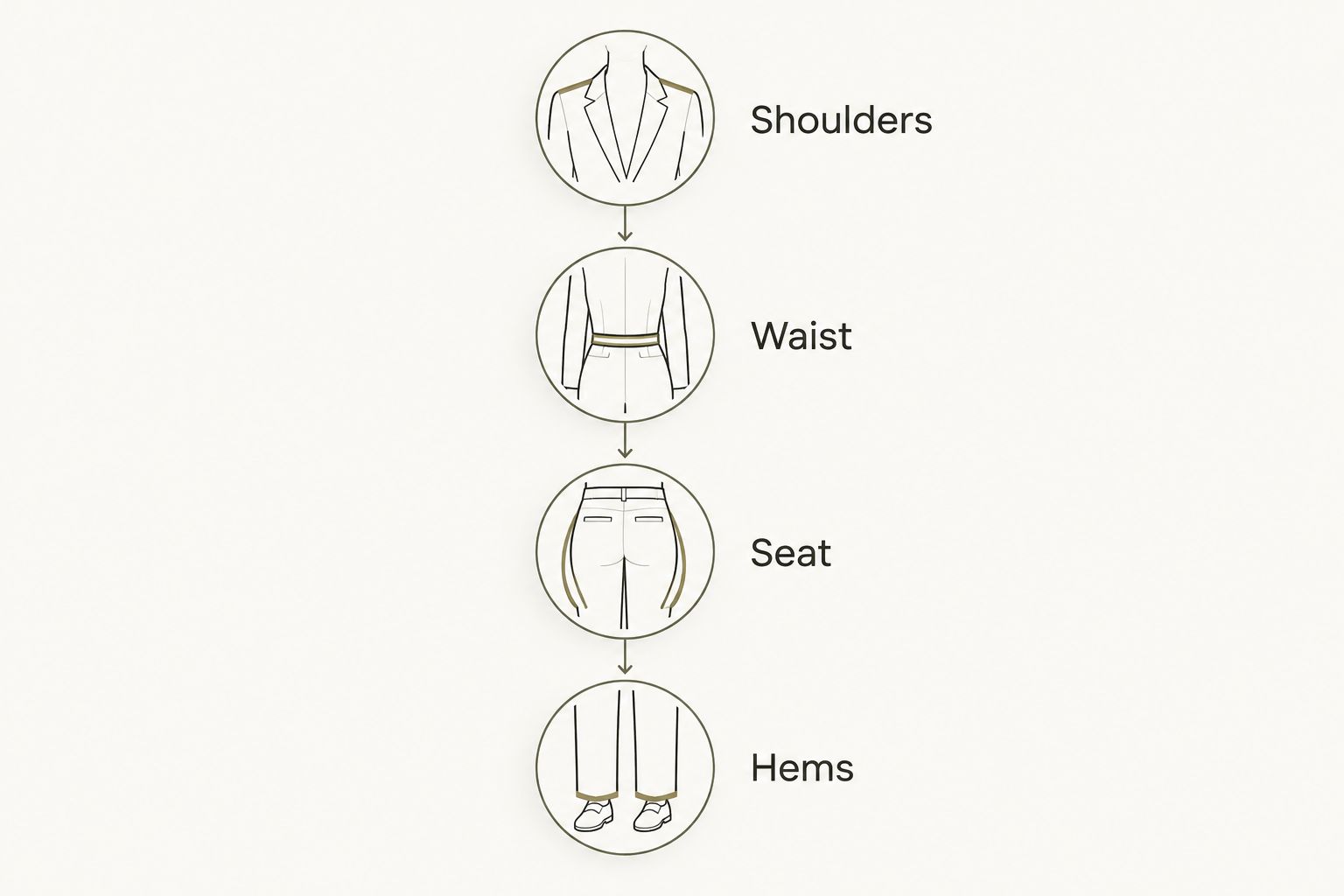
After moving, let the fabric settle naturally. Resist smoothing every fold into place; ordinary movement is the more useful test of how the pyjamas will feel at home.
A mirror helps you see pulling and length, but your comfort makes the final decision. A neat-looking fit is not the right fit if you feel restricted whenever you sit down.
What to know about One Wednesday Pointelle Pyjamas
One Wednesday Pointelle Pyjamas are best for shoppers seeking relaxed-fit, 100% cotton separates. The Pointelle Pyjama Longsleeve and Pointelle Pyjama Pants are sold separately, so you can assess the top and trousers independently rather than choosing a single size for both.
The official product details checked on October 21, 2026 describe 100% cotton pointelle, a relaxed fit, ruffled hems, and Ivory, Espresso and Merlot colours. The pointelle trousers are the relevant starting point for checking the lower-half fit.
The advantage is the ability to choose each piece around your proportions. The limitation is that a relaxed-fit description alone does not tell you whether the waist, rise, sleeve length or trouser length will suit you; those still need checking against the product information and your own fit preferences.
Ruffled hems also deserve attention during the length check. Choose a length you are comfortable wearing as designed rather than treating the finish as an afterthought.
Why pointelle pyjama fit varies
There is no universal size-up rule for pointelle pyjamas. The useful differences are in the garment's measurements, intended silhouette and how those relate to your body.
- Intended fit. A relaxed design already aims for a different outline from a close-fitting one. Read the fit description before adding extra room.
- Your proportions. Your shoulders, chest, waist and hips do not have to fall within the same size on a chart.
- Trouser rise. Check where the waistband sits comfortably and whether the crotch feels restrictive or excessively low.
- Sleeve and leg length. More width does not automatically give you a useful length, and sizing down is not a dependable solution to long hems.
- Personal preference. You might prefer a looser top and more neatly fitting trousers. Assess each piece rather than forcing one silhouette throughout.
- Care history. When replacing an older pair, distinguish its current fit from how it fitted when new. Follow the new garment's own care instructions.
For a 2026 purchase, use the current product details rather than an old size recommendation. The number or letter on a favourite pair is a starting point, not a substitute for checking the new garment.
Should I size up in pointelle pyjamas?
Size up only when the measurements or movement check show that you need more room. Do not automatically go larger because the fabric is cotton or because you want pyjamas to feel comfortable.
If your usual size pulls across the seat or restricts your arms, compare the next size with the size chart. Check what changes elsewhere, especially the waist and length, before deciding.
If the larger size removes the pulling but creates slipping or troublesome hems, reconsider the cut. Bigger is not always more comfortable; useful room is different from fabric you have to manage.
Should pointelle pyjamas feel snug at first?
Pointelle pyjamas should feel comfortable when you first try them on, not require uncomfortable tension to achieve the intended shape. Do not buy a restrictive pair on the assumption that wearing or washing will make it fit.
A close fit and a tight fit are different. If you prefer a neater silhouette, keep the movement checks: you should still be able to sit, reach and bend without discomfort.
For 2026 shopping, treat terms such as relaxed as a description of the intended silhouette, not a guarantee of fit. Your own proportions still determine how that silhouette sits.
Can I choose different sizes for the top and trousers?
Yes, choose different sizes when the pieces are sold separately and your measurements call for it. Matching pyjamas need to work together visually, not carry identical size labels.
For One Wednesday Pointelle Pyjamas, the separate top and trousers let you make that decision independently. Check each piece against its own fit information rather than applying the trouser size to the top by default.
FAQ
How should pointelle pyjamas fit around the waist?
Pointelle pyjamas should sit securely at the waist without uncomfortable pressure when you sit. Check that the waistband stays in place during ordinary movement rather than choosing from standing fit alone.
Should pointelle pyjamas be loose or fitted?
Pointelle pyjamas should follow their intended cut while leaving you comfortable room to move. For a relaxed design, avoid both stretched fabric and excess material that needs constant adjustment.
How do I know if pointelle pyjama trousers are too small?
Pointelle pyjama trousers are too small for you if sitting or bending creates uncomfortable restriction. Check the seat, thighs and rise as well as the waistband.
Should I buy a bigger size in cotton pointelle pyjamas?
Buy a bigger size only if the measurements and fit checks support it. Cotton content alone does not establish how much room a particular garment gives you or how its dimensions will change with care.
How long should pointelle pyjama trousers be?
Pointelle pyjama trousers should clear your feet at your preferred waistband position. Avoid a hem that catches beneath your heels, and consider any decorative finish before planning alterations.
Can I buy different sizes in One Wednesday Pointelle Pyjamas?
Yes, the Pointelle Pyjama Longsleeve and Pointelle Pyjama Pants are sold separately. Choose each piece using its fit information and your measurements rather than assuming the same size will suit both.
Should I wash pointelle pyjamas to make them fit?
Do not use washing as a sizing method. Choose a comfortable fit first and follow the garment's care label rather than trying to shrink or stretch it into shape.
One last thing
Try sitting before you make the final decision. It is an easy step to miss when the colour and texture feel right, but it tells you more about waist and seat comfort than another look in the mirror.
For your 2026 pyjama drawer, choose the pair that stays comfortable without attention. Soft fabric is part of the appeal; a fit you can leave alone is what makes it useful.