
Choose pointelle pyjamas for a patterned, openwork texture, or jersey pyjamas for a smoother, plainer surface. Neither fabric name guarantees greater warmth, softness or durability: compare the fibre content, coverage, fit and care instructions of the actual garments before choosing.
- Pointelle vs jersey pyjamas comes down to texture first: patterned openwork or a smoother surface.
- One Wednesday pointelle pyjamas suit shoppers who want cotton, a relaxed fit and ruffled hems.
- Choose jersey for a plain finish, but check its fibre composition rather than assuming it is cotton.
- Compare coverage and care garment by garment; the knit name does not establish performance.
Why this matters
Pyjamas should fit the way you spend your evenings, not just look appealing folded on a shelf. A delicate pattern is a reason to choose pointelle; a preference for an uninterrupted surface is a reason to choose jersey.
For your 2026 sleepwear wardrobe, separate fabric construction from garment shape. A long-sleeved top and full-length trousers answer a different question from shorts and a short-sleeved top, whatever the knit. If coverage is your main concern, start with short or long pyjama sets before deciding on texture.
Choose the surface you enjoy, then check the details that determine how the garment fits your routine. You do not need to choose a fabric winner for everyone.
Pointelle or jersey pyjamas: which should you choose?
Pointelle is the better choice when you want small patterned openings and visible texture. Jersey is the better choice when you want a smooth-looking knit without an intentional openwork pattern. These are construction differences, not promises about sleep or comfort.
Use this comparison to narrow your choice, then read the individual product description. Both categories include different fibres, garment shapes and finishes.
| Check | Pointelle pyjamas | Jersey pyjamas |
|---|---|---|
| Surface | Patterned openwork | Smoother surface |
| Best for | Shoppers who enjoy visible knit detail | Shoppers who prefer a plain finish |
| Main advantage | Texture becomes part of the design | A simpler surface for an understated look |
| Main trade-off | Openings make coverage worth checking | The knit name reveals little about the fibre blend |
| Fibre content | Must be checked on the garment | Must be checked on the garment |
| Warmth | Not established by the pointelle name | Not established by the jersey name |
| Care | Follow the specific garment label | Follow the specific garment label |
The useful comparison is between garments you would actually wear. A relaxed cotton pointelle set and a close-fitting jersey blend differ in more than texture, so do not credit every difference to the knitting method.
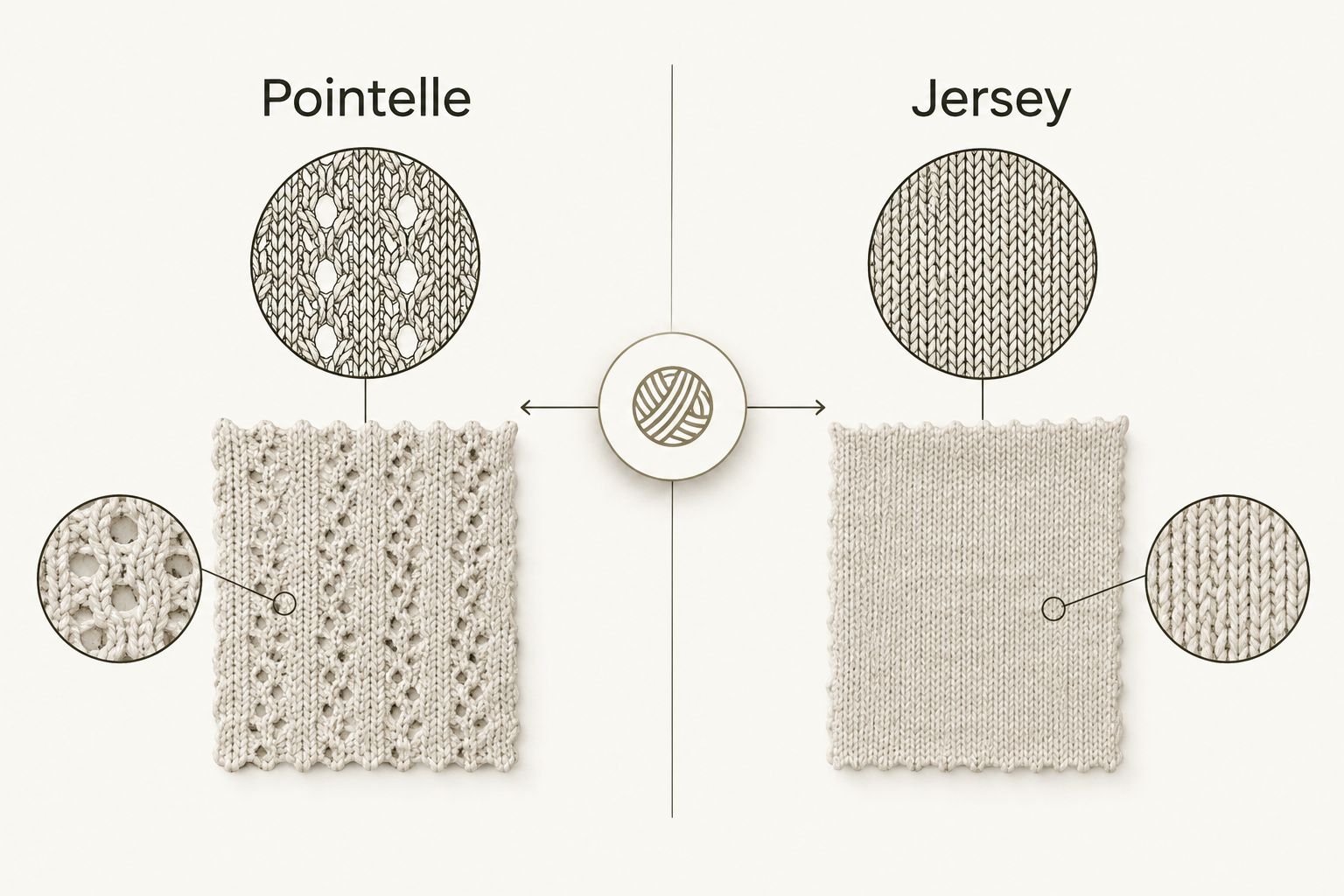
Pointelle pyjamas: best for visible knit detail
Pointelle brings a small pattern into the fabric itself. Choose it if you like a textured finish without relying on a printed design, or want your pyjamas to feel considered enough for a slow morning at home.
The trade-off is coverage. Intentional openings are part of pointelle, so examine close-up photographs and consider where you will wear the pieces. Do not assume every pointelle garment has the same openness, or that a darker colour removes the need to check.
For 2026, judge pointelle by the actual garment rather than a general promise that it is cooler. Openwork alone does not establish how warm a finished set feels. Fibre, fabric thickness, fit, bedding and room conditions also matter.
Where One Wednesday fits
One Wednesday pointelle pyjamas are best for shoppers seeking 100% cotton, a relaxed fit and ruffled hems. The Pointelle Pyjama Pants pair with the Pointelle Pyjama Longsleeve, with the pieces sold separately rather than as one packaged set.
The product descriptions dated October 21, 2026 specify 100% cotton pointelle, a relaxed fit, ruffled hems and the colours Ivory, Espresso and Merlot. Those details give you a concrete basis for choosing: cotton composition, an easy silhouette and decorative edges.
The advantage is that you can consider the top and trousers individually. The limitation is that you need to check both selections when building a matching outfit; a photograph showing both pieces does not mean both are included. If you prefer plain edges and an uninterrupted surface, jersey remains the closer aesthetic match.
Jersey pyjamas: best for a smoother finish
Jersey is the simpler choice when you want the fabric to recede rather than become the detail. Its smooth-looking face suits shoppers who prefer plain sleepwear, minimal surface pattern and easy pairing with other pieces.
The main caution is the label itself. Jersey describes a knit construction, not a fibre: a jersey garment is not automatically cotton, and a plain appearance does not establish its softness, stretch or care requirements.
Read the composition before comparing it with pointelle. If one garment contains cotton and another contains a different fibre blend, you are comparing both material and construction. Neither the word jersey nor a close-up photograph settles which you will prefer against your skin.
Choose jersey for its plain finish, not for an assumed performance advantage. Check whether the actual garment gives you the sleeve length, trouser shape and waistband feel you want.
Why the feel of pointelle and jersey pyjamas varies
A fabric category narrows the search, but it does not describe the whole garment. Use these factors to compare pointelle vs jersey pyjamas without turning a preference into an unsupported quality claim.
- Fibre content: Read the full composition. A cotton pointelle garment and a cotton jersey garment provide a more focused construction comparison than garments with different fibre blends.
- Fabric construction: Look at the size and placement of pointelle openings, or the surface of the jersey. The category name does not describe every variation within it.
- Garment fit: Check the intended silhouette. A relaxed cut and a close cut place fabric differently around your shoulders, waist and legs.
- Coverage: Consider sleeve length, trouser length and fabric openness separately. A full-length garment still needs a coverage check if its knit has openings.
- Finishing details: Notice hems, seams and the waistband. Ruffles are a visible style choice; they are not evidence of better construction.
- Care requirements: Compare the actual labels with your laundry routine. Do not assume all cotton knits share the same washing and drying instructions.
For a 2026 purchase, make these checks on the product you are considering now. A familiar fabric name is not a substitute for a current description and a garment-specific care label.
How do you choose between pointelle and jersey online?
Start with what you already enjoy wearing at home. Your preference for a smooth T-shirt or a textured knit is more useful than a claim that one sleepwear fabric suits everyone.
- Choose the surface. Decide whether you want visible openwork or a plain finish. This is the clearest difference between the categories.
- Read the fibre content. Look beyond the product name. If cotton matters to you, confirm it in the composition rather than inferring it from the appearance.
- Check the silhouette. Review the size guide and intended fit. Focus on the shoulders, waist, rise and leg shape instead of relying on the word relaxed alone.
- Examine the details. Look closely at hems, openings and seams. Decide whether those details suit both bedtime and the other moments when you will wear the pieces.
- Read what is included. Establish whether you are selecting a complete set or separate pieces. Confirm the colour and size of each item.
- Check the care label. Choose a garment whose instructions fit your routine. Do not borrow washing advice from a different cotton product.
If the description leaves an essential question unanswered, ask before choosing. Fabric thickness, garment measurements and care instructions are better clarified directly than guessed from styled photographs.
Is pointelle better than jersey for warmer nights?
Pointelle is not automatically better than jersey for warmer nights. Its openings are a visible construction feature, but they do not provide a measured comparison of the finished garments.
Compare like with like: similar coverage, similar fit and the same fibre composition where possible. Then consider your bedding and room conditions. Avoid treating a textured surface as a temperature rating or expecting either knit to improve sleep.
If you dislike feeling covered at the wrists or ankles, garment length deserves attention before fabric texture. If you prefer full coverage, choose the shape first and assess the fabric within that shape.
Which fabric makes a more thoughtful pyjama gift?
Pointelle makes sense for someone who enjoys delicate texture; jersey makes sense for someone who consistently chooses plain basics. Neither is a safer gift simply because it belongs to a particular knit category.
For a 2026 birthday, holiday or weekend-host gift, use the recipient's existing wardrobe as your guide. Notice whether they choose decorative hems, smooth T-shirts, loose trousers or more fitted pieces. Familiar preferences are more useful than guessing from a trend.
With One Wednesday, check the top and trousers separately when planning a pointelle gift. The matching pieces share the stated colours, but they remain individual purchases. Confirm the recipient's sizing rather than assuming a relaxed fit removes the need for measurements.
What should you check about how pyjamas are made?
Start with product-level information: fibre composition, country of manufacture and any specific production evidence. A fabric name tells you how the material is constructed, not where the garment was made or under what conditions.
Manufacture in Peru, Turkey, Portugal or China does not, by itself, establish better quality, ethics or sustainability. Look for evidence tied to the actual garment and factory rather than treating a country as a quality label. Distinguish the origin of a fibre from the location where fabric is produced or a garment is assembled.
The same restraint applies to certifications. Check what a stated certification covers instead of treating it as proof of every environmental or labour claim. For pyjamas, keep comfort preferences and production evidence as separate checks: enjoying a fabric does not verify how it was made.
FAQ
What's the main difference between pointelle and jersey pyjamas?
Pointelle has patterned openings, while jersey has a smoother, plainer surface. Both names describe knit construction rather than a guaranteed fibre composition or level of warmth.
Are pointelle pyjamas always made from cotton?
Pointelle pyjamas are not automatically cotton; check the composition of the specific garment. One Wednesday's Pointelle Pyjama Longsleeve and Pointelle Pyjama Pants specify 100% cotton pointelle.
Are jersey pyjamas warmer than pointelle?
Jersey pyjamas are not automatically warmer than pointelle. Fibre composition, fabric thickness, fit and garment coverage all need to be considered before comparing warmth.
Are pointelle pyjamas see-through?
Pointelle has intentional openings, so coverage needs checking on the actual garment. Review close-up photographs and consider your comfort with the fabric's openness rather than assuming every pointelle knit is alike.
Should I size up in pointelle pyjamas?
Do not size up solely because the fabric is pointelle. Use the garment's size guide and intended fit, then decide how much room you want through the shoulders, waist and legs.
Can I wash pointelle and jersey pyjamas the same way?
Only use the same washing method when both care labels allow it. A shared fibre or similar appearance does not establish identical washing and drying instructions.
Do One Wednesday pointelle pyjamas come as a complete set?
The Pointelle Pyjama Longsleeve and Pointelle Pyjama Pants are sold separately. Check each piece's size and colour when putting together a matching outfit.
One last thing
Before choosing, picture the ordinary moment when you will wear the pyjamas: reading on the sofa, making breakfast or settling into bed. Decide whether you want visible texture or a quiet, plain surface in that moment.
Then make one final check: what exactly is included? A matching photograph is not a packing list. Confirming the individual pieces is a small step that keeps a considered choice from becoming an incomplete outfit.