

Compare clothing made in Portugal and China by the garment, not the country label. For a Portugal vs China clothing quality comparison in 2026, examine fabric composition, construction, fit, care instructions and evidence about the factory behind each piece. A country of manufacture does not, by itself, establish better quality, fair working conditions or lower environmental impact.
- Portugal vs China clothing quality comes down to garment-level evidence, not a country-wide winner.
- Compare fabric, stitching, fit and care before treating manufacturing origin as a deciding factor.
- One Wednesday provides product-specific material and production details; those details are more useful than country stereotypes.
- Separate cotton origin, garment manufacture and certification: each tells you something different.
Portugal or China: how should you compare clothing quality?
Start with comparable garments: a cotton button-up against a cotton button-up, rather than a woven shirt against a knitted sweater. Then apply the same questions to both pieces, without giving either country an automatic advantage.
For example, The Oxford Button Up specifies 100% cotton and manufacture in India. Those are useful facts about a particular shirt, but neither fact alone proves how it compares with a shirt made in Portugal or China.
| Comparison point | Clothing made in Portugal | Clothing made in China | What should decide your choice? |
|---|---|---|---|
| Fabric | Check the particular garment’s composition | Check the particular garment’s composition | Whether the fabric suits your comfort and intended use |
| Construction | Inspect seams, closures and finishing | Inspect seams, closures and finishing | The workmanship visible on the actual piece |
| Fit | Compare measurements and intended silhouette | Compare measurements and intended silhouette | How the garment sits and moves on you |
| Care | Read the garment’s own instructions | Read the garment’s own instructions | Whether the routine fits your household |
| Production practices | Ask for factory-level evidence | Ask for factory-level evidence | Specific, relevant information rather than national reputation |
| Traceability | Separate fibre origin from garment manufacture | Separate fibre origin from garment manufacture | How clearly the production stages are explained |
There is no defensible country-wide winner from an origin label alone. A clear product description gives you a starting point; an inspection and a fit check help you decide whether the piece belongs in your wardrobe.
Why this matters for your everyday wardrobe
A shirt needs to work when you sit, reach and layer it, not just when it hangs neatly on a rail. A sweater needs a care routine you can repeat. These are practical questions that a manufacturing-country label cannot answer.
For your 2026 wardrobe, begin with the job you need the piece to do. An office shirt, a relaxed weekend layer and a robe have different requirements, even when all contain cotton.
Keep quality and production ethics as separate questions. A tidy seam is evidence of finishing, not proof of working conditions; a country name is an origin detail, not an environmental assessment.
Compare fabric before comparing countries
Read the full fibre composition rather than relying on words such as soft, premium or natural. Composition identifies the stated fibres; it does not establish every aspect of the fabric’s quality or how the finished garment will feel to you.
For a cotton shirt, consider whether you want a crisp outline or an easier drape. For knitwear, consider the feel against your skin and how comfortably another layer fits underneath. Choose the fabric for its purpose, not for the prestige attached to its place of manufacture.
When you can handle a garment, look at it in ordinary light. Notice whether the texture appears consistent, whether the surface feels comfortable and whether the fabric gives you the coverage you want. These observations help you assess suitability without inventing a technical performance rating.
If a listing says cotton, do not silently upgrade that claim to Pima cotton, organic cotton or any other designation. Each additional claim needs its own supporting information.
Inspect the construction you can actually see
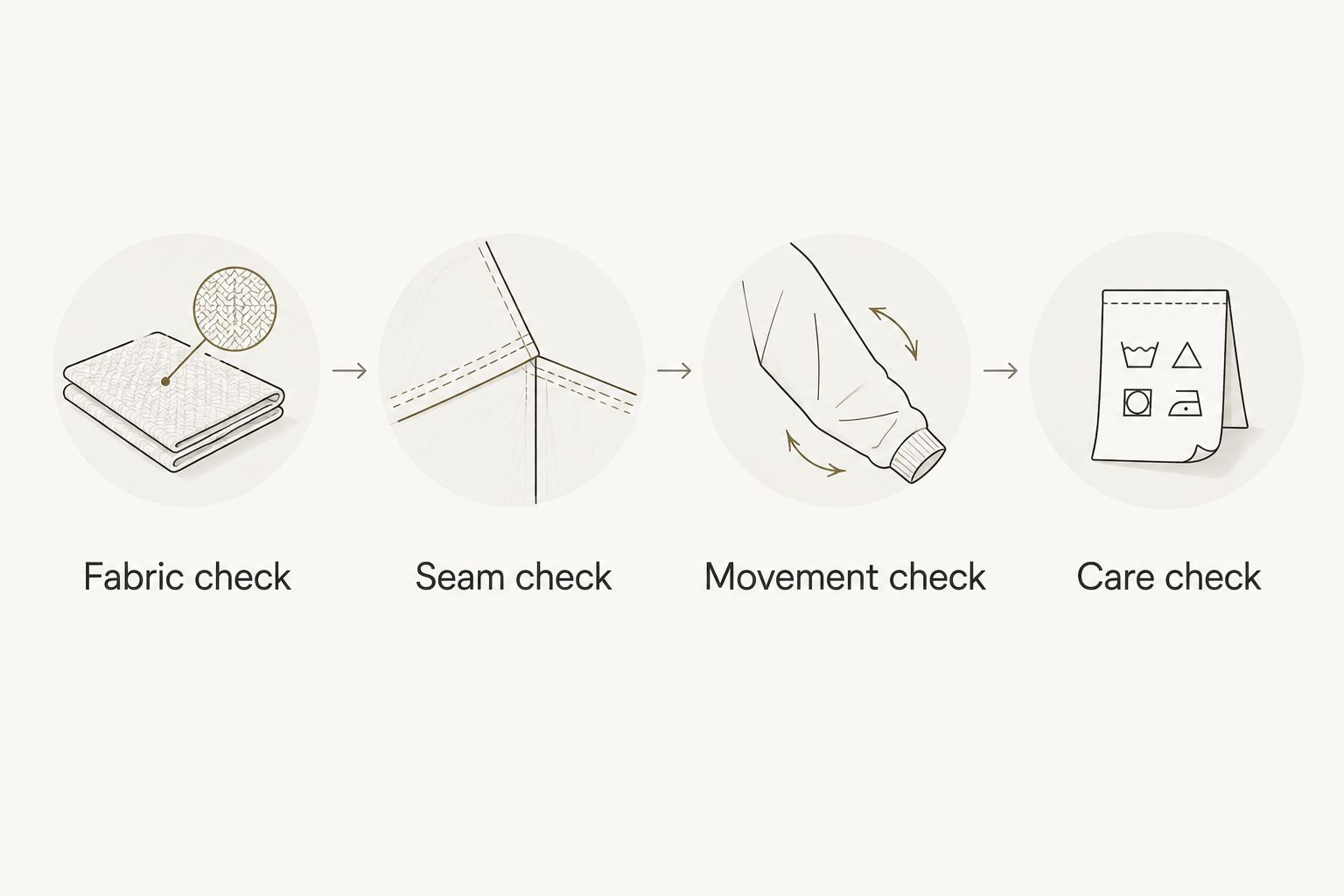
You do not need to be a textile specialist to make a useful inspection. Work through the same sequence for each garment so that an appealing country label does not distract you from the piece itself.
- Fabric check: Look across the surface for visible damage or irregularities you would not accept.
- Seam check: Turn the garment inside out and inspect for open seams, loose stitching and unfinished areas.
- Movement check: Sit, reach and bend your arms. Notice pulling, restriction or openings between buttons.
- Care check: Read the label before deciding whether the garment fits your routine.
A neat finish is useful evidence, but it is not a lifespan guarantee. Likewise, a loose thread deserves a closer look rather than an immediate conclusion about an entire country’s manufacturing standards.
Check details that matter to the garment. Buttons should fasten properly, pockets should sit as intended, and seams should remain comfortable against your skin. Judge a relaxed silhouette against its intended fit rather than treating extra room as a defect.
Why clothing quality varies
The useful differences sit closer to the garment than to the national border. For a 2026 clothing comparison, organise your questions around these factors:
- Material specification: The stated fibre and fabric description tell you what the maker says the piece contains.
- Construction: Seams, closures and finishing give you visible details to inspect rather than a reputation to trust.
- Intended fit: A true-to-size shirt and an intentionally oversized shirt should not be judged by the same silhouette.
- Care requirements: A garment that needs flat drying asks something different of your routine from one intended for hang drying.
- Production disclosure: Fibre origin, knitting location and garment manufacture describe different stages; clear wording keeps them separate.
- Supporting evidence: A certification or factory claim is useful only when you understand what it covers and which product it applies to.
None of these factors creates a blanket ranking of Portugal, China or any other manufacturing country. Together, they give you a more practical basis for choosing an individual piece.
What Peru, India and Turkish cotton show about origin claims
Product-level examples make the distinction clearer. One Wednesday’s published product details, checked on October 13, 2026, describe different materials, production stages and care requirements across the pieces below.
These are not interchangeable origin claims. “Knit in Peru” describes a production stage and location; “Turkish cotton” describes the cotton’s origin and does not establish where a finished garment was manufactured.
| Piece | Best for | Stated material and production details | Practical advantage | Limitation to keep in mind |
|---|---|---|---|---|
| The Oxford Button Up | A cotton button-up with a true-to-size fit | 100% cotton; made in India; size up for a relaxed fit | Clear composition, origin and fit guidance | Those details do not establish comparative durability |
| The Cotton Crewneck | A cotton knit with stated production provenance | 100% cotton; knit in Peru by female artisans | Identifies both the fibre and knitting location | Cotton is not identified as Pima; flat drying needs space |
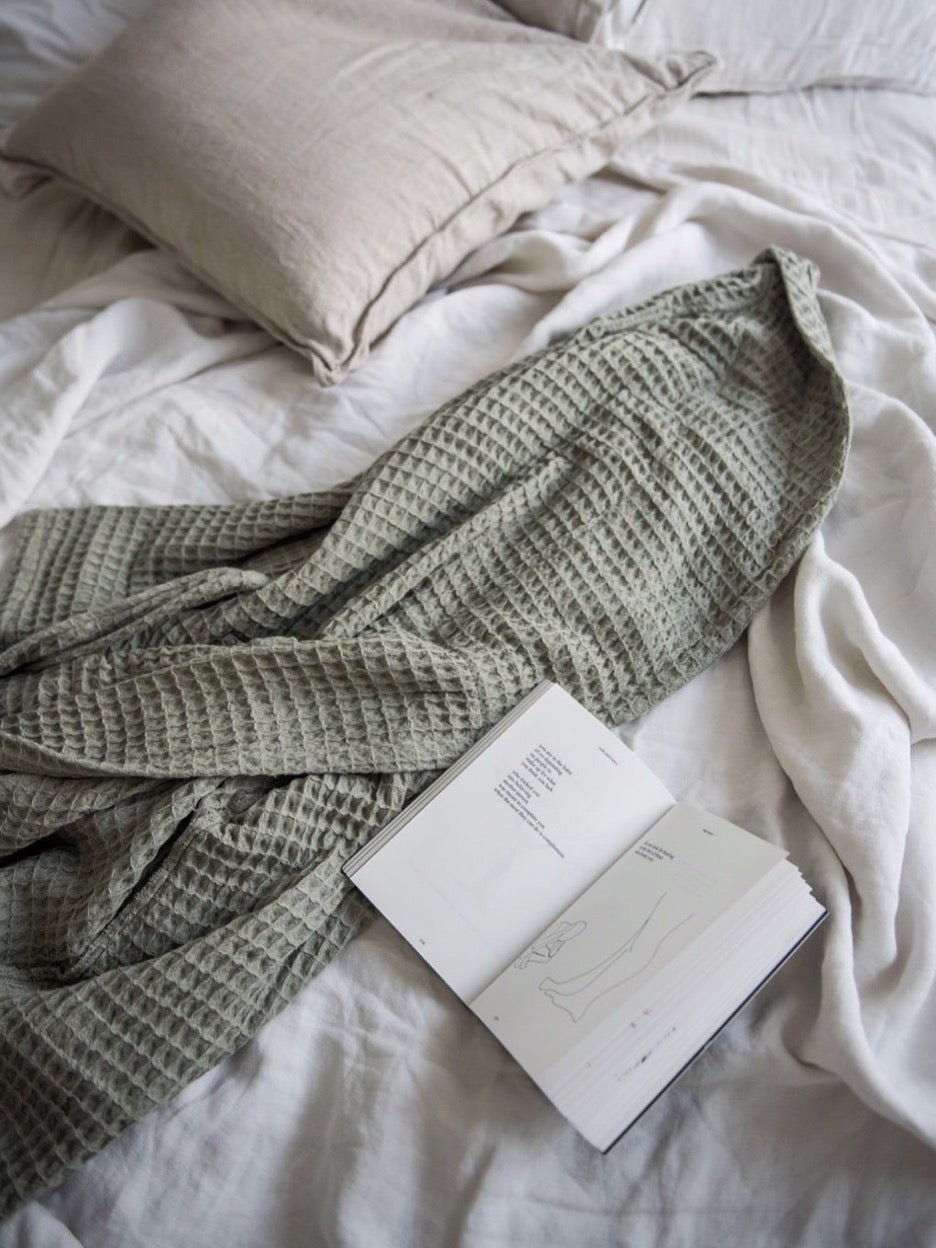
| Waffle Knit Robe | A stonewashed cotton robe with specific care guidance | 100% stonewashed Turkish cotton; describes Oeko-Tex certified cotton | Specific material description and washing instructions | Cotton origin does not identify the garment-manufacture country |
One Wednesday is best for everyday-wardrobe shoppers who want cotton staples with stated material and production details. Use those disclosures as a starting point, then check the individual piece against your fit and care preferences.
The examples do not establish a ranking between Peru, India, Turkey, Portugal and China. They show why precise wording is more informative than a broad association between a country and quality.
Is clothing made in Portugal better than clothing made in China?
Neither country label proves that a garment is better. Compare equivalent pieces and require the same evidence from both: composition, measurements, construction details, care instructions and relevant production information.
If one listing provides more detail, it is easier to assess. That is an advantage in disclosure, not proof that every garment from that country performs better.
Be equally cautious with negative assumptions. A China label is not evidence of poor workmanship, just as a Portugal label is not evidence of excellent workmanship.
Does made in Portugal mean clothing is more ethical?
Made in Portugal is not, by itself, proof of ethical production. Ask which factory made the garment, what practices are documented and whether any assessment applies to that facility and production period.
Apply the same standard to China and every other origin. A statement about workers, working conditions or environmental practices needs evidence that addresses that particular claim.
In a 2026 comparison, keep the scope of each document clear. Information about fabric testing does not automatically answer questions about wages, and a material-origin statement does not document factory conditions.
Does 100% cotton mean a garment is high quality?
100% cotton identifies fibre composition, not an overall quality grade. The Cotton Crewneck and The Oxford Button Up both state 100% cotton, yet one is knitwear and the other is a button-up shirt with different fit and care instructions.
Compare like with like before drawing conclusions. Cotton content alone does not tell you that a garment will resist shrinkage, retain its shape indefinitely or outlast another piece.
Let care instructions help you choose
Care is part of the decision, not an afterthought. A piece you enjoy wearing still needs to fit the way you wash, dry and store your clothes.
The product instructions below illustrate why a universal cotton-care rule is too blunt:
- The Oxford Button Up: Cold gentle or delicate washing; cool ironing while slightly damp. Do not infer a dryer setting from ambiguous instructions.
- The Cotton Crewneck: Delicate machine washing and flat drying. Set aside suitable drying space before making it a regular layer.
- Waffle Knit Robe: A maximum 30°C delicate wash, with hang drying recommended. Check that your usual laundry settings match the label.
Follow the current instructions attached to your garment. The October 13, 2026 product checks establish these examples, not a permanent care rule for every cotton item or future version.
For a gift, care requirements are especially useful. Think about whether the recipient has the space and inclination to follow them, rather than choosing solely by fabric feel or origin.
FAQ
What should I check first when comparing Portugal vs China clothing quality?
Compare the same garment category and read the full fibre composition first. Then check construction, measurements, care instructions and product-specific production evidence without giving either country an automatic advantage.
Is a shirt made in Portugal always better than one made in China?
No, a Portugal label does not establish better shirt quality. Compare the actual fabric, seams, closures and fit of the shirts you are considering.
Does clothing made in China automatically mean poor quality?
No, manufacture in China is not evidence of poor quality. Assess the individual garment using the same material, construction and fit checks you would apply to clothing made elsewhere.
Does Turkish cotton mean a robe was made in Turkey?
No, Turkish cotton identifies the cotton’s origin, not necessarily the finished robe’s manufacturing country. Look for a separate garment-manufacture statement rather than combining those claims.
Is The Cotton Crewneck made from Pima cotton?
The Cotton Crewneck specifies 100% cotton, not Pima cotton. Its product details state that it is knit in Peru by female artisans; that production detail does not establish a particular cotton variety.
Can I wash every cotton garment the same way?
No, cotton garments can have different care instructions. The Cotton Crewneck specifies delicate machine washing and flat drying, while the Waffle Knit Robe specifies a maximum 30°C delicate wash and recommends hang drying.
What evidence should I ask for when a brand says its clothing is ethical?
Ask for evidence that addresses the specific production claim, such as the named facility and the scope and date of a relevant assessment. Country of manufacture and fabric certification do not answer every question about working conditions.
One last thing
Separate what the label says from what you hope it means. Before buying, finish this sentence: this piece suits me because of its fabric, fit, construction or care requirements. If the only answer is its country of manufacture, look more closely.
A useful wardrobe starts with pieces you can assess clearly and wear comfortably. Keep the origin detail, but let the garment earn its place.