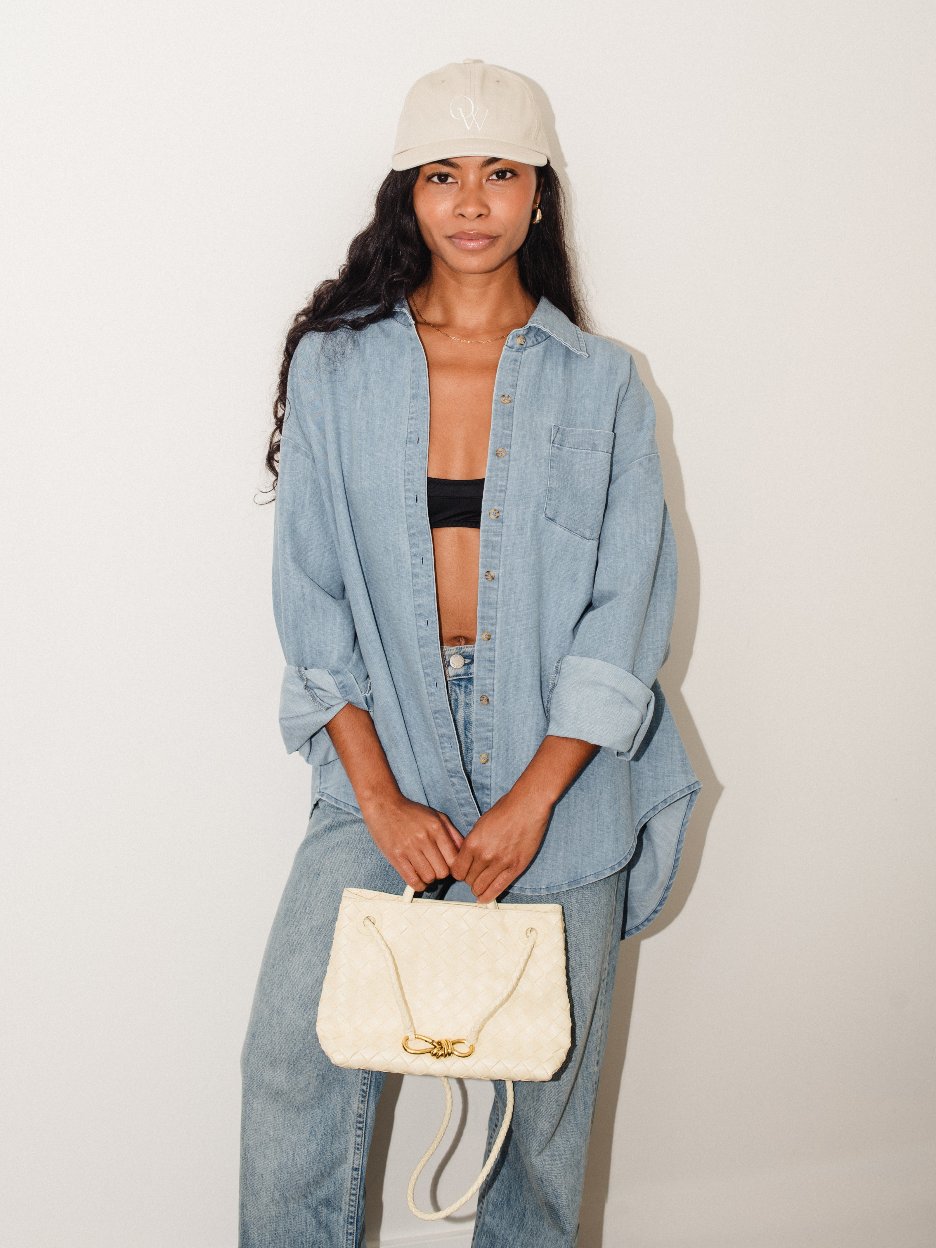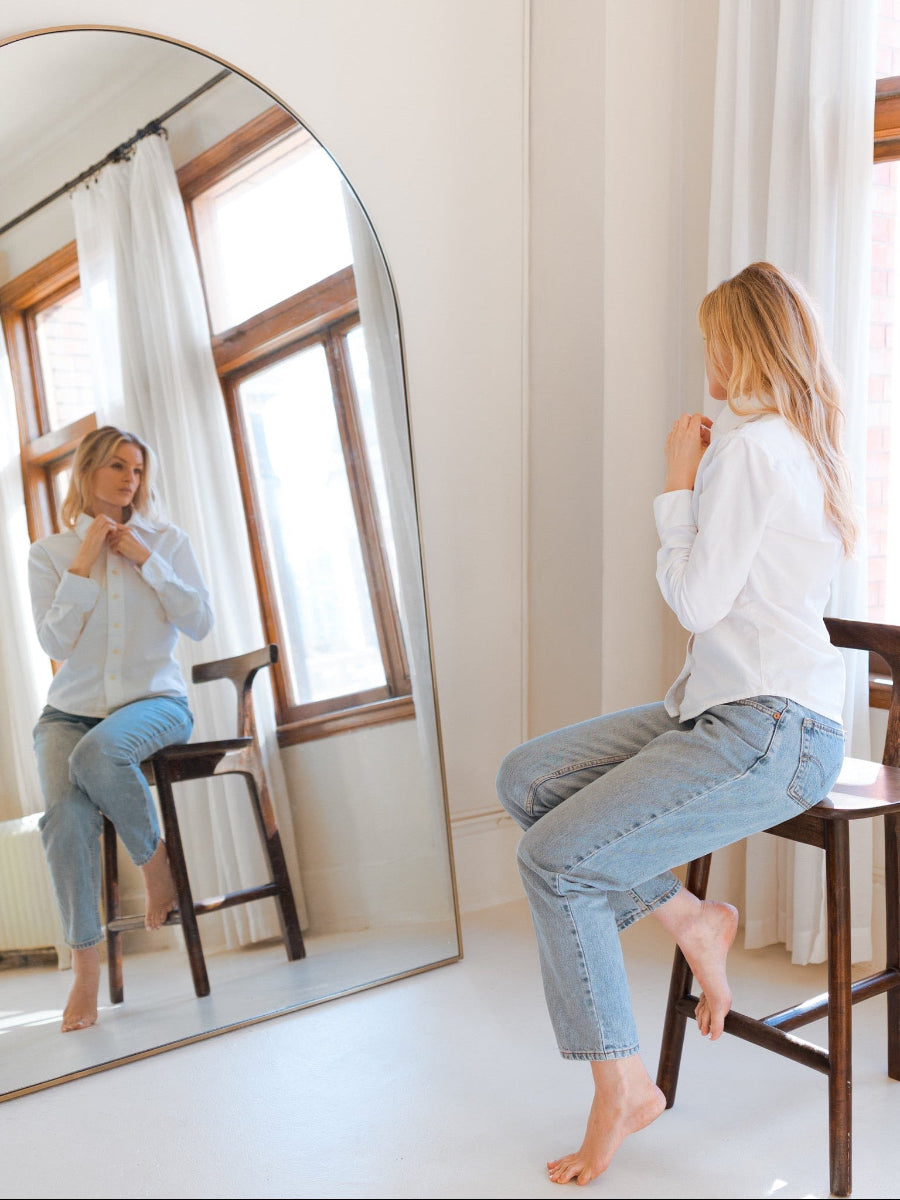

The Oxford Button Up should feel comfortable across your shoulders and chest, with a button placket that lies flat and enough room to sit and reach without pulling. Start with your usual size: its product guidance says true to size, with sizing up recommended for a relaxed fit. Choose the fit you want to wear, rather than sizing down to remove every fold.
- For oxford button up shirt fit women, start with The Oxford Button Up’s true-to-size guidance.
- One Wednesday’s The Oxford Button Up is best for women wanting a cotton shirt with a choice of fitted or relaxed styling.
- Size up for a relaxed fit, then check the shoulders, sleeves and hem together.
- A flat button placket matters more than a size label; test the shirt sitting down.
Why this matters
A shirt can look right standing still and feel wrong as soon as you sit at a desk. Your everyday fit needs to work through that change, whether you wear the shirt tucked into trousers or loose over jeans.
Decide on fit before deciding on styling. The guide to how to style The Oxford Button Up is a useful next step once you know whether you want a closer silhouette or more room through the body.
How should The Oxford Button Up fit?
The Oxford Button Up should sit comfortably through your upper body without the buttons taking the strain. One Wednesday’s product information, checked October 13, 2026, describes it as true to size and recommends sizing up for a relaxed fit. It specifies 100% cotton and manufacture in India.
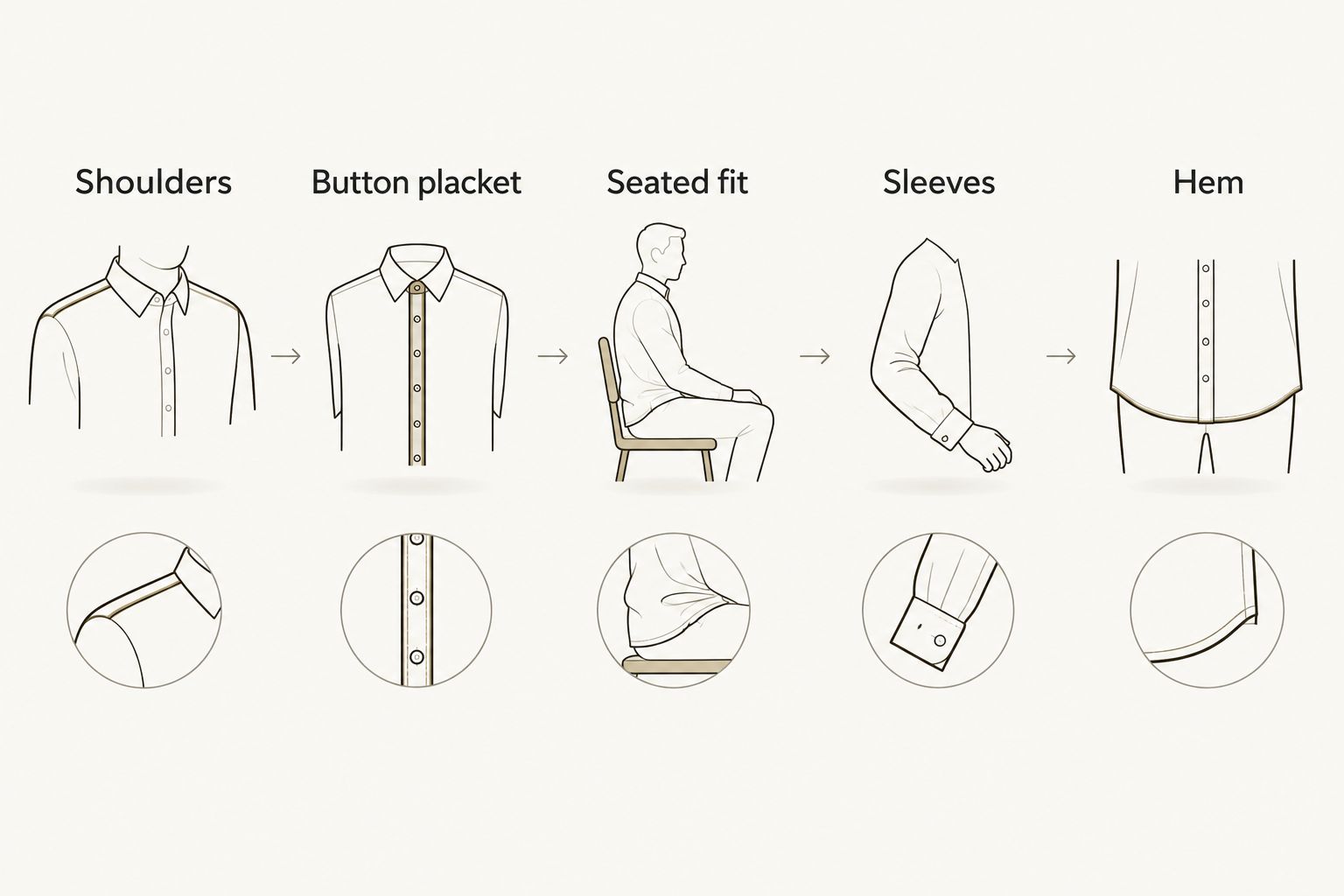
Use that guidance as your starting point, then check how the shirt behaves on you:
- Shoulders: Let your arms rest naturally. Check that the upper shirt does not feel taut when you reach forward.
- Button placket: Button the shirt as you intend to wear it. Look for pulling or openings between the buttons, especially across the chest.
- Seated fit: Sit down with the shirt buttoned. Check that the chest, waist and lower buttons remain comfortable.
- Sleeves: Bend your elbows and reach forward. Make sure the sleeves do not restrict those movements.
- Hem: Try your intended tuck, then leave the shirt untucked. Choose the size that works with the way you will actually wear it.
These are try-on checks, not a promise that every body shape needs the same silhouette. A little fabric movement is part of wearing a shirt; visible strain and restricted movement are reasons to reconsider the size.
Your usual size: best for a closer everyday silhouette
Start with your usual size if you want the shirt to follow your shape without feeling tight. This follows the product’s true-to-size guidance. It is a sensible starting point for a shirt you intend to tuck into tailored trousers or wear beneath another layer.
The benefit is a less expansive silhouette. The trade-off is that your usual size still needs to accommodate your particular proportions; a size label cannot settle the fit across your chest, shoulders and hips.
Keep the shirt buttoned during the try-on, even if you usually leave the collar open. If you need to undo a body button to feel comfortable, reconsider the size rather than treating that adjustment as the solution.
A closer fit does not mean a fitted waist. Do not expect the shirt to trace every curve, and do not size down solely because there is spare fabric at your middle. Check the upper body first.
A size up: best for a relaxed silhouette
Size up when you want more room through the shirt, as the product guidance recommends. This is the clearest starting point for a loose, untucked look or a casual tuck that leaves some fabric above the waistband.
The benefit is room for your preferred silhouette. The trade-off is that sizing up changes more than the body: reassess the shoulders, sleeve length and overall length rather than assuming each will remain unchanged.
Try the larger size with the trousers you wear most. Look at the side view as well as the front. If the extra fabric feels deliberate and comfortable, keep it; if it collects awkwardly under your outer layers, reconsider whether you want that much room.
A relaxed shirt should still be easy to wear. If you must keep adjusting the cuffs or rearranging the hem, the larger size is not automatically the better choice.
Which fit should you choose?
Use this comparison to separate silhouette preferences from fit problems. Neither a smaller nor a larger size is a shortcut around checking the shirt on your body.
| Fit approach | Best for | Main advantage | Main limitation | Decision check |
|---|---|---|---|---|
| The Oxford Button Up in your usual size | A closer everyday silhouette | Follows the stated true-to-size guidance | Your proportions still need a try-on check | Buttons stay flat when you sit |
| The Oxford Button Up sized up | A relaxed silhouette | Follows the product’s relaxed-fit recommendation | Sleeves and overall length also need checking | Extra room feels intentional, not cumbersome |
| The Chambray | Women specifically seeking an intentionally oversized cotton shirt | Its product guidance explicitly describes an oversized fit | It is a different shirt, not a substitute size chart | Choose it for its own silhouette and denim wash |
The Chambray’s official product information, checked October 13, 2026, specifies 100% cotton, manufacture in India and an intentionally oversized fit. Do not use its sizing description to predict how The Oxford Button Up will sit.
One Wednesday’s The Oxford Button Up is best for women wanting a cotton shirt with a choice of fitted or relaxed styling. Start with its own fit guidance, not the size you happen to wear in a differently cut shirt.
Why Oxford shirt fit varies
Your preferred shirt fit depends on the relationship between your body, the garment and the way you wear it. These practical checks matter more than whether you usually call your wardrobe fitted or oversized.
- Shoulder comfort: A shirt that restricts reaching is not made comfortable by leaving the collar open. Test movement through the upper body.
- Chest room: The button placket shows whether the shirt is under strain. Check it while seated as well as standing.
- Hip room: If you wear the shirt untucked, button it through the lower body and check that the hem falls without catching.
- Sleeve fit: Bend your elbows and check the cuffs. A body fit you like still needs sleeves you can comfortably use.
- Styling preference: A full tuck, loose tuck and untucked shirt create different silhouettes. Test your preferred one before choosing.
- Layering needs: Try the shirt with the actual layer you intend to add. Extra shirt fabric can change how the combination feels.
For your 2026 wardrobe, begin with the outfit you repeat most often. A shirt that works with your everyday trousers is more useful than one that only looks right in an unfamiliar styling combination.
Should I size up if the buttons pull across my chest?
Try a larger size if the buttons pull across your chest. Then repeat the shoulder, sleeve and seated checks: solving chest tension should not create a fit you dislike elsewhere.
Check that the pulling is present with the shirt sitting naturally, rather than caught under a waistband or twisted after a tuck. Smooth the shirt, sit down and reach forward before deciding.
If the larger size still does not give you a comfortable balance, do not force the fit. A different cut is a better choice than a shirt you keep adjusting throughout the day.
Should an Oxford shirt be tucked in or left out?
Choose the size with your intended tuck in mind, but confirm that the shirt is comfortable either way. A tuck changes the visible silhouette; it does not fix a tight chest or restrictive shoulder fit.
For business-casual dressing, try a full tuck with your usual trousers. For a more relaxed outfit, leave the hem loose or use a light front tuck without pulling the whole shirt taut.
In 2026, use those styling choices as alternatives, not rules. Your best fit is the one that lets you change position without repeatedly smoothing, pulling or rebuttoning the shirt.
Can I wear The Oxford Button Up under a sweater?
Try The Oxford Button Up under your intended sweater before settling on a size. Check the upper arms, collar and waistband, where overlapping fabric can affect comfort.
Pull the shirt hem straight before putting on the sweater. Then bend your elbows and sit down. If the combination feels crowded, assess both garments rather than automatically choosing a smaller shirt.
The Cotton Crewneck is a relevant layering option from the same wardrobe. Its official information, checked October 13, 2026, specifies 100% cotton and knitting in Peru; that does not establish how much room it gives your particular shirt. Test the pairing rather than assuming matching fibres guarantee a comfortable fit.
Does cotton content tell you how the shirt will fit?
Cotton content does not replace fit information. The Oxford Button Up’s 100% cotton composition tells you the stated fibre, while its true-to-size guidance tells you where to start with sizing.
Do not treat cotton content as evidence of stretch, a particular fabric weight or a predicted amount of shrinkage. Those are separate claims. Choose a comfortable fit now rather than buying a tight shirt in the expectation that washing or wear will correct it.
The same distinction applies to manufacturing information. The verified product details place The Oxford Button Up and The Chambray in India, and The Cotton Crewneck’s knitting in Peru. Those facts identify production locations or stages; they do not establish a country-wide quality ranking.
When comparing clothing made in Peru, Turkey, Portugal or China in 2026, ask for product-level evidence about materials, production stages and any stated certifications. Country alone does not prove quality, factory conditions or sustainability, and no Portuguese manufacture is established for this shirt.
How should you care for the fit you choose?
Follow The Oxford Button Up’s own care instructions, not another cotton garment’s routine. The product information checked October 13, 2026, specifies cold gentle or delicate washing and cool ironing while slightly damp.
Keep washing and fit decisions separate. Buy the size that feels right before washing, and consult the garment’s care label for drying instructions rather than choosing a dryer setting from general cotton advice.
Different pieces have different instructions. The Chambray specifies warm machine washing and hang drying; The Cotton Crewneck specifies delicate machine washing and flat drying. Shared cotton content is not a reason to care for all of them identically.
After washing, put the shirt on and repeat the seated and reach checks. If the fit feels different, review the care instructions before assuming that every cotton shirt behaves the same way.
FAQ
Does The Oxford Button Up run true to size?
The Oxford Button Up’s product guidance says true to size and recommends sizing up for a relaxed fit. Confirm your choice by checking the shoulders, button placket and seated comfort.
Should I size down for a more fitted Oxford shirt?
Start with your usual size rather than automatically sizing down. A closer silhouette still needs a flat button placket and comfortable movement through the shoulders and chest.
How do I know if my button-up shirt is too tight?
A button-up shirt needs more room if the buttons pull apart or the upper body restricts sitting and reaching. Check it with the shirt resting naturally, not twisted inside a tuck.
Is The Oxford Button Up oversized like The Chambray?
The Oxford Button Up is described as true to size, while The Chambray is described as intentionally oversized. Use each shirt’s own fit guidance rather than assuming they fit alike.
Can I wear a relaxed Oxford shirt to the office?
A relaxed Oxford shirt can form part of a business-casual outfit when it suits your workplace’s dress expectations. Try it tucked into your usual trousers and check that the extra fabric sits comfortably.
What is The Oxford Button Up made from?
The Oxford Button Up specifies 100% cotton and manufacture in India in the product information checked October 13, 2026. Those details do not establish stretch, fabric weight or a specific shrinkage rate.
How should I wash The Oxford Button Up?
The Oxford Button Up specifies cold gentle or delicate washing and cool ironing while slightly damp. Follow its care label for drying rather than borrowing instructions from another cotton shirt.
One last thing
The seated check is the one to keep. A neat standing silhouette is only part of the decision; sit in the shirt with your usual trousers, then reach forward as you would at a desk.
If the buttons remain flat and you stop noticing the shirt, you have a useful everyday fit. Choose that comfort over a size label.