
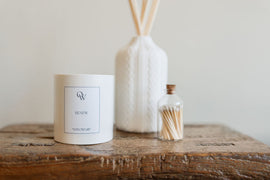


Choose a robe for your hospital bag with comfortable wrap coverage, sleeves that stay clear of your hands and care instructions you can manage at home. For your 2026 packing list, check your hospital’s guidance first: a personal robe is a comfort layer, not a replacement for clothing your care team asks you to wear.
- Choose a robe for hospital bag comfort by checking seated coverage, sleeve clearance and the care label.
- One Wednesday’s Waffle Knit Robe suits shoppers seeking a cotton robe for hospital packing and everyday use.
- Practise opening and closing your robe before packing, especially if you plan to breastfeed.
- Follow your hospital’s clothing guidance; a personal robe is optional, not medical equipment.
Why this matters
A hospital bag asks something different of your everyday clothes. You want a familiar layer that is easy to put on, comfortable while sitting and straightforward to move out of the way when needed.
Start with function, then consider colour and texture. The Waffle Knit Robe from One Wednesday is a cotton option to consider, but the right choice still depends on your fit preferences, your care routine and the hospital’s instructions.
For a 2026 hospital stay, use the current packing guidance from your own maternity unit rather than treating a general checklist as a requirement. A robe earns its place when it makes getting dressed simpler.
How do you choose a robe for your hospital bag?
Choose your robe by trying it over the clothes you intend to pack. Check it standing, sitting and reaching; a wrap that looks generous on a hanger can feel different once you move.
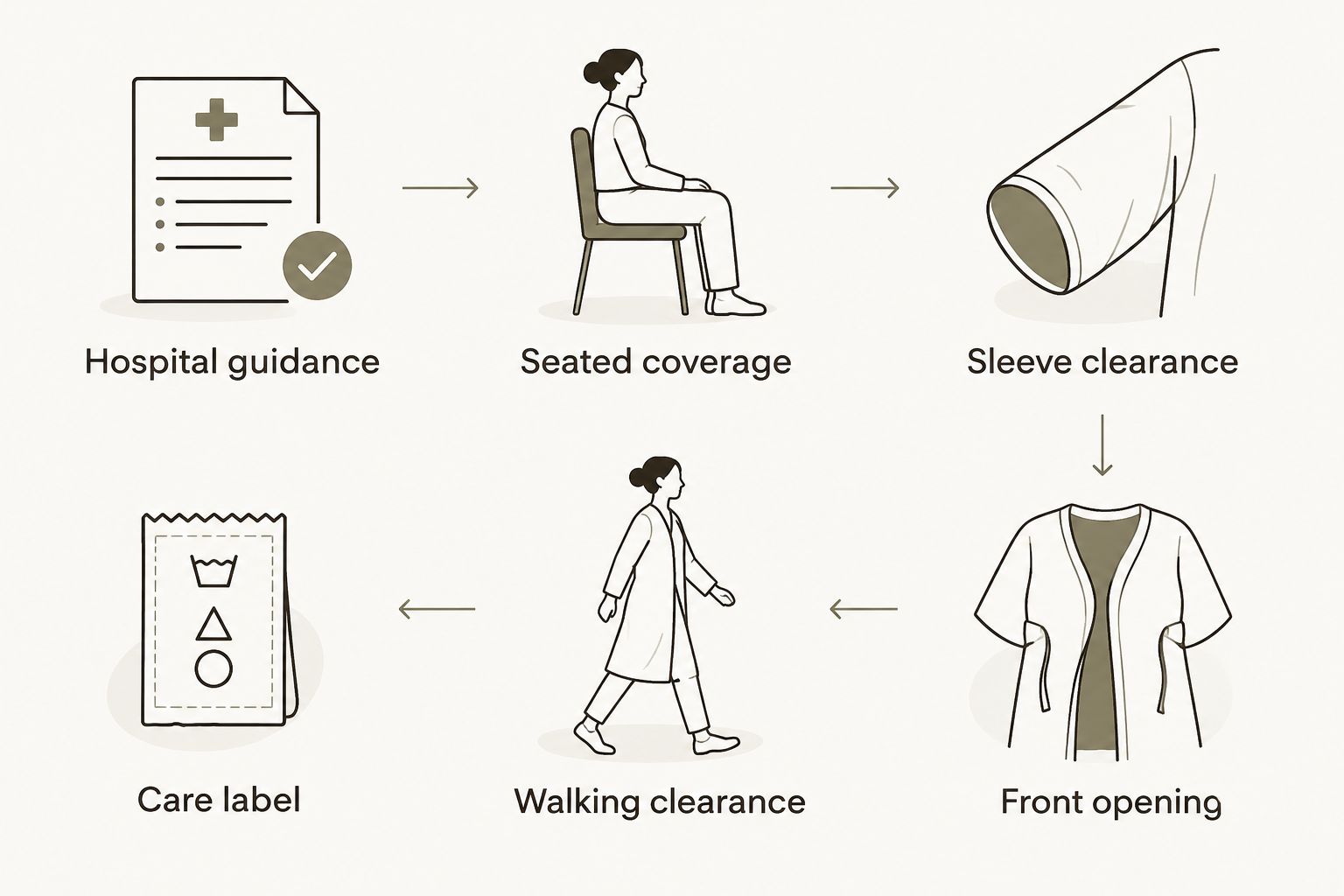
Use this sequence before placing it in your bag:
- Check the hospital guidance. Confirm whether personal clothing is appropriate and when you can wear it. Ask your care team about clothing around any planned procedure.
- Test seated coverage. Sit in a chair with the robe closed. Check that the front stays comfortably overlapped without pulling the belt tight.
- Check the sleeves. Reach for a cup and wash your hands. Notice whether the cuffs fall into your way or need constant adjustment.
- Practise opening it. Open and close the front while seated. If you plan to breastfeed, try the movement over your intended feeding clothes.
- Walk and turn. Check that the hem stays clear of the floor and that you can move without holding it up.
- Read the care label. Make sure the washing and drying instructions fit the help and laundry arrangements you expect at home.
You do not need a robe with a particular maternity label to carry out these checks. Equally, a maternity label does not replace checking the actual garment’s measurements and how it feels on you.
Compare robe designs by the task they need to do
These are design choices, not a ranking of fabrics. Each has a useful role and a limitation to check in person.
| Design choice | Best for | Practical benefit | What to check |
|---|---|---|---|
| Wrap-front robe | Adjustable front coverage | You can change the overlap and open the front | Whether the wrap stays closed while seated without a tight belt |
| Button-front robe | Shoppers who prefer a fixed closure | Buttons provide a defined way to fasten the front | Whether you can manage the buttons comfortably while sitting |
| Shorter robe | Shoppers prioritizing walking clearance | A shorter hem can stay farther from the floor | Whether it gives the seated coverage you want |
| Longer robe | Shoppers prioritizing leg coverage | More of your legs remain covered when standing | Whether the hem interferes with walking or getting up |
Choose the design you can manage comfortably, rather than the one that looks most like a hospital-bag essential. If a robe needs repeated adjustments during a simple try-on, keep looking.
Choose coverage without adding pressure
Start with the robe’s measurements, not an automatic decision to size up. Extra fabric can increase overlap, but it can also change sleeve length and leave more material to arrange around you.
Try your intended size over a comfortable nightdress or pyjamas. Bring the fronts together naturally and tie the belt without cinching your waist. Then sit down and lean back.
The useful question is not whether the robe closes at all. It is whether it stays comfortably closed in the position where you expect to spend time.
Check the upper front as well as the hem. You should not have to keep pulling the neckline into place to get the coverage you prefer. If you are buying before birth, use the current size guide and allow for your changing fit rather than trying to predict an exact postpartum size.
For a gift, ask about preferred length and fit before choosing. A hospital robe is a personal item; the recipient’s comfort matters more than making the purchase a surprise.
Keep sleeves and fastenings simple
A sleeve can feel comfortable at rest and become distracting when you reach forward. Test the robe while doing ordinary movements: washing your hands, picking up your phone and taking something from a bag.
Notice how much adjustment each action requires. If you plan to push the sleeves back, check whether they stay where you put them without feeling restrictive.
A belt should be easy for you to find and manage. Try tying it while seated, then loosening it again without standing up. If you prefer buttons, practise those too; neither closure is automatically right for everyone.
Your care team decides what clothing works around examinations, monitoring or treatment. Do not choose a robe on the assumption that it will accommodate every hospital procedure. Ask when a personal layer is appropriate, and follow the answer even if it changes what you pack.
Consider One Wednesday’s Waffle Knit Robe
One Wednesday’s Waffle Knit Robe is best for shoppers who want a cotton robe for hospital packing and everyday use. Its appeal here is a familiar clothing choice, not a medical feature or a promise about recovery.
The official product information checked on October 13, 2026 specifies 100% stonewashed Turkish cotton, a maximum 30°C delicate wash and recommended hang drying. Those details give you something concrete to assess against your fabric preferences and laundry routine.
The advantages and limits are straightforward:
- Best for: someone who wants a cotton robe to consider for both the hospital bag and home.
- Material: the stated cotton composition lets you choose by fibre rather than relying on a photograph.
- Care consideration: a delicate wash and recommended hang drying need to fit your household routine.
- Fit consideration: fabric composition does not establish seated coverage, sleeve clearance or your preferred length; check the current measurements.
- Hospital consideration: the product information does not establish approval by your maternity unit.
Turkish cotton describes the stated cotton origin; it does not, by itself, establish where the finished robe was manufactured. Country references also do not prove a particular factory’s working conditions or a garment’s suitability for sensitive skin.
Choose on the evidence that matters to your use: material, fit, care and comfort. Do not turn a country name or a textured weave into a claim about medical suitability, drying speed or performance.
Why the right hospital-bag robe varies
There is no single length, closure or fabric that suits every hospital stay. Your choice changes with the practical details of how you will wear and care for it.
- Hospital instructions: personal clothing must fit the guidance from the unit where you will receive care.
- Your preferred coverage: some shoppers want more leg coverage; others find a shorter hem easier to manage.
- Your underlying clothes: a robe needs to fit comfortably over the nightdress, pyjamas or other clothing you intend to wear.
- Front access: if you plan to breastfeed, check the opening over your intended feeding clothes rather than assuming any wrap will feel convenient.
- Laundry arrangements: delicate washing and hang drying require different handling from garments whose labels permit other methods.
- Use after discharge: a robe that suits your ordinary mornings has a clearer place in your wardrobe after the hospital bag is unpacked.
These factors are more useful than choosing by appearance alone. A quiet colour or an appealing texture is a finishing preference, not a substitute for the movement check.
Should I size up my robe for the hospital?
Do not size up automatically for your hospital robe. Start with the garment’s current measurements and check how much overlap you have over your intended clothes.
A larger size is not an improvement if the sleeves become awkward or the hem gets in your way. Choose the fit that gives you comfortable coverage without creating a new adjustment to manage.
Can I wear my own robe after giving birth?
Ask your maternity unit when you can wear your own robe after giving birth. Its instructions and your care needs take priority over a general packing recommendation.
Keep the robe easy to reach if the unit permits it. Pack it as an optional layer, with the understanding that you might prefer or need different clothing during parts of your stay.
Is a cotton robe enough for my hospital bag?
A cotton robe can be your chosen comfort layer, but fibre content alone does not settle the decision. You still need to check coverage, movement, the care label and hospital guidance.
Do not assume that cotton guarantees a particular warmth, fabric weight or drying time. Judge the actual robe rather than assigning those qualities from the fibre name.
Pack it for use, not just for the checklist
Before closing your 2026 hospital bag, give your robe a final practical check. Follow its own label if you wash it before packing, let it dry completely and check the fit again afterwards.
Fold it where you or your support person can find it without emptying the bag. Keep the belt with the robe, and show your support person where you have packed it if they will help you find clothing.
Think about the journey home separately. A robe that feels pleasant over sleepwear is not automatically the outfit you will want for leaving the hospital. Set aside your preferred going-home clothes rather than asking the robe to do every job.
If you already own a robe that passes the checks, you do not need another simply because you are packing for a hospital stay. Repeated wear begins with choosing something that already fits your life.
FAQ
What should I look for in a robe for my hospital bag?
Look for comfortable seated coverage, manageable sleeves, an easy front opening and care instructions you can follow. Check your hospital’s clothing guidance before deciding what to pack.
Do I need a maternity robe for the hospital?
You do not need to choose by a maternity label alone. Assess the actual robe’s measurements, coverage and ease of movement, and follow your maternity unit’s guidance.
Should my hospital robe be long or short?
Choose a length that gives you the coverage you want without interfering with walking. Test it while seated and while getting up, not only while standing.
Is One Wednesday’s Waffle Knit Robe cotton?
One Wednesday’s Waffle Knit Robe is specified as 100% stonewashed Turkish cotton in the official product information checked on October 13, 2026. Cotton origin does not establish the finished garment’s country of manufacture.
How do I wash the Waffle Knit Robe?
The Waffle Knit Robe’s verified care instructions specify a maximum 30°C delicate wash and recommend hang drying. Follow the care label supplied with your garment rather than general cotton-care advice.
Can I use a wrap robe if I plan to breastfeed?
A wrap front gives you a way to open the robe, but you should test it over your intended feeding clothes. Check whether you can open and close it comfortably while seated.
Is a robe a useful gift for someone packing a hospital bag?
A robe can be a useful gift when it matches the recipient’s preferred fit, length and laundry routine. Ask what they want before choosing, and do not assume they need a new one.
One last thing
For your 2026 packing list, the most useful robe test happens in a chair. Sit down, reach for a drink, stand up and close the front again.
If you spend that brief try-on rearranging the sleeves, pulling the neckline closed or holding up the hem, the robe is asking too much of you. Choose the piece that needs less attention.