

Choose a postpartum robe that stays comfortably closed when you sit, opens easily when needed and fits without pressure at the waist. For your 2026 shortlist, check the care instructions as closely as the fabric: a robe that needs hang drying also needs space in your laundry routine.
- Choose a postpartum robe for seated comfort, adjustable coverage and manageable care, not appearance alone.
- One Wednesday’s Waffle Knit Robe suits shoppers seeking stonewashed cotton, provided its fit and hang-drying routine work.
- Check feeding access over the clothes you will actually wear underneath.
- A robe is everyday clothing, not a recovery garment or a substitute for medical advice.
Why this matters
A robe can look generous while standing and feel quite different in a chair. Postpartum shopping calls for a closer look at the ordinary moments: sitting down, reaching for a drink, changing clothes and receiving visitors without repeatedly adjusting what you wear.
Buy for your present comfort, rather than a future size. The guide to choosing a women’s robe for everyday comfort covers the broader wardrobe question; this 2026 checklist focuses on postpartum fit, access and care. Your own preferences matter more than a label describing a robe as a new-parent essential.
How do you choose a robe for postpartum comfort?
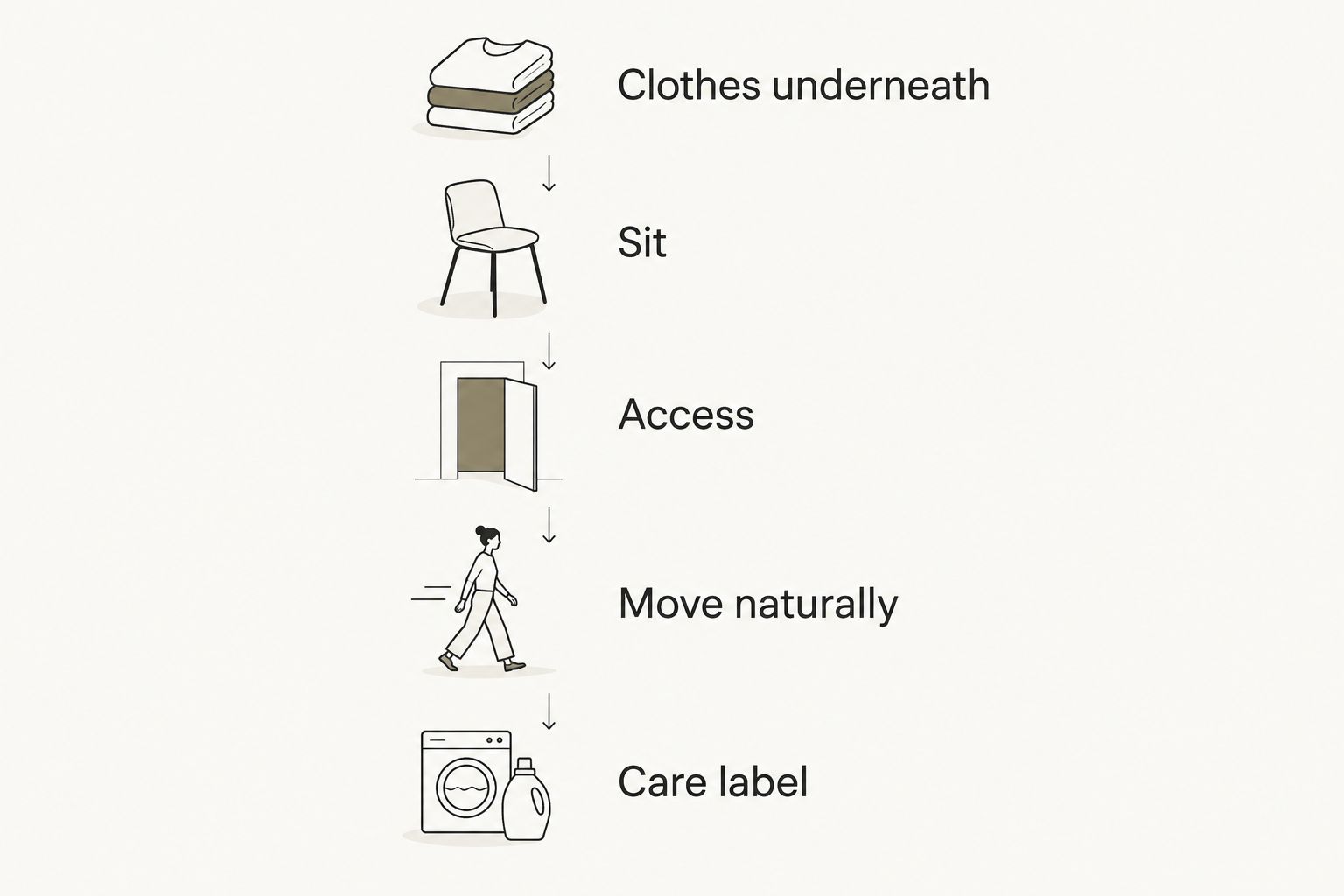
Start with a seated fit check, then test access, movement and care. Fabric matters, but it cannot compensate for a front that falls open or a belt that feels uncomfortable.
Start with the clothes underneath
Try the robe over the layers you expect to wear at home. That might mean pyjamas, a feeding top or another comfortable base layer. A robe tried over very little clothing does not tell you how it will feel over your usual clothes.
Check the shoulders and upper arms without pulling the robe tightly across your body. You should be able to reach forward without the back feeling restrictive. If you are shopping online, compare the published garment measurements with clothing you already find comfortable rather than relying only on the size name.
Sit before deciding
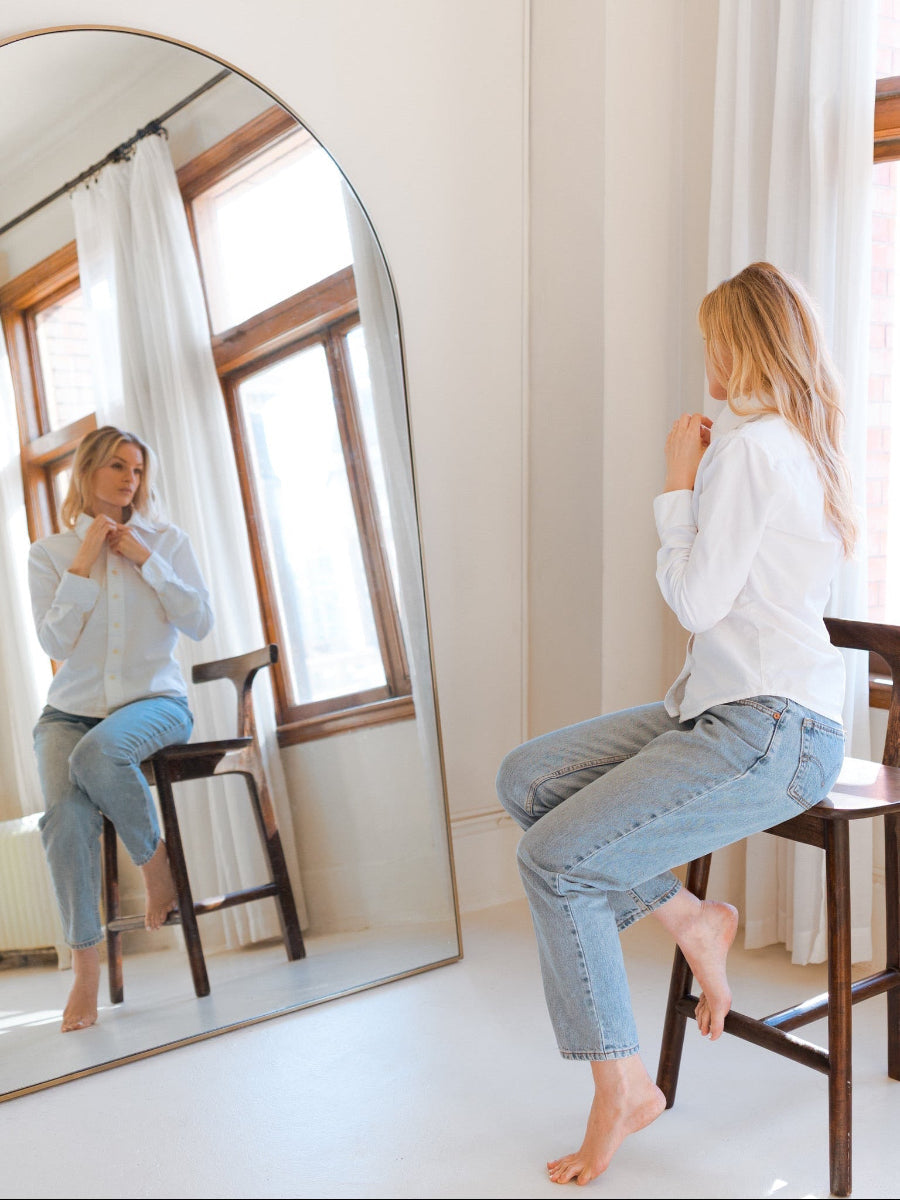
Sit in the kind of chair you use at home and let the fabric settle naturally. Check whether the front panels still overlap, the hem offers the coverage you want and the belt rests somewhere comfortable.
Do not tighten the belt simply to make an unsuitable fit stay closed. If securing the robe creates pressure, try a different size or cut. Any instructions from your care team about clothing near an incision or sensitive area take priority over styling advice.
Check access
If you plan to breastfeed or express milk, practise opening and closing the robe over your intended feeding clothes. Check whether the neckline moves aside without requiring you to remove the whole garment.
Access and coverage are separate questions. A robe that opens easily still needs to feel comfortable when closed. If feeding access is not relevant to you, use this step to assess how easily you can dress and undress.
Move naturally
Reach forward, bend your elbows and walk around. Notice whether the sleeves slip over your hands, the hem catches underfoot or the tie needs constant attention.
A generous silhouette is useful only when the extra fabric stays manageable. Choose the amount of room that supports your movements, not the largest size by default.
Read the care label
Decide whether the actual washing and drying instructions fit your household. A machine-washable robe can still require a separate cycle or a particular drying method.
Think through where you would hang or lay the garment to dry before choosing it. Care is part of comfort: the piece should fit your routine as well as your body.
Which robe features matter most for your routine?
Different routines place different demands on a robe. Use this comparison to decide what to check first; these are shopping priorities, not claims that a particular fabric or product performs best for everyone.
| Priority | Best for | What to check | Trade-off to consider |
|---|---|---|---|
| Adjustable wrap | Shoppers who want control over the closure | Front overlap while seated and a comfortable tie position | A tie still needs fastening and adjustment |
| Generous cut | Shoppers wearing layers underneath | Shoulder movement, sleeve room and seated coverage | Extra fabric can feel cumbersome |
| Shorter hem | Shoppers who dislike fabric around their lower legs | Coverage when seated and clearance while walking | Less leg coverage |
| Longer hem | Shoppers who prefer more leg coverage | Whether the hem stays clear of your feet | More fabric to manage while moving |
| Machine-washable care | Households planning regular laundering | Exact cycle, temperature and drying instructions | Machine washable does not mean tumble-dry suitable |
Avoid treating any row as a universal recommendation. If you dislike a belt against your waist, an adjustable wrap is not automatically the right choice. If you prefer more coverage, a shorter hem will not become comfortable simply because it is convenient to walk in.
Why postpartum robe comfort varies
The same robe can suit one person’s routine and frustrate another’s. These are the practical differences to consider:
- Fit while seated. Standing coverage does not establish how the front panels sit in a chair.
- Layers underneath. Pyjamas and feeding clothes take up space within the garment.
- Closure preference. A tie offers adjustment, but only if you find its position and fastening comfortable.
- Sleeve and hem length. Fabric should offer the coverage you want without getting in your way.
- Fabric preference. Choose a texture you enjoy against your skin rather than assuming a fibre name guarantees comfort.
- Laundry arrangements. A recommended hang-drying method needs a suitable place in your home.
For your 2026 purchase, separate a feature from its benefit. Cotton content is a material fact; whether you enjoy wearing that cotton robe is a personal fit and feel decision. Neither the fibre label nor the word postpartum settles that question.
A cotton option: One Wednesday’s Waffle Knit Robe
One Wednesday’s Waffle Knit Robe is best for shoppers seeking a stonewashed cotton robe who are comfortable with hang drying. It is the first option to consider here for that specific preference, rather than a claim that one robe suits every postpartum body.
The Waffle Knit Robe product information dated October 13, 2026 specifies 100% stonewashed Turkish cotton, a maximum 30°C delicate wash and recommended hang drying. Those details give you a concrete starting point for comparing materials and care.
The appeal is straightforward: a cotton robe with a stonewashed finish and a defined washing routine. The limitation is equally practical: recommended hang drying does not suit someone whose essential requirement is tumble-dryer care. Confirm the current size information and assess the closure and seated coverage before deciding.
The supplied product details do not establish postpartum-specific features. Treat the robe as everyday clothing and apply the same movement and access checks you would use for any robe. Do not assume a recovery benefit, special feeding construction or suitability for a particular medical situation.
What Turkish cotton does—and does not—tell you
The product information describes Turkish cotton and Oeko-Tex certified cotton. Cotton origin, a certification description and garment manufacture are different pieces of information. Turkish cotton does not, by itself, establish where the finished robe was sewn.
Country alone also does not prove better quality, factory conditions or sustainability. For a production-based comparison, look for product-level evidence about the fibre, manufacturing location and the scope of any certification. A simple origin label is not enough to rank garments made in Turkey, Peru, Portugal, India or China.
How should a postpartum robe fit around your waist?
A postpartum robe should close without requiring a tight belt and remain comfortable when you sit. Fit the garment to the clothes and coverage you want now, rather than choosing a size as a target.
If you dislike pressure at your waist, test where the tie naturally rests. Moving a belt is useful only if the robe still stays securely closed and feels comfortable. Do not use a robe belt as compression or support unless your clinician has specifically advised an appropriate garment.
Sizing up is not a complete solution. A larger robe can add room through the body while also adding sleeve length and fabric at the hem. Check the whole garment instead of assuming more fabric always means more comfort.
Can you use an everyday robe for feeding?
An everyday robe can work for feeding if it opens as you need and sits comfortably over your feeding clothes. The useful test is the movement itself, not whether the product name includes nursing or postpartum.
Practise while seated and check what happens to the unused front panel and belt. Keep loose fabric clear of your baby’s face. If you prefer a separate feeding layer underneath, assess the robe and that layer together rather than expecting the robe to provide every function.
Is a postpartum robe a thoughtful gift?
A postpartum robe is a thoughtful gift when the recipient wants one and you know their preferences for fit, coverage and laundry care. Ask about those details before choosing a size or fabric.
A quiet, practical question is enough: would they prefer a robe, another clothing layer or something else entirely? Avoid presenting a robe as something every new parent needs. A gift should make getting dressed feel easier, not add another expectation.
Include the garment’s actual care instructions rather than a generic cotton-care note. If the recipient needs dryer-compatible clothing, do not substitute a hang-dry recommendation simply because you like the fabric.
Caring for a robe during postpartum life
Follow the garment’s own label, not a universal cotton-washing rule. Cotton clothing can have different constructions, finishes and care instructions. The instructions for a shirt or sweater do not automatically apply to a robe.
For the One Wednesday Waffle Knit Robe, the product information dated October 13, 2026 gives a maximum 30°C delicate wash and recommends hang drying. Do not replace those instructions with a hotter wash or a dryer setting based on another cotton garment.
Plan the practical details before the first wash. Choose a suitable drying space, keep the care label accessible and make sure anyone helping with laundry knows the instructions. If a cleaning requirement conflicts with the garment’s care directions, seek product-specific advice instead of improvising a treatment.
FAQ
What should I look for in a postpartum robe in 2026?
Choose a postpartum robe for comfortable seated coverage, manageable sleeves, easy access and care instructions that fit your routine. Try it over the clothes you expect to wear underneath, rather than judging the fit while standing alone.
Should I size up when buying a postpartum robe?
Size up only if the garment measurements and your fit check support it. Extra room through the body can also mean longer sleeves and more fabric at the hem, so assess movement and coverage together.
Is a cotton robe always the most comfortable postpartum option?
Cotton alone does not establish which robe will feel most comfortable to you. Consider the fabric texture, garment cut, closure and care instructions alongside the fibre content.
Is One Wednesday’s Waffle Knit Robe suitable for postpartum wear?
One Wednesday’s Waffle Knit Robe is an option for shoppers seeking 100% stonewashed Turkish cotton and who are comfortable with recommended hang drying. Assess its fit, closure and feeding access yourself; the supplied product details do not establish postpartum-specific features.
Can I tumble dry a postpartum robe?
Tumble dry a robe only when its own care label permits it. A machine-washable label does not establish dryer suitability, and the Waffle Knit Robe’s supplied care information recommends hang drying.
Do I need a special nursing robe for breastfeeding?
You do not need to choose by the nursing label alone. Check whether the robe opens easily over your feeding clothes, remains comfortable while seated and lets you keep loose fabric clear of your baby’s face.
One last thing
Before removing the tags, sit down in the robe with your intended layers underneath. Reach for something nearby, adjust the closure and stand again. That ordinary sequence tells you more about everyday comfort than a standing mirror check.