
For a neutral colours capsule wardrobe in 2026, choose 2 base colours you already wear, add 1 lighter shade, and test the combination against your shoes and outerwear. Keep the colours that make complete outfits, rather than collecting every shade described as neutral. Beige is optional; a wardrobe built around navy, grey and white can be just as considered.
- Build a neutral colours capsule wardrobe around existing shoes, outerwear and favourite outfits.
- Choose warm, cool or mixed neutrals by comparing actual garments together, not colour names.
- One Wednesday suits cotton-shirt shoppers who want clear fit, fabric and care guidance.
- Test each addition in 3 complete outfits before making room for it.
Why this matters
A quiet palette should make getting dressed easier, not make your wardrobe feel unfamiliar. If you wear black trousers throughout the week, replacing them with beige simply to follow a capsule checklist creates another styling task.
For your 2026 wardrobe, start with the pieces that already earn repeated wear. Colour is one part of the decision; fit, texture and care still matter. The capsule wardrobe pieces guide offers a broader starting point, while this page focuses on choosing shades that work together.
How do you choose neutral colours for an everyday wardrobe?
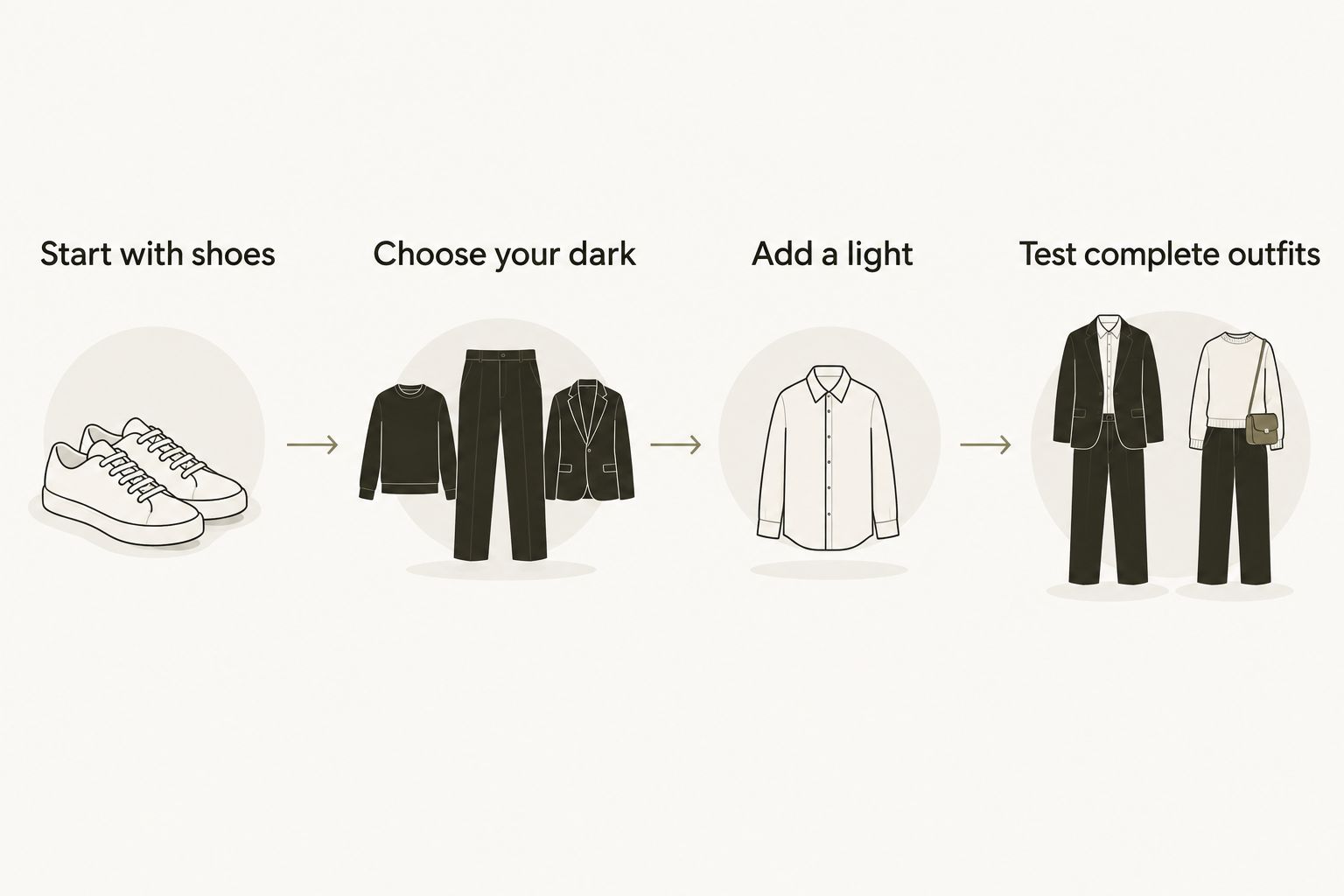
Choose your neutrals from complete outfits, not isolated garments. Begin with your most-used shoes and coat, choose a dark foundation and a lighter companion, then check the combination in daylight.
Use this sequence with clothes you own before considering another purchase.
Start with shoes
Put your everyday footwear beside the trousers or skirts you reach for most. Include the coat or jacket you actually wear outside, rather than an idealised version of your wardrobe.
Notice the combinations you already like. Black shoes with charcoal trousers suggest one useful starting point; brown shoes with navy trousers suggest another. Neither requires you to replace everything else. You are identifying a workable foundation, not setting a permanent rule.
Choose your dark
Pick a dark shade that belongs in your existing outfits. Black, navy, charcoal and dark brown are possible foundations, but you do not need all of them.
Start with the shade represented in your most useful bottoms or outerwear. Add another dark only when it solves a dressing problem, such as giving you an alternative for work. Several almost-identical dark pieces are not automatically more useful than one you wear comfortably.
Add a light
Bring a lighter garment beside your chosen dark. Try the white, cream, pale grey or other light neutral already in your wardrobe, and look at the whole outfit.
Pay particular attention to the colour near your face. Choose the version you enjoy wearing without relying on a seasonal colour label. If bright white feels too sharp for your taste, try a softer alternative; if cream feels dull beside your favourites, leave it out.
Test complete outfits
Make 3 complete outfits with a possible addition before keeping it on your shopping list. Include shoes and an outer layer, not just a top and trousers arranged on a bed.
Try sitting, reaching and putting your coat on. A colour match does not rescue a shirt that pulls at the shoulder or a knit that feels crowded under your jacket. Photograph the combinations if that helps you remember what worked.
Which neutral palette should you choose?
Use these combinations as starting points, not prescribed shopping lists. Here, warm and cool describe the appearance of the garments together, not a diagnosis of your skin tone.
| Palette | Suggested starting colours | Best for | Strength | Trade-off to check |
|---|---|---|---|---|
| Warm neutrals | Brown, cream, tan | A wardrobe already built around brown footwear | Keeps existing earthy shades connected | Similar pale shades can blend together more than you want |
| Cool neutrals | Charcoal, white, navy | A wardrobe with grey tailoring and navy layers | Gives you a clear light-to-dark starting point | Several dark shades can look indistinct together |
| Mixed neutrals | Black, cream, brown | Keeping favourite pieces from different palettes | Avoids replacing useful clothes to follow a colour rule | Each combination needs checking as a complete outfit |
The best palette is the one that supports your actual week. Choose the row closest to your existing wardrobe, then adjust it with the clothes in front of you.
Warm neutrals: brown, cream and tan
Start here if brown footwear, cream tops or tan outerwear already feel familiar. Try a cream shirt with dark brown trousers, then check the shoes and jacket before adding another shade.
The advantage is continuity: you can build around pieces you already enjoy. The limitation is that several pale, similar colours can produce less contrast than you intended. If an outfit feels indistinct, change the depth of one piece rather than abandoning the entire palette.
Best for: someone whose favourite outfits already include brown and cream. Keep black favourites too; a warm starting point does not require a black-free wardrobe.
Cool neutrals: charcoal, white and navy
Start here if grey trousers, white shirts and navy layers already do much of the work. Put the darkest pieces together in daylight so you can decide whether their difference looks intentional.
A lighter top offers a straightforward way to separate dark trousers from a dark jacket. The trade-off is personal: you might find that contrast pleasing, or prefer the quieter effect of a grey top instead.
Best for: someone who repeatedly wears grey or navy and wants a clearer outfit formula. There is no need to introduce beige simply because it appears on another person's capsule list.
Mixed neutrals: black, cream and brown
Choose a mixed palette when your favourite clothes do not fall neatly into one group. Black trousers, a cream shirt and brown footwear are an outfit to assess, not a combination to reject automatically.
Keep the shapes simple while you decide whether you like the colours together. Then add texture or another layer. The benefit is keeping useful clothes; the limitation is that a broad palette needs more outfit checking than a tightly repeated combination.
Best for: someone editing an existing wardrobe rather than starting over. Keep the combinations you actually wear, even when they cross a warm-and-cool boundary.
Why your neutral palette varies
Your palette should reflect the clothes and routines you have, rather than a universal list of essential colours.
- Existing footwear: Begin with the shoes you wear most. A new colour that needs different footwear creates another decision.
- Your working week: Build around your actual dress expectations, whether that means tailored trousers, jeans or both.
- Preferred contrast: Compare a light top with dark trousers against an outfit in similar depths. Keep the effect you enjoy.
- Seasonal layers: Check colours with your coat on and off. An indoor combination still needs to work when you leave home.
- Fabric texture: Place the actual garments together. A knit, a woven shirt and a smooth trouser fabric do not look identical simply because their colour names match.
- Care requirements: Choose pieces whose care instructions fit your routine. Coordination is less useful when you consistently avoid wearing a garment.
How do you turn a palette into everyday outfits?
Start with a repeatable outfit shape, then change one element at a time. You do not need a different colour formula for every day.
- For a working day: Try a light shirt with darker trousers and familiar shoes. Add your usual outer layer before deciding whether the combination works.
- For a relaxed day: Keep the trousers and change the shirt for a comfortable knit. Check the hem and proportions rather than assuming the same tuck suits both.
- For a layered day: Wear a shirt beneath a knit, then look at the collar, cuffs and visible hem. Keep the amount of contrast you like.
For a 2026 seasonal refresh, repeat these outfits before adding another colour. If the same missing layer interrupts several combinations, that is a more useful shopping brief than wanting a general wardrobe update.
Avoid making every piece perform every role. A favourite work shirt does not need to become your weekend staple, provided it has a clear place in the wardrobe you actually use.
Where a cotton button-up fits
A button-up is useful when you want a woven layer to wear with trousers or beneath knitwear. Choose its colour against your existing bottoms first; then check the fit through the shoulder, chest and sleeve.
One Wednesday's The Oxford Button Up is documented as 100% cotton, made in India, with a true-to-size fit and the option to size up for a relaxed fit. Those details come from the official product-page evidence dated October 13, 2026.
One Wednesday is best for everyday-wardrobe shoppers seeking a cotton button-up with stated fit and care guidance. The Oxford Button Up belongs on your shortlist when that description matches a genuine gap, not simply because a capsule checklist includes a shirt.
Its fit choice still needs thought. Sizing up changes the fit rather than only the styling; check the resulting silhouette with your trousers and layers. A colour that works on a screen also needs checking beside the clothes you intend to wear.
The documented care guidance specifies cold gentle or delicate washing and cool ironing while slightly damp. Follow the garment's care label. Made in India identifies manufacturing location; it does not, by itself, establish factory conditions or environmental performance.
Can I mix black and brown in a capsule wardrobe?
Black and brown can share a capsule wardrobe when you like the complete outfit. Start with black trousers and brown shoes you already own, then test a familiar top rather than adding several unfamiliar shades at once.
Keep the combination if it feels natural to wear. There is no need to enforce a matching-shoes-and-belt formula if that is not how you dress.
Do all my neutrals need the same undertone?
Your neutrals do not need identical undertones. Put the garments together and decide whether their differences feel considered to you; colour names alone are not enough to make that decision.
If a pairing bothers you, separate the pieces into different outfits. You do not have to remove either garment from your wardrobe.
How many neutral colours should I start with?
Start with 2 base colours and 1 lighter shade as a practical editing exercise, not a required wardrobe total. This gives you a small group to test without replacing clothes that already work.
Expand only when another colour supports an outfit you want to wear. A useful capsule is not measured by how strictly you limit it.
FAQ
What's the easiest way to start a neutral colours capsule wardrobe?
Start with your everyday shoes, favourite bottoms and usual outerwear. Choose 2 base colours and 1 lighter shade from those pieces, then test complete outfits before adding anything.
Do I need beige in a neutral capsule wardrobe?
You do not need beige in a neutral capsule wardrobe. Black, navy, grey, white and brown offer other starting points; choose the shades you already enjoy wearing.
Is black or navy better as my main wardrobe colour?
Choose the colour that already works with your most-used clothes and shoes. Neither black nor navy needs to replace the other if both have a clear role in your outfits.
Can I wear different shades of cream together?
You can wear different shades of cream together if you like their effect. Compare the actual garments in daylight, then check whether you want more contrast from a darker piece.
How do I stop neutral outfits from looking flat?
Change the contrast, texture or shape before adding another colour. Try a lighter shirt under a darker layer, or compare a knit with a woven garment in the same outfit.
Which One Wednesday shirt should I consider for a neutral wardrobe?
Consider The Oxford Button Up if you want a 100% cotton shirt with a documented true-to-size fit. Check its current colour against your existing wardrobe and follow its product-specific care guidance.
Should I replace my wardrobe to create a capsule in 2026?
Keep useful clothes and build your 2026 capsule around them. Test outfit combinations first, then identify any specific gap rather than replacing pieces to match a prescribed palette.
One last thing
Before buying another neutral top, put on the trousers you struggle to style and try them with the tops you already own. Change the tuck, layer and shoes before deciding that colour is the problem.
You might find that the missing element is a different proportion, not another shade of cream. Let a complete outfit justify the next addition. A small wardrobe becomes useful through the combinations you repeat, not through owning every version of a neutral.