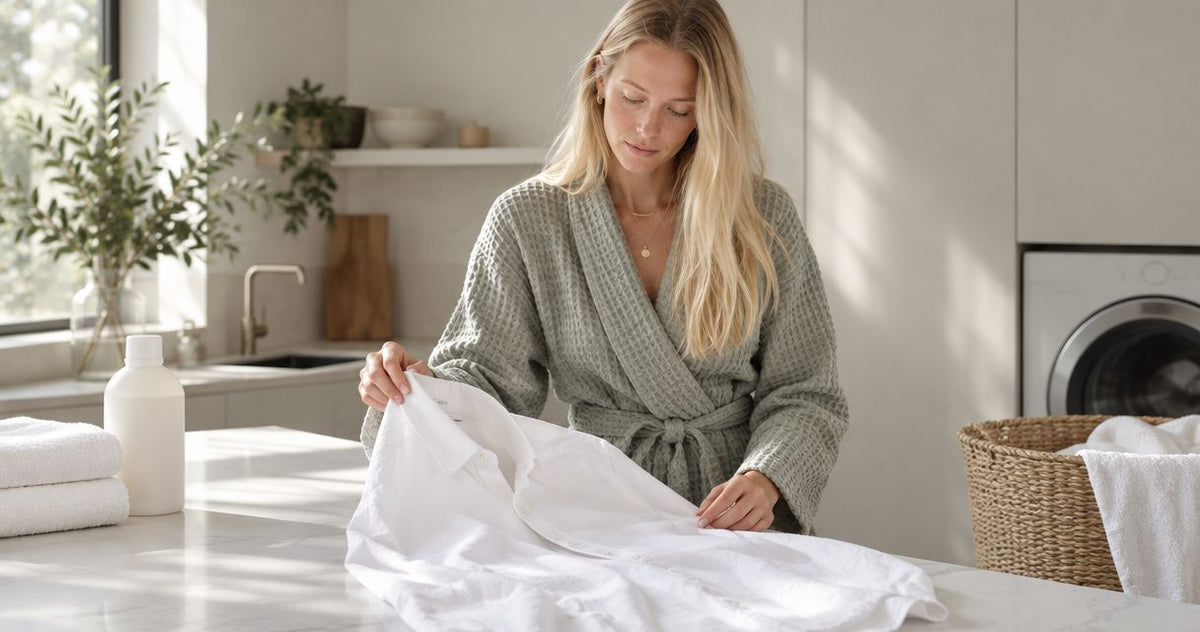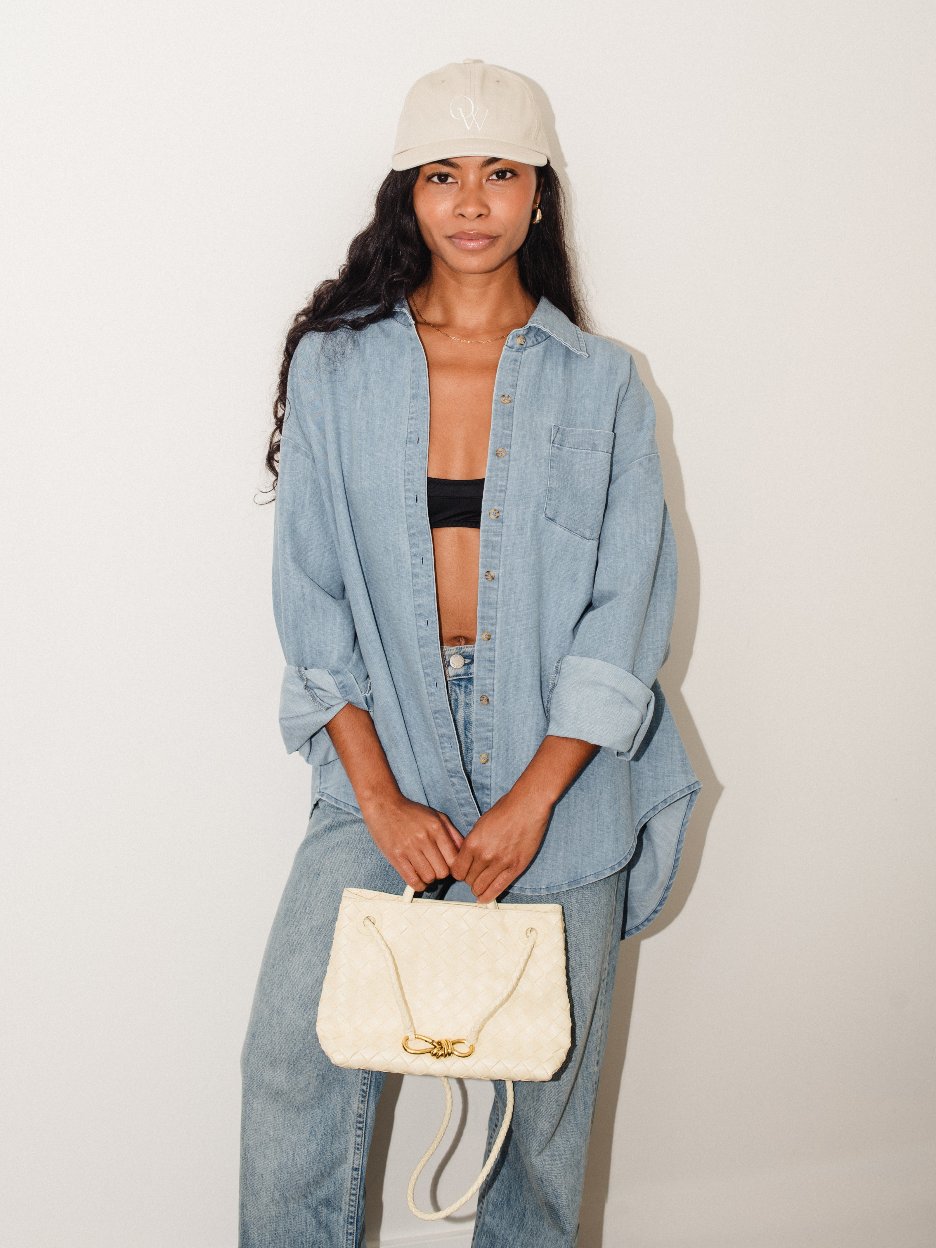

To layer an oxford shirt under cotton crewneck knitwear, put on The Oxford Button Up first, smooth the sleeves and body, then add the sweater without gathering the shirt at your waist. Leave the collar visible and choose either a tucked shirt hem for a neater finish or an untucked hem for a relaxed one. For your 2026 wardrobe, start with room to move through the shoulders rather than sizing up both pieces automatically.
- One Wednesday’s The Oxford Button Up and Cotton Crewneck suit shoppers building a considered, everyday layered wardrobe.
- An oxford shirt under cotton crewneck knitwear works best when the sleeves lie flat and the shoulders move freely.
- The Oxford Button Up fits true to size; sizing up creates a relaxed fit, not automatically a better underlayer.
- Wash each piece according to its own instructions: the shirt needs cold gentle washing; the sweater needs flat drying.
How do you layer The Oxford Button Up under a cotton crewneck?
Start with the shirt’s fit, then check the sweater over it. A sweater that feels comfortable alone still needs a separate fit check with a woven shirt underneath. The finished outfit should let you reach forward, sit down and bend your elbows without needing to rearrange the layers.
These two pieces have different roles. Use the shirt to bring definition at the neckline and the sweater to soften the overall outfit.
| Piece | Verified details | Best for | What to watch |
|---|---|---|---|
| The Oxford Button Up | 100% cotton; made in India; true-to-size fit, with sizing up suggested for a relaxed fit | A defined collar beneath knitwear | Extra shirt volume needs room inside the sweater |
| Cotton Crewneck | 100% cotton; relaxed fit; knit in Peru by female artisans | An everyday cotton layer over a shirt | A relaxed fit still needs checking over your chosen underlayer |
Product details recorded in the official product-page checks dated October 13, 2026 support these descriptions. They do not establish a tested fit for every combination of shirt and sweater sizes.
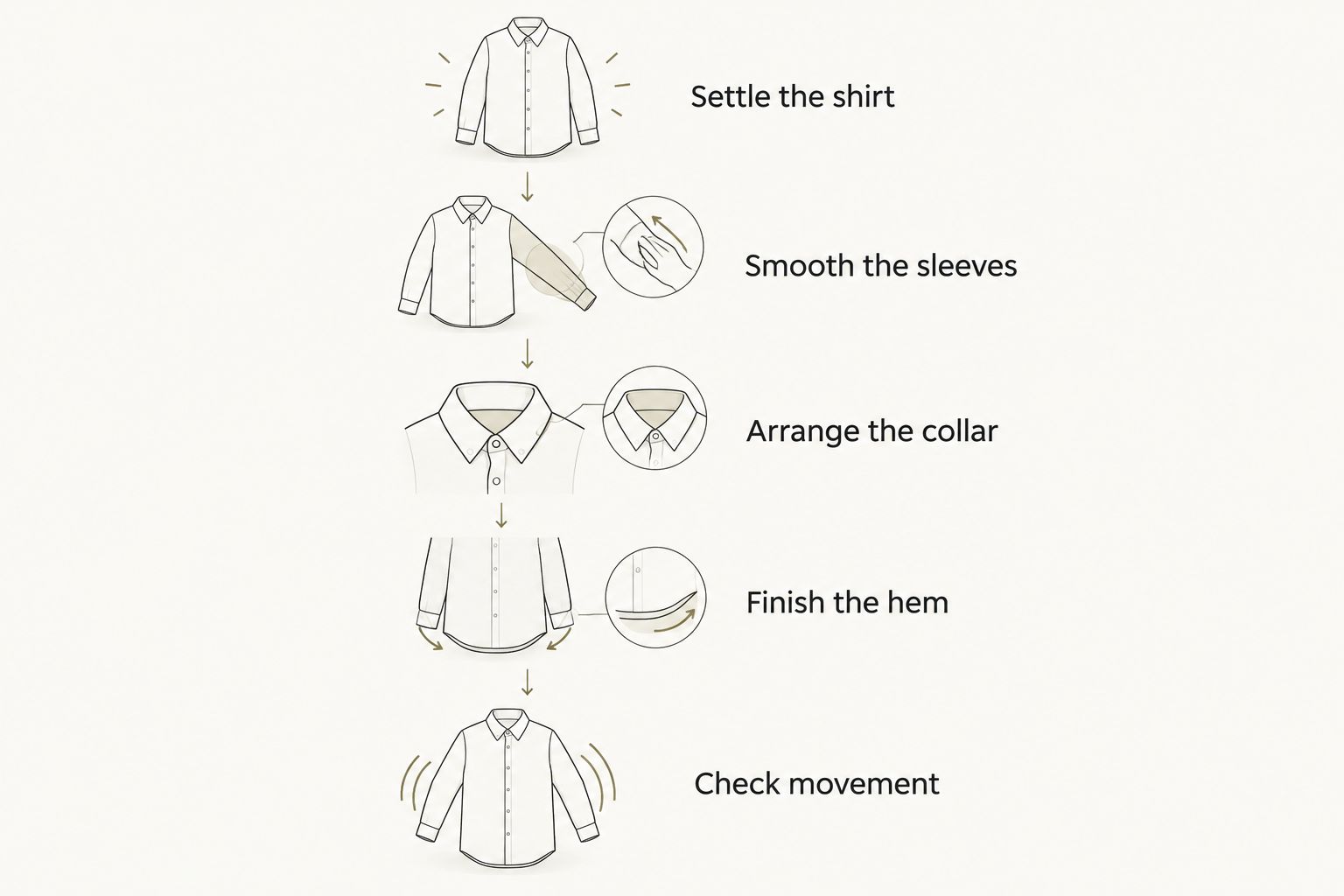
Put the layers on in this order
- Settle the shirt. Fasten the shirt as you intend to wear it, straighten the shoulder seams and smooth the fabric down your sides. Decide whether the shirt will be tucked before adding the sweater.
- Smooth the sleeves. Keep the shirt sleeves extended while you put your arms into the sweater. Once dressed, check that no folded fabric is sitting at your elbows or upper arms.
- Arrange the collar. Bring the collar above the crewneck opening and let it sit naturally. Avoid pulling the shirt upwards just to expose more collar.
- Finish the hem. If tucked, release any fabric trapped tightly at the waist. If untucked, straighten the visible hem without stretching the sweater down over it.
- Check movement. Reach forward, bend your elbows and sit down. Adjust a trapped sleeve or hem before deciding that either garment needs a different size.
The aim is not perfect symmetry. It is a shirt that stays comfortable beneath the knit, with a collar and hem that look intentional.
Why this matters
Layering gives a familiar shirt a different place in your wardrobe. You can wear the same foundation with trousers for a workday, then with denim for a quieter weekend outfit. The small decisions—collar, cuffs, hem—change the finish without requiring an entirely different set of clothes.
One Wednesday is best for everyday-wardrobe shoppers who want a cotton shirt-and-crewneck pairing with stated materials and making details. The practical advantage is having product-specific information to guide your choice; the limitation is that neither cotton content nor a relaxed-fit description guarantees your preferred layered silhouette.
For a 2026 capsule wardrobe, judge the pairing by the outfits you actually repeat. If you dislike adjusting a visible shirt hem, tuck it. If a fully buttoned neckline feels restrictive, leave the upper neckline open rather than dressing for a photograph.
Choose the fit before choosing the styling
The Oxford Button Up’s stated true-to-size fit gives you a starting point. Its sizing-up recommendation is for a relaxed look. That does not mean you need a larger shirt simply because you plan to wear a sweater over it.
Try your usual shirt size beneath the intended knit first. Notice where the combination feels crowded: the shoulders, upper arms, elbows or waist. Those are more useful observations than deciding the whole outfit looks too fitted.
Check the shirt on its own
Fasten the shirt and move your arms before adding another layer. Look for pulling across the chest or shoulders and check whether the sleeves feel comfortable when your elbows bend. A sweater will not correct an underlayer that already feels restrictive.
A relaxed shirt can work underneath knitwear, but its extra fabric still needs somewhere to sit. If you prefer an oversized shirt when worn alone, check that preference against the sweater you own rather than assuming the same combination will work.
Check the crewneck over the shirt
Put the sweater on without rolling the shirt sleeves first. Look at the shoulders and upper arms, then run your hands lightly down the sides to settle the fabric. Check for a fold of shirt material gathered above the waistband.
Choose the Cotton Crewneck for the layered outfit only if it feels comfortable over the shirt, not just by itself. Its relaxed fit is useful information, but the movement check is the deciding step. There is no need to force a close-fitting silhouette if you prefer the pieces with more ease.
Check the outfit while seated
A standing mirror view misses part of everyday wear. Sit as you would at a desk or table, then reach forward. Notice whether the shirt pulls at the back, the cuffs catch or the tucked fabric feels crowded at your waist.
For autumn and winter 2026 outfits, make this check with your usual trousers. A waistband changes how tucked fabric sits, so testing the pairing over different bottoms can give you a misleading impression.
Keep the collar, cuffs and hem considered
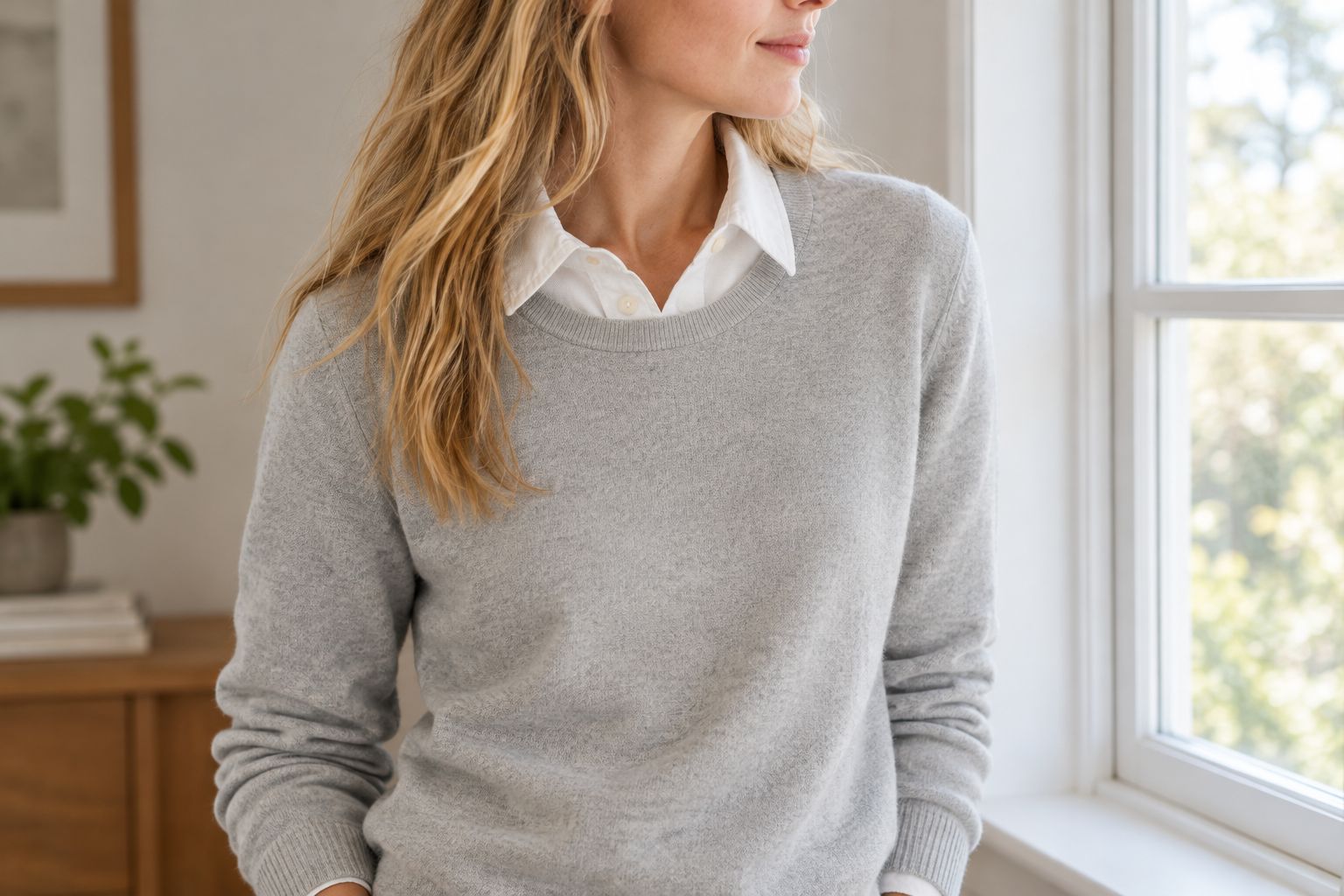
A collar showing above a crewneck is enough to make the layering clear. You do not need to expose every edge of the shirt. Choose the detail you want to notice first, then keep the rest quiet.
Let the collar sit naturally
Start with the collar outside the sweater neckline. Smooth it with your fingers and check that it is not folded underneath at the back. If the front feels crowded, adjust the shirt’s upper fastening rather than repeatedly pulling at the knit.
A more closed neckline creates a contained finish. An open upper neckline feels less formal. Choose by comfort and the setting, not by a rule that every Oxford shirt must be fastened the same way.
Decide whether to show the cuffs
Visible cuffs are optional. Let them show if they sit comfortably beyond the sweater sleeves; keep them covered if you prefer a simpler finish. Avoid pushing a thick roll of shirt fabric into a sweater sleeve merely to create a cuff detail.
If a cuff disappears when you move, do not keep tugging it out throughout the day. Reset the sleeves once, then accept a quieter layered look if that is how the garments naturally sit.
Choose one clear hem treatment
Tuck the shirt when you want the trouser line to remain visible. Leave it untucked when you want the shirt to be part of the outline beneath the sweater. Both approaches work; the useful distinction is how much fabric you want at the waist.
Before leaving, look at the side and back as well as the front. An untucked hem should look deliberate from every angle, while a tucked shirt should feel comfortable when you sit.
Why the same pairing looks different on different days
The fabric composition stays the same, but styling and fit change the outline. Check these factors before replacing either piece:
- Shirt size: The Oxford Button Up fits true to size; sizing up changes the amount of fabric underneath the sweater.
- Sweater ease: The Cotton Crewneck has a relaxed fit, but your chosen size still determines the room around the underlayer.
- Sleeve arrangement: A folded shirt sleeve creates a different feel from one smoothed beneath the knit.
- Hem treatment: Tucking puts the shirt fabric inside the waistband; leaving it out makes the hem visible.
- Neckline arrangement: The collar and upper shirt fastening change how the layers frame your face.
- Care: Each garment has its own washing and drying instructions, so treat them separately rather than as a matching set.
For a 2026 outfit refresh, change the arrangement before buying a different size. A trapped sleeve needs smoothing, not necessarily replacing.
Make the pairing work for your day
Keep the shirt-and-sweater combination consistent while changing the trousers and shoes. This makes it easier to see whether you enjoy the layers themselves, rather than attributing every outfit difference to the knitwear.
| Outfit approach | Best for | How to finish it | Trade-off |
|---|---|---|---|
| Tucked shirt with tailored trousers | A neater business-casual outfit | Keep the collar visible and the cuffs quiet | Tucked fabric needs a seated comfort check |
| Untucked shirt with straight-leg denim | Relaxed everyday dressing | Let the hem show deliberately below the knit | The side and back view need checking too |
| Tucked shirt with relaxed trousers | A softer outfit with a defined waist | Let the sweater sit naturally over the waistband | A generous shirt can feel crowded when tucked |
These are styling choices, not dress-code guarantees. For work, start with the expectations of your workplace. For a gift, ask which fit the recipient already enjoys rather than guessing that everyone wants an oversized shirt.
The Oxford Button Up and Cotton Crewneck are the relevant pieces for this pairing. Choose them for their documented cotton composition and the way they fit your wardrobe, not for an assumed performance difference from other materials.


How do you care for the shirt and sweater separately?
The Oxford Button Up calls for cold gentle or delicate washing and cool ironing while slightly damp. The Cotton Crewneck calls for delicate machine washing and flat drying. Do not give both garments the same drying routine simply because both are cotton.
Follow the current garment labels when doing laundry. Avoid adding a dryer setting for the shirt that its instructions do not clearly establish. Before wearing the pieces together again, smooth the shirt and check that the sweater is fully dry.
The official product information recorded October 13, 2026 also distinguishes their making details: One Wednesday’s Oxford shirt is made in India, while its cotton crewneck is knit in Peru by female artisans. Those statements describe these garments; they do not prove that one country produces better clothing than another or establish an independent factory audit.
Should I size up the shirt for layering?
The Oxford Button Up is true to size, with sizing up suggested for a relaxed fit. Start with your usual fit preference and test it beneath the sweater; added shirt volume is not automatically useful under knitwear.
Should the shirt hem show below the crewneck?
A visible shirt hem is a styling choice, not a requirement. Leave it out for a relaxed outline, or tuck it when you want the trousers and waist to remain the focus.
Can I wear this combination for business casual?
An Oxford shirt beneath a cotton crewneck can form a business-casual outfit when it suits your workplace’s dress expectations. Try a tucked shirt with tailored trousers, then check comfort while seated before making it a regular workday combination.
FAQ
What’s the best way to wear an oxford shirt under cotton crewneck knitwear?
Put the shirt on first, smooth its sleeves and body, then add the sweater and arrange the collar. Finish by checking the hem and moving your arms to find trapped fabric.
Should I buy a bigger Oxford shirt to wear under a sweater?
Do not size up automatically for layering. The Oxford Button Up fits true to size, while sizing up is suggested for a relaxed fit; check whether that extra fabric sits comfortably beneath your sweater.
Should my shirt collar be inside or outside the crewneck?
Start with the collar outside the crewneck so it sits visibly above the neckline. Check the back of the collar for folded fabric and adjust the upper shirt fastening if the front feels crowded.
Do I have to show my shirt cuffs under a cotton sweater?
No, visible shirt cuffs are optional. Keep them covered for a quieter finish, or let them show if the sleeves sit comfortably without repeated adjustment.
Can I wash the Oxford shirt and cotton crewneck the same way?
Follow each garment’s instructions separately. The Oxford Button Up specifies cold gentle or delicate washing and cool ironing while slightly damp; the Cotton Crewneck specifies delicate machine washing and flat drying.
Are One Wednesday’s Oxford shirt and Cotton Crewneck made in the same country?
No, the product information recorded October 13, 2026 states that The Oxford Button Up is made in India and the Cotton Crewneck is knit in Peru by female artisans. Country of manufacture alone does not establish comparative quality or factory conditions.
One last thing
Check the sleeves before changing the size. Remove the sweater, straighten the shirt sleeves and put the knit back on without rolling or gathering the underlayer. If the outfit now feels comfortable, the issue was its arrangement rather than proof that you needed a different garment.
Let your One Wednesday layers settle into the clothes you already wear. A collar, a soft knit and a comfortable pair of trousers are enough; repeated adjustment is the signal to reconsider the fit.