

Choose a Turkish cotton waffle robe for its cotton feel and textured surface, not because the country name guarantees better quality. The useful details are the fibre content, finish, fit and care instructions; Turkish cotton alone does not establish where the robe was sewn or how quickly it dries.
- Choose a turkish cotton waffle robe for its material and texture, not an assumed quality ranking.
- One Wednesday’s Waffle Knit Robe suits shoppers seeking stonewashed cotton with clearly stated care instructions.
- Turkish cotton origin, waffle texture and fabric certification describe different things.
- Check fit and laundering requirements before choosing a robe for yourself or as a gift.
Why this matters
A robe sits close to your skin and becomes part of an ordinary routine: getting dressed, making coffee, slowing down after a shower. Its fabric should suit that routine. An appealing origin story cannot answer whether you like the texture or have space to hang it after washing.
For your 2026 robe search, read the material description alongside the care instructions. The Waffle Knit Robe has documented details that make this assessment practical: 100% stonewashed Turkish cotton, a maximum 30°C delicate wash and recommended hang drying.
Choose the robe whose documented details fit your day, rather than the one with the strongest country-of-origin language. That keeps the decision focused on what you will actually wear.
Why choose Turkish cotton for a waffle knit robe?
Turkish cotton is a useful material detail when you want a cotton robe with a waffle surface. Cotton absorbs moisture, while the waffle description tells you about the fabric’s textured appearance. Neither detail, on its own, proves that one finished robe is softer, warmer or faster-drying than another.
The strongest reason to choose this combination is preference: you want cotton against your skin and like a visibly textured fabric. The limitation is equally straightforward. Without comparable product measurements or testing, you cannot turn that preference into a performance ranking.
The official product evidence recorded on October 13, 2026 supports the following distinctions. Each answers a different shopping question.
| Detail | What it tells you | What it does not establish |
|---|---|---|
| Turkish cotton | The stated cotton origin | Where the finished garment was manufactured |
| 100% cotton | The stated fibre composition | Fabric weight, garment dimensions or drying time |
| Waffle texture | The surface has a waffle pattern | A measured advantage over another robe |
| Stonewashed finish | The product has a stated finishing treatment | A guarantee against shrinkage or wear |
| Oeko-Tex certified cotton | The description includes a cotton certification claim | A complete account of factory conditions |
| Maximum 30°C delicate wash | The specified washing limit and cycle | Permission to use any drying method |
These distinctions are more useful than treating “Turkish” as shorthand for every desirable quality. Read the whole description. Then decide whether the actual garment suits you.
What does “Turkish cotton” tell you?
“Turkish cotton” identifies the stated origin of the cotton, not every stage of the garment’s production. Fibre sourcing, fabric production, finishing and sewing are separate parts of making a robe. A description needs to identify those stages before you can make claims about them.
That distinction matters when you care about traceability. A cotton-origin statement is useful information, but it is not a complete supply-chain account. Look for specific supporting details rather than filling the gaps yourself.
What does the waffle texture add?
Waffle gives the robe a patterned surface rather than a smooth one. If that texture appeals to you, it is a sound reason to consider the style. You do not need a claim about exceptional performance to justify a fabric you enjoy wearing.
The trade-off is personal preference. A textured surface will not appeal to everyone, and photographs cannot fully communicate how a fabric feels. Do not assume that every robe described as waffle has the same thickness, softness or drape.
What does stonewashing tell you?
Stonewashing describes a finishing process, separate from cotton origin and fibre composition. It is part of the product description, not a promise that the garment will never change with washing.
Treat “stonewashed” as useful context for the intended fabric feel. Keep following the garment’s care instructions, even when its finish sounds relaxed or already worn-in.
Why Turkish cotton waffle robes vary
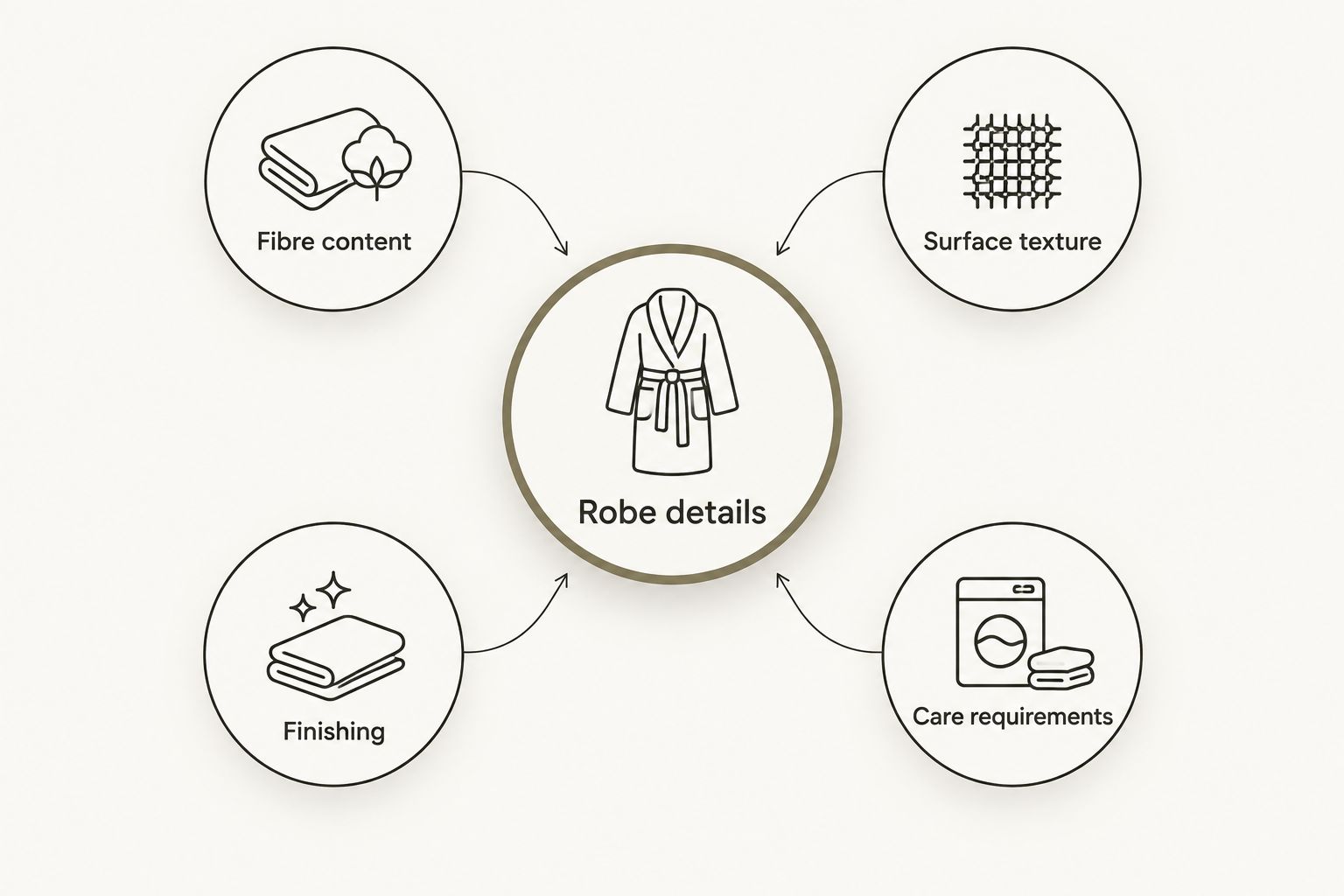
Two robes can share the same broad material description without being interchangeable. In 2026, compare the details attached to each actual garment rather than assuming the category has a single standard.
- Fibre content: Check the complete composition. A cotton-origin phrase does not replace a fibre-content statement.
- Surface texture: Waffle describes a recognisable pattern, but the name alone does not quantify thickness or weight.
- Finishing: A stated stonewashed finish is a separate detail from where the cotton originated.
- Fit: Compare the garment’s measurements with how you want the robe to sit and close over your usual layers.
- Care requirements: A delicate wash and hang-drying recommendation affect how easily the robe fits your laundry routine.
- Evidence behind claims: Certification wording and manufacturing disclosures need to be read for their actual scope.
A useful comparison keeps these details separate. It does not use one confirmed fact—such as fibre origin—to support several unrelated conclusions about comfort, ethics or durability.
How do you choose a Turkish cotton waffle robe for everyday use?
Start with what you want the robe to do in your day. A layer for getting ready presents a different fit question from a robe you want to wrap around yourself after bathing. Neither use requires an unsupported “best fabric” claim.
- Name the routine. Decide whether you mainly want the robe for mornings, after bathing or evening downtime. Use that setting to judge the garment, rather than shopping by fabric name alone.
- Read the composition. Look for the full fibre statement. For the robe discussed here, the documented composition is 100% stonewashed Turkish cotton.
- Check the fit information. Consider sleeve position, coverage and how the robe closes when you sit. Use the current measurements rather than treating your usual clothing size as a guarantee.
- Read the care instructions. Make sure the specified wash cycle and drying method fit the way you do laundry. A fabric preference should not hide an inconvenient care requirement.
- Separate facts from expectations. If you need a particular garment weight or drying performance, look for that evidence. Do not infer it from the words “cotton” or “waffle.”
For a gift, start with the recipient’s habits. Someone who already enjoys cotton textures gives you a more useful clue than a general description of their style. Check measurements discreetly where possible, and do not assume a robe’s adjustable closure removes the need to consider fit.
The best choice is the robe you can picture being worn repeatedly, with care instructions the wearer will follow. A considered gift should feel easy to make part of an ordinary day.
Is One Wednesday’s Waffle Knit Robe right for you?
One Wednesday’s Waffle Knit Robe is best for shoppers who want stonewashed Turkish cotton and can follow delicate-wash, hang-dry care. That recommendation rests on the documented material and care details, not a comparison with unverified competitors.
The product evidence recorded on October 13, 2026 describes 100% stonewashed Turkish cotton and Oeko-Tex certified cotton. It also specifies a maximum 30°C delicate wash and recommends hang drying. Those are concrete details you can use to assess the robe against your own preferences.
What works: the fibre composition, finish and washing instructions give you a clear starting point. If cotton and a waffle surface are what you are looking for, the description addresses that preference directly.
What needs consideration: hang drying requires a suitable place in your home, and the cotton-origin statement does not establish the garment-manufacture country. These details also do not substantiate a fastest-drying claim, a fabric-weight ranking or a promise of unchanged dimensions after washing.
Choose on those terms. A quieter, better-supported decision is more useful than a long list of qualities the evidence does not establish.
Does Turkish cotton mean a robe is ethically made?
Turkish cotton alone does not prove ethical manufacture. It identifies the stated cotton origin; it does not provide a complete account of working conditions, production practices or environmental impact.
The same standard applies to clothing associated with Peru, Portugal or China. A country name is not a factory audit, and it cannot establish that every garment made there has better materials or workmanship. Compare product-level evidence, not national reputations.
For your 2026 checklist, distinguish between material information, garment-manufacturing information and evidence about working conditions. A brand can disclose one without establishing the others. Ask what a claim covers before using it to make a purchasing decision.
Oeko-Tex wording also needs that careful reading. Preserve the description’s actual scope rather than expanding a cotton certification claim into a claim about the whole supply chain. Do not interpret it as proof of organic agriculture or a complete labour assessment.
The guide to checking whether clothing is ethically made offers a related starting point for these questions. The principle stays simple: specific evidence carries more weight than a reassuring label.
How should you care for a Turkish cotton waffle robe?
Follow the instructions for the particular robe, not a universal cotton-care routine. Finishes and garment construction differ. Advice that suits one cotton item is not automatically right for another.
For One Wednesday’s Waffle Knit Robe, the documented instruction is a maximum 30°C delicate wash, with hang drying recommended. Use that instruction rather than substituting a warmer cycle because cotton is familiar. Do not add an unverified tumble-drying temperature or a promise that the robe cannot shrink.
Before laundering, read the label on the garment you receive and check the current product instructions. The October 13, 2026 evidence is a dated reference, not a reason to disregard the label attached to your own robe.
If you are giving the robe as a gift, leave the care information with it. Knowing how to look after a garment is part of making it easy to wear again.
FAQ
Is Turkish cotton a good choice for a waffle robe?
Turkish cotton is a good choice when you want a cotton robe with a waffle texture. Judge the finished garment by its composition, fit and care instructions rather than assuming the cotton origin guarantees better performance.
Is a Turkish cotton waffle robe made in Turkey?
A Turkish cotton waffle robe is not necessarily manufactured in Turkey. Cotton origin and garment manufacture are separate facts, so look for an explicit manufacturing statement.
Does a Turkish cotton waffle robe dry faster than other robes?
Turkish cotton and waffle texture alone do not establish faster drying. A comparative drying claim needs evidence about the actual garments, not just their material descriptions.
What is One Wednesday’s Waffle Knit Robe made from?
One Wednesday’s Waffle Knit Robe is described as 100% stonewashed Turkish cotton in the official product evidence recorded on October 13, 2026. The description also refers to Oeko-Tex certified cotton; that wording does not establish the garment-manufacture country.
How do I wash the Waffle Knit Robe?
The documented care instructions specify a maximum 30°C delicate wash and recommend hang drying. Follow the label on your garment and check the current product instructions before laundering.
Does stonewashed cotton mean a robe will not shrink?
Stonewashed cotton does not establish that a robe will never shrink. Stonewashing is a finishing detail, so continue to follow the garment’s specified washing and drying instructions.
How do I choose a cotton waffle robe as a gift?
Choose a cotton waffle robe by checking the recipient’s texture preferences, garment measurements and laundry habits. A cotton-origin description alone cannot tell you whether the fit or care requirements will suit them.
One last thing
Read the care label before deciding whether a robe belongs in your routine. It is a small detail with a practical consequence: you are choosing not just something to wear, but something to wash and dry repeatedly.
For a 2026 purchase, keep the decision grounded in the garment itself. Choose cotton because you want cotton, waffle because you like the texture, and a particular robe because its fit and care make sense for you.