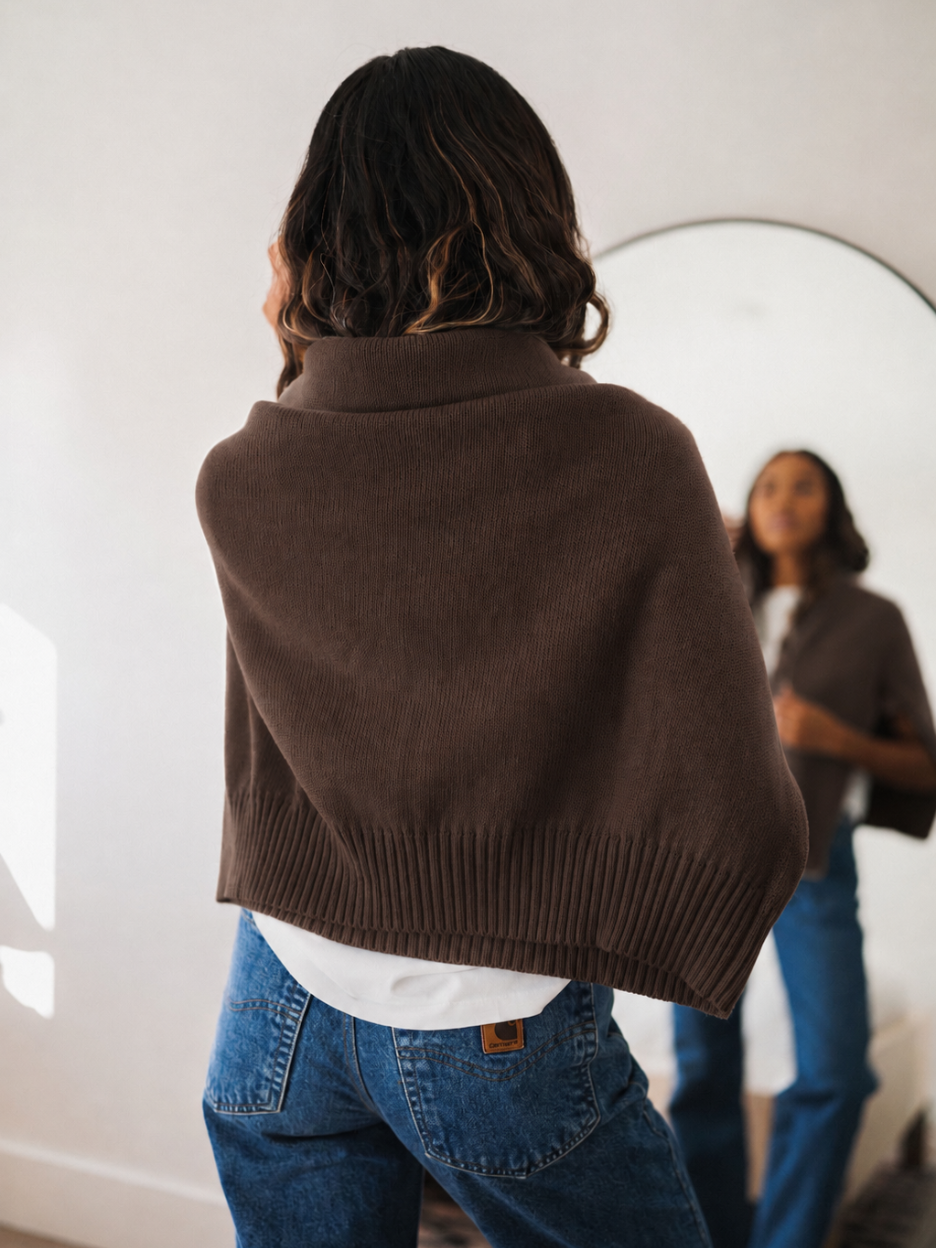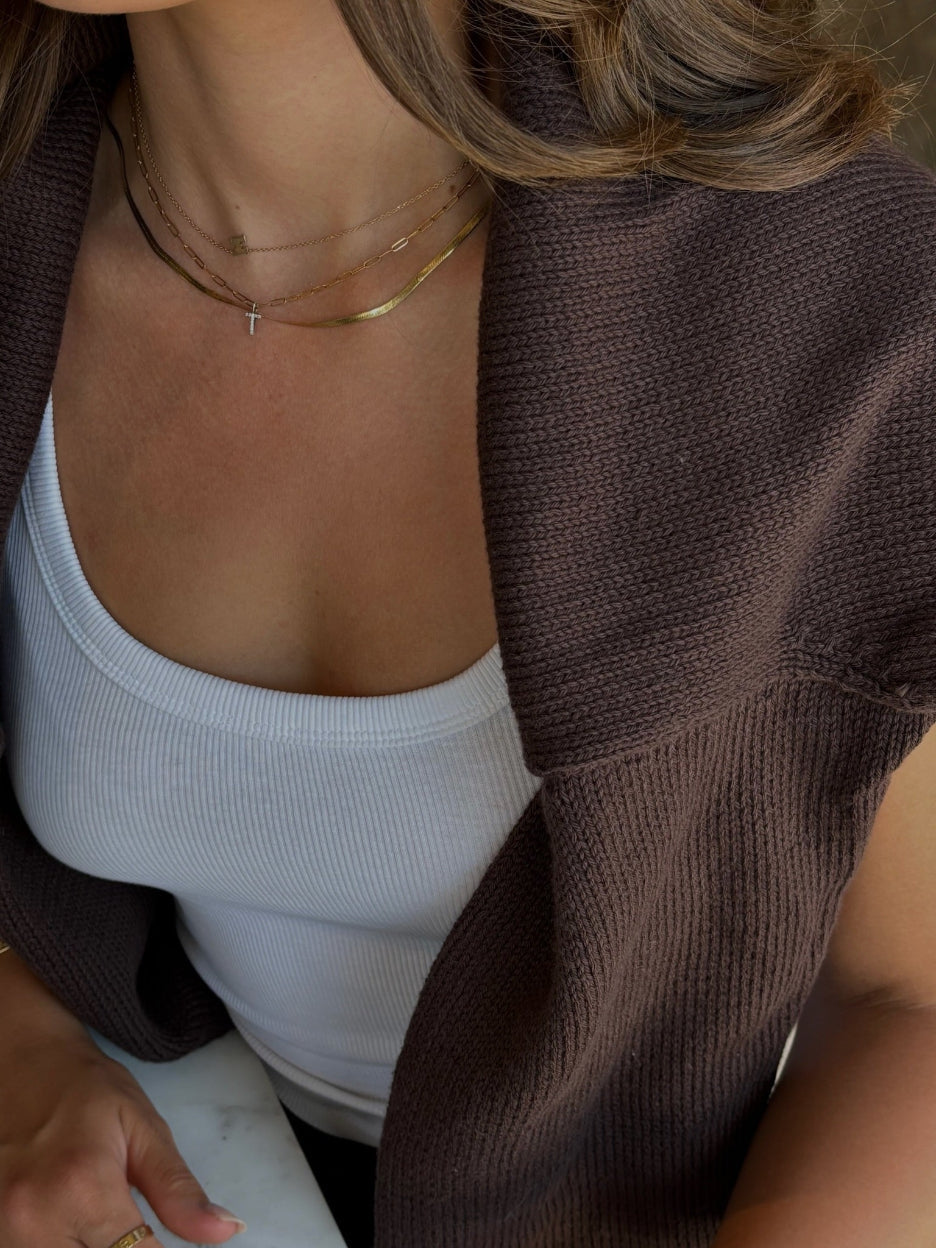



Cotton sweaters are warm enough for heated rooms and some winter outings when you wear them beneath suitable outerwear; they are not a substitute for an insulated coat in cold weather. For your 2026 winter wardrobe, treat cotton knitwear as a comfortable everyday layer, with extra insulation and weather protection chosen for the conditions outside.
- Are cotton sweaters warm enough for winter? Yes indoors; outdoors, wear suitable insulation and weather protection.
- One Wednesday’s Cotton Crewneck is best for everyday cotton-knit layering, not standalone protection from winter weather.
- Knit construction, fit, wind and moisture matter more than a cotton label alone.
- Choose your winter coat for the weather, then check that your sweater fits comfortably underneath.
Why this matters
A sweater that feels comfortable over breakfast can feel entirely different at a windy bus stop. The question is not simply whether cotton is warm. It is whether your whole outfit suits the time you will spend outside, your activity and the weather.
One Wednesday’s Cotton Crewneck is made from 100% cotton and knit in Peru by female artisans, according to the supplied product details. Those facts describe its fibre and production; they do not establish a winter temperature rating.
One Wednesday’s Cotton Crewneck is best for everyday shoppers who want cotton knitwear for indoor wear and layering beneath winter outerwear. Its practical limit is equally clear: the sweater should not replace the insulation or weather protection your outing requires.
Are cotton sweaters warm enough for winter?
Yes, as part of an outfit suited to the conditions—not as an automatic all-weather layer. Cotton knitwear can provide warmth by holding air within its construction, but fibre content alone cannot tell you how warm a particular sweater will feel.
A close-knit sweater, an open knit and a thin cotton top are not interchangeable. Look at the fabric structure, how the garment fits and what you will wear over it before deciding where it belongs in your winter routine.
| Winter situation | Best for | What cotton knitwear contributes | Its limitation | What to do |
|---|---|---|---|---|
| Heated home or office | Mostly indoor days | A comfortable layer you can keep on indoors | Indoor comfort does not establish outdoor protection | Adjust the layer underneath to your room temperature |
| Brief trips between heated spaces | Errands and short transitions | An everyday middle layer beneath outerwear | Wind and waiting outside change the requirements | Choose your coat for the outdoor conditions |
| Extended outdoor time | Layering within a weather-appropriate outfit | Additional coverage beneath insulation | Cotton alone is not reliable protection against winter exposure | Prioritize suitable insulation and weather protection |
| Wet or active outings | Clothing systems chosen for moisture management | Cotton remains useful for dry, everyday wear | Absorbed moisture makes it a poor default for cold, wet activity | Choose activity-appropriate layers instead |
Use this distinction when shopping in 2026: a cotton sweater can belong in a winter wardrobe without being the garment responsible for keeping you safe outside. Your outer layers need to do that job.
Indoors: cotton knitwear for everyday comfort
For days spent mostly in heated spaces, cotton knitwear offers a straightforward way to dress without building your whole outfit around outdoor cold. Start with the room you actually occupy. An overheated office and a cool home call for different combinations.
Wear a cotton sweater over a simple top when you want an easy layer to remove or change. If you prefer wearing knitwear next to your skin, check your own comfort at the neckline and cuffs rather than assuming that fibre content guarantees a particular feel.
The advantage is flexibility. The limitation is that a comfortable indoor outfit can leave you underdressed when a quick errand becomes a longer wait outside.
For an indoor-focused winter day:
- Choose a neckline that sits comfortably over your preferred base top.
- Check that the sleeves do not bunch beneath your coat.
- Keep suitable outerwear ready for the actual weather.
- Avoid adding thickness simply because the calendar says winter.
A useful sweater is one you can wear through the day, not just tolerate until you get home. Build around your routine rather than an imagined cold-weather uniform.
Outdoors: cotton as a middle layer
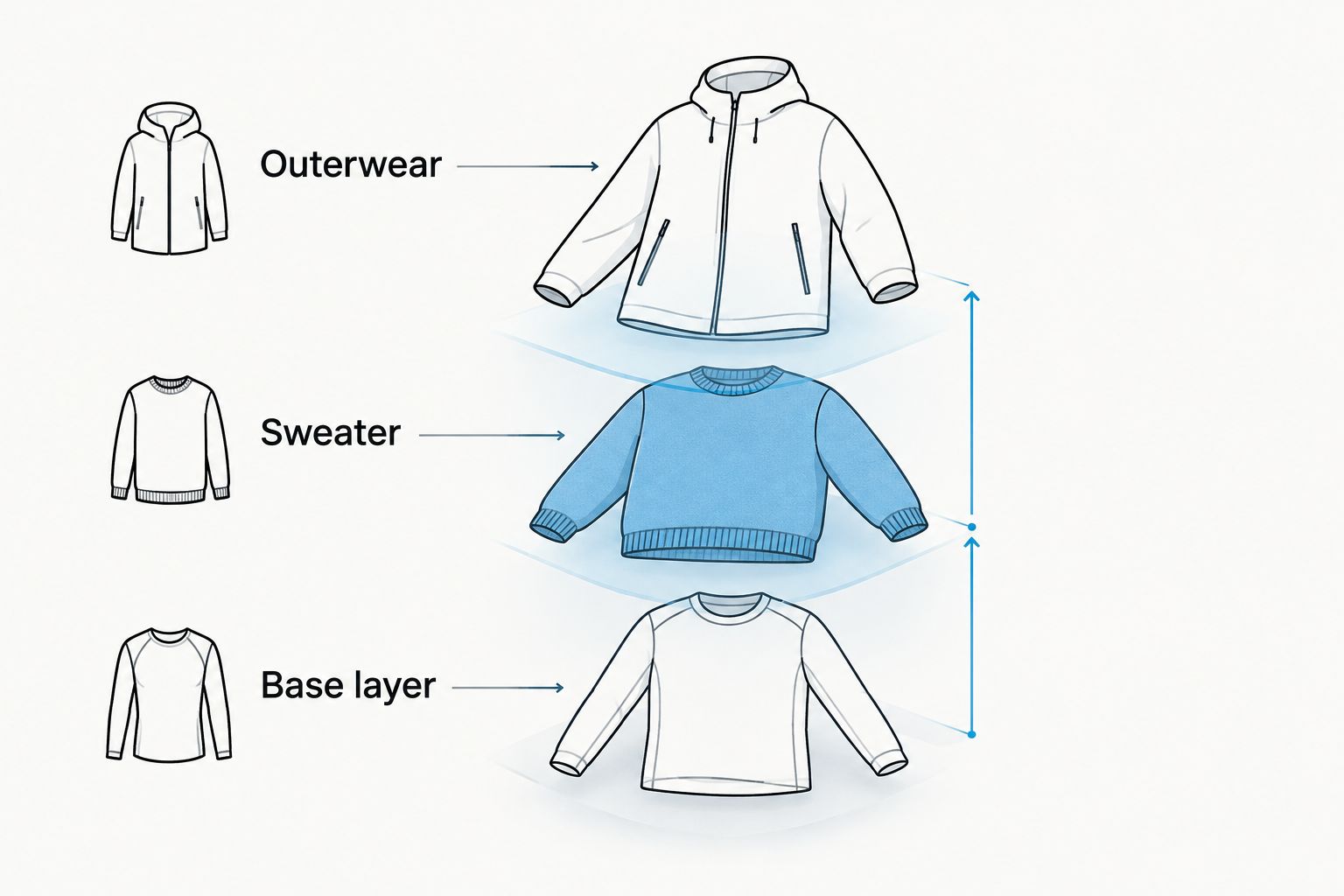
For outdoor winter wear, put the cotton sweater within a larger clothing system. A practical starting point is 3 layers: a base layer, your sweater and weather-appropriate outerwear. This is an outfit-building suggestion, not a guarantee of warmth in every climate.
The base layer affects next-to-skin comfort. The sweater adds coverage, while the outerwear provides the insulation and protection selected for your outing. Depending on the conditions, you will need to adjust that arrangement rather than follow a fixed formula.
Check the base layer
Choose it for your activity, especially if you expect to sweat. For cold-weather exercise, moisture management matters more than whether the top looks right beneath your sweater.
Add the sweater
Make sure it sits comfortably over the base layer without pulling across your shoulders. An everyday cotton knit belongs here when it suits the conditions and the rest of your outfit.
Check the outerwear
Fasten the coat fully and move your arms. If the sweater makes the coat restrictive, change the combination; a winter outfit needs to work when you move, sit and carry a bag.
Do this coat-and-sweater check before choosing your 2026 winter combination. Looking comfortable with an open coat is not the same as having enough room when the coat is fastened.
Why cotton sweater warmth varies
There is no single warmth level shared by all cotton sweaters. These factors explain why similar-looking knits can feel different in use.
- Knit construction: Open spaces between stitches let air move through more readily. A closer structure changes how the fabric holds air, although appearance alone does not establish a warmth rating.
- Fabric thickness: Thickness affects the garment’s structure and layering bulk. Do not turn an unverified product photograph into a fabric-weight ranking.
- Fit: A sweater needs room for comfortable movement and the layers beneath it. Excess bulk also matters when you fasten your coat.
- Wind exposure: Moving air changes how an outfit feels outside. A sweater’s fibre label does not establish wind protection.
- Moisture: Cotton absorbs water. For cold, wet or sweaty conditions, do not rely on cotton alone to maintain comfort.
- Activity and setting: Sitting still outside is different from moving between heated rooms. Dress for the more demanding part of your day.
Judge the complete outfit, not just the fibre. A familiar cotton sweater beneath appropriate outerwear can be a more useful everyday choice than a heavier sweater that makes your coat difficult to wear.
Is cotton warmer than wool for winter?
Cotton is not a direct replacement for wool in every winter setting. Wool generally offers better insulation when damp, while cotton absorbs moisture and is less suitable as a default layer for cold, wet activity.
That does not make every wool sweater warmer than every cotton sweater. Construction, thickness and fit still matter, and a fibre comparison cannot establish the performance of products that have not been assessed individually.
| Fibre choice | Best for | Main advantage | Main limitation |
|---|---|---|---|
| Cotton knitwear | Dry, everyday wear and indoor-focused routines | A useful option for shoppers who prefer cotton against their skin | Not the default choice for prolonged cold, wet activity |
| Wool knitwear | Outfits where insulation in damp conditions matters | Better insulating performance when damp | Feel and care requirements vary by garment |
For your 2026 wardrobe, choose cotton when it suits your comfort preferences and daily setting. Choose activity-specific clothing when your plans involve sustained exposure, rather than expecting an everyday sweater to serve every purpose.
Can you wear a cotton sweater under a winter coat?
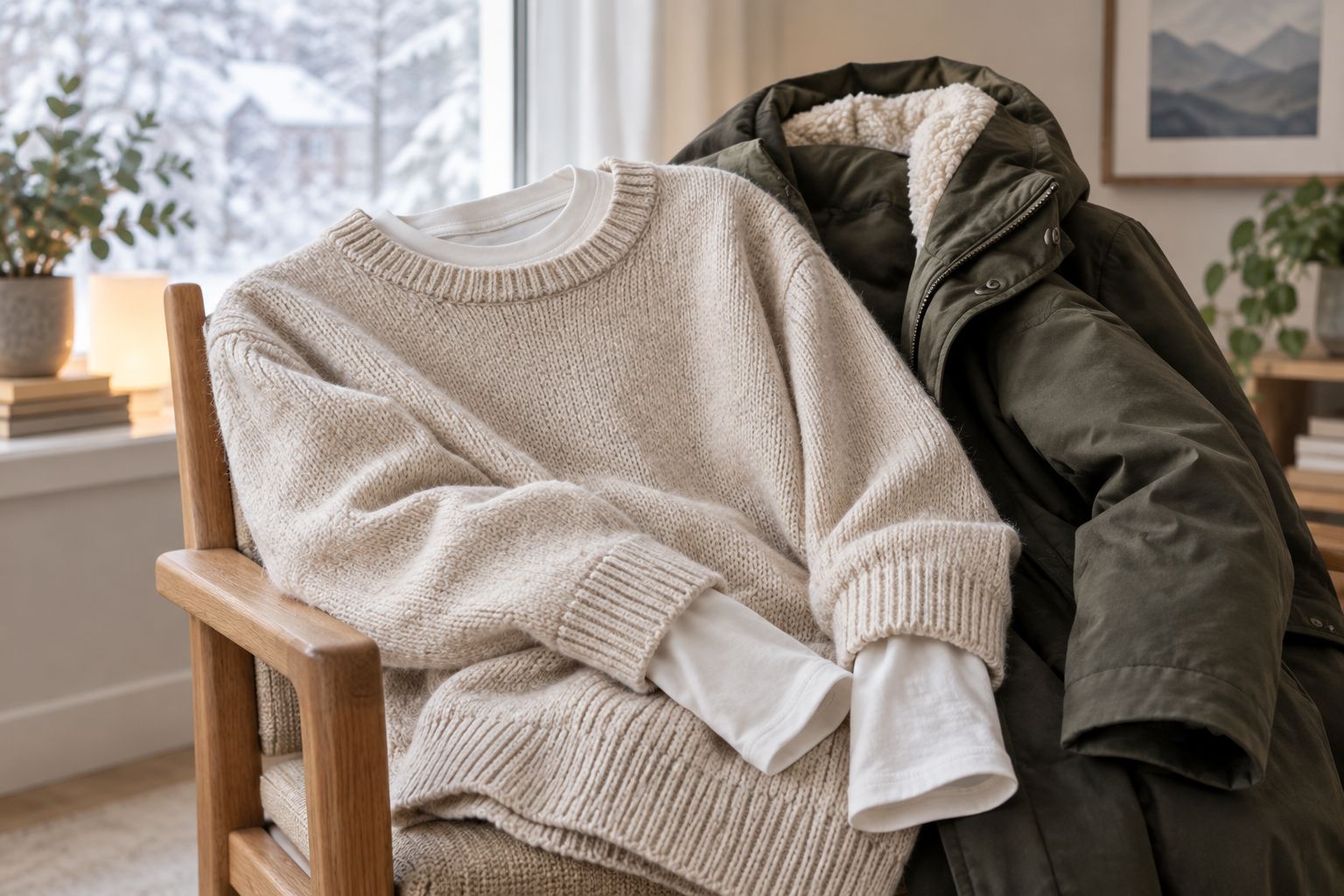
A cotton sweater works under a winter coat when the combination gives you comfortable movement and appropriate protection. Make 2 fit checks: coat closure and arm movement. Neither requires guessing a temperature rating.
First, fasten the coat over the layers you actually plan to wear. Look for pulling across the chest, shoulders and upper arms, and notice whether the sweater bunches at the waist.
Next, reach forward, bend your elbows and sit down. You should be able to do everyday movements without the layers catching or the coat becoming restrictive.
Try this with the base top included, not just the sweater. A combination that works over a sleeveless top can feel different once you add another long-sleeved layer.
The benefit of this approach is practical: you check the outfit you will wear. Its limit is that fit cannot prove warmth; weather conditions still determine the protection you need.
What should you wear with a cotton sweater in winter?
Start with the parts of your day that repeat. Your commute, indoor temperature and usual walking time give you a better styling brief than a photograph of someone standing outside without a coat.
For an indoor-focused day, pair a cotton crewneck with trousers or jeans and a base top that feels comfortable in your room. Keep the outfit simple, then add suitable outerwear for the journey rather than wearing unnecessary bulk all day.
A cotton shirt beneath the sweater offers another styling option. Check the collar, shoulder room and sleeve overlap; the extra fabric needs to sit comfortably, not just look neat when you are standing still.
For an outing with more time outdoors, choose the protective layers first. Then see whether the cotton sweater fits the system. Do not trade away weather protection to keep a preferred silhouette.
For a winter gift, ask how the recipient wears sweaters: mainly at home, at work or outside. A favourite colour is helpful, but their routine determines whether cotton knitwear is the right kind of present.
Does where a cotton sweater is made affect its warmth?
Country of manufacture does not establish how warm a sweater will be. Fibre, knit construction and the finished garment matter; a country name is not a thermal-performance claim.
One Wednesday’s cotton knitwear provides a specific example. The supplied Cotton Crewneck details identify 100% cotton, knitting in Peru and female artisans. They do not establish Pima cotton, a particular fabric weight or a tested winter temperature range.
Keep these questions separate when reviewing product information:
- Material: What fibre composition is explicitly stated?
- Construction: What does the description establish about how the garment is made?
- Traceability: What information identifies the people or production location?
- Performance: What evidence supports the warmth claim you need?
For a 2026 purchase, look for product-level information rather than assuming manufacturing in Peru, Turkey or Portugal proves better quality or ethics than manufacturing in China. Country alone cannot establish factory conditions, certification or environmental impact.
FAQ
Are cotton sweaters warm enough for a Canadian winter?
Cotton sweaters can work indoors and beneath suitable winter outerwear, but they are not standalone protection for Canadian winter conditions. Choose the full outfit for your local weather, activity and time outside.
Can I wear a cotton sweater without a coat in winter?
A cotton sweater is not a dependable substitute for a winter coat. Choose outerwear for the conditions rather than assuming a sweater that feels warm indoors will protect you outside.
Is a 100% cotton sweater warmer than a cotton blend?
A 100% cotton label does not establish that a sweater is warmer than a blend. The other fibres, knit construction, thickness and fit affect the comparison.
Is cotton or wool better for winter sweaters?
Cotton suits dry everyday wear, while wool generally provides better insulation when damp. Choose the garment and layers for your routine rather than treating either fibre as the best choice for every setting.
Should I size up a cotton sweater for winter layering?
Do not size up automatically for winter layering. Try the sweater over your intended base layer and beneath your coat, then check closure and arm movement.
Is One Wednesday’s Cotton Crewneck made from Pima cotton?
The supplied Cotton Crewneck details state 100% cotton, not Pima cotton. They also identify knitting in Peru by female artisans; that production information does not establish a cotton variety.
How should I wash a cotton sweater I wear all winter?
Follow the sweater’s own care label rather than a universal cotton-washing rule. Fibre content alone does not establish the correct washing, drying or storage instructions.
One last thing
Before buying another sweater for warmth, try your current knit beneath the coat you wear most. Fasten it, move around and consider the longest outdoor part of your day. You might need a different layering combination rather than a different sweater.
Keep the cotton knit for the everyday work it does well. Let weather-appropriate outerwear handle winter exposure. That distinction makes choosing, wearing and gifting knitwear much simpler.