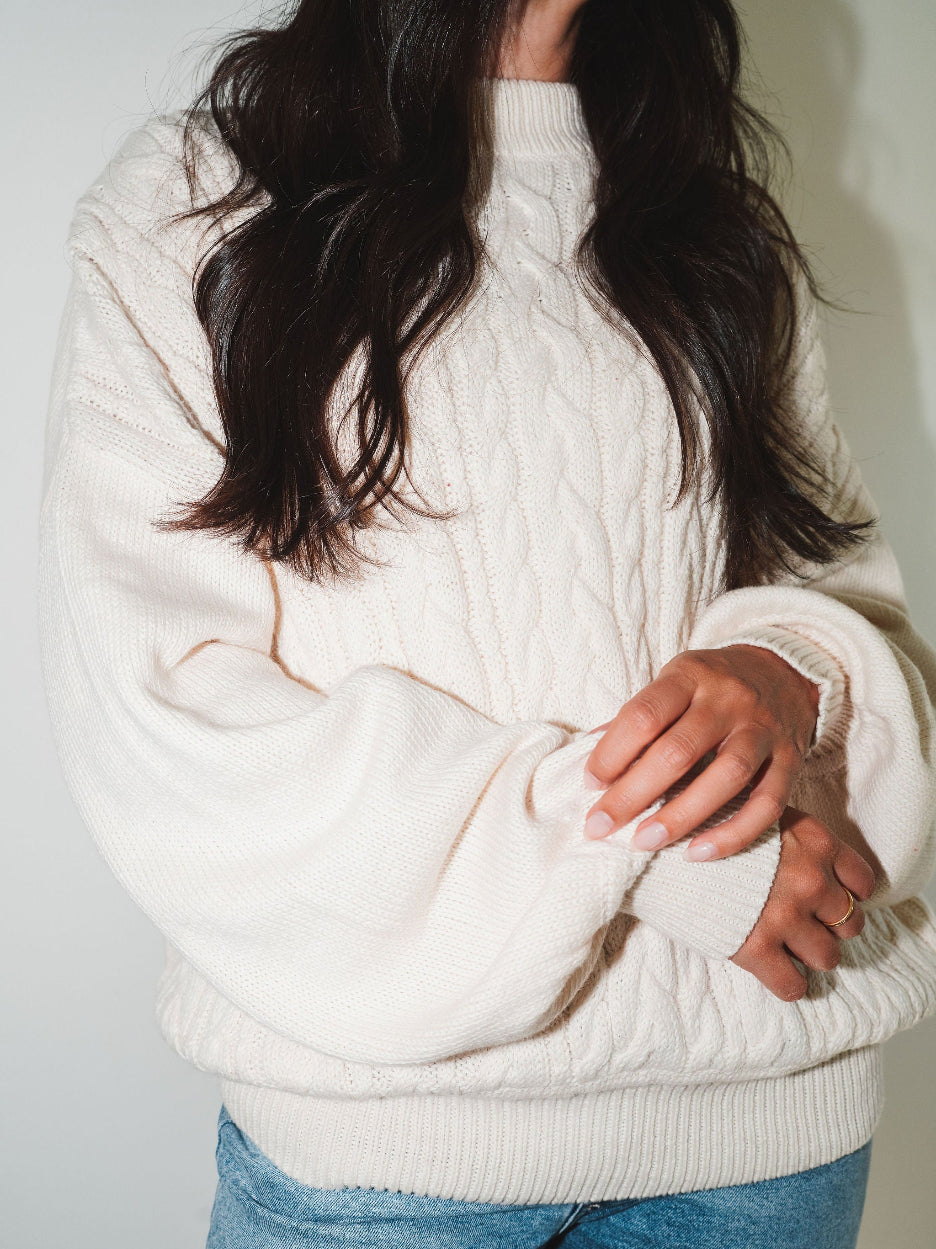

Choose cotton sweaters for mild weather, indoor comfort and outfits built around simple layers; choose wool sweaters when retaining warmth is your main priority. Neither fibre wins every wardrobe: the knit construction, fit and care label matter alongside the material. For everyday wear in 2026, start with where you spend your day, not which fibre sounds more luxurious.
- Cotton vs wool sweaters: choose cotton for mild-weather layering and wool when warmth comes first.
- Onewednesdayshop cotton knitwear suits shoppers seeking a cotton alternative to wool, with documented Peruvian production.
- Compare fibre composition, knit construction and garment measurements before choosing a sweater.
- Follow the garment’s care label; neither cotton nor wool guarantees machine-washable knitwear.
Why this matters
A sweater that feels right outdoors can feel too warm at your desk. A comfortable indoor knit can need another layer when you leave the house. Your wardrobe works better when each sweater has a clear purpose.
Choose for your actual routine, then check the care requirements. Before treating cotton as the easier option, read about whether cotton sweaters shrink. Fibre choice does not remove the need to follow a garment’s washing and drying instructions.
Cotton or wool sweaters: which should you choose?
Cotton is the better starting point when you want a sweater for mild days, heated rooms and layering over shirts. Wool is the better starting point when you want insulation for colder conditions. These are fibre-level distinctions, not a ranking of every finished sweater.
Cotton fibres absorb moisture, but a damp cotton garment can feel cold against your skin. Wool’s crimp helps create insulating air spaces, although the finished fabric still determines how much warmth a particular sweater provides. A loose, open wool knit does not behave like a dense wool knit.
| What matters to you | Cotton sweater | Wool sweater |
|---|---|---|
| Best for | Mild-weather layering and indoor outfits | Cold-weather layering where warmth matters |
| Main advantage | An alternative for people who dislike wool against their skin | Fibre structure that supports insulation |
| Main limitation | Damp cotton can feel cold; cotton is not a substitute for weather protection | Some wool feels prickly, and care requirements need attention |
| Moisture | Absorbs moisture; check comfort when the garment gets damp | Absorbs moisture vapour; comfort still depends on construction and conditions |
| Washing | Follow the garment label; cotton knitwear can shrink or change shape | Follow the garment label; unsuitable washing can cause felting or shrinkage |
| What to verify | Composition, measurements, knit structure and care instructions | Wool type, blend, measurements, knit structure and care instructions |
For the fibre explanation, Woolmark’s educational material covers wool’s crimp, moisture absorption and care. Those properties explain the comparison; they do not establish the warmth, softness or washing instructions of an individual sweater.
For your 2026 wardrobe, cotton wins on suitability for mild-weather layering; wool wins when insulation is the deciding requirement. Neither verdict replaces trying the garment or reading its specifications.
Cotton sweaters: best for everyday layering
Choose cotton when your sweater needs to move between home, a heated workplace and a mild afternoon outside. It also makes sense when you prefer not to wear animal fibres. Keep the composition in view: a sweater described as cotton can still contain other fibres.
A 100% cotton label identifies the fibre content, not the cotton variety, yarn quality or garment thickness. It does not establish Pima cotton, organic cultivation or a particular certification. Those details need their own evidence.
Cotton also gives you practical styling choices. Wear a crewneck with straight-leg trousers for a quiet weekday outfit, or layer it over a cotton shirt with the collar visible. Leave enough room at the shoulders and underarms for the shirt rather than relying on the knit to stretch around it.
The limitation is straightforward: cotton is not the first choice when your main concern is warmth in damp, cold conditions. A cotton sweater can still belong in a winter outfit, but the rest of that outfit must do its share. An outer layer, a suitable base layer and protection from wind matter more than a seasonal label on the sweater.
Do not assume cotton means effortless laundry. A knitted garment can change dimensions, and heavy wet knitwear needs careful handling. The care label tells you whether machine washing, hand washing or another method is appropriate.
Wool sweaters: best for warmth-led outfits
Choose wool when your sweater’s main job is to help retain warmth. A wool knit makes sense for cold commutes, cool rooms and outfits worn beneath an appropriate coat. Check the finished garment rather than treating the fibre name as a temperature rating.
Wool varies in feel. Fibre diameter, yarn structure and finishing affect whether a sweater feels smooth or prickly against your skin. A merino label identifies a wool type, but it does not guarantee that every wearer will find the garment comfortable.
If skin feel is your deciding factor, assess the neckline and cuffs as well as the body. Those areas often touch you directly even when you wear a shirt underneath. A base layer separates skin from the sweater, but it does not change the sweater’s texture.
Wool’s warmth is an advantage; unwanted prickliness and unsuitable care requirements are reasons to choose something else. Avoid buying a wool sweater solely because it sounds like the more premium option. A garment you avoid wearing has little place in an everyday wardrobe.
Wool is not automatically dry-clean-only, and it is not automatically machine washable. Some garments permit washing; others require a different method. Follow the individual label rather than borrowing instructions from another wool sweater.
Why cotton and wool sweaters vary
Two sweaters with the same fibre label can feel quite different. For a 2026 purchase, compare these details before deciding that one material always suits you better:
- Fibre composition: A 100% cotton sweater is different from a cotton blend. Read the complete composition rather than the first fibre named in the product title.
- Knit construction: Open stitches, denser structures and textured knits change how a garment feels and layers. Do not infer thickness or warmth from a product photograph alone.
- Fit and layering room: The same sweater serves a different purpose worn close to the body or over a shirt. Check the measurements against a sweater you already enjoy wearing.
- Care instructions: Your willingness to follow the label matters. A garment with unsuitable care requirements is the wrong choice even when you like its texture.
- Verified production details: Fibre content, manufacturing information and specific certifications answer different questions. None replaces the others.
A cotton sweater need not look casual, and a wool sweater need not look formal. Shape, neckline and the clothes you pair with it determine the outfit. Keep fibre choice focused on comfort, use and care rather than assigning either material a fixed style identity.
How do you choose a sweater for your own routine?
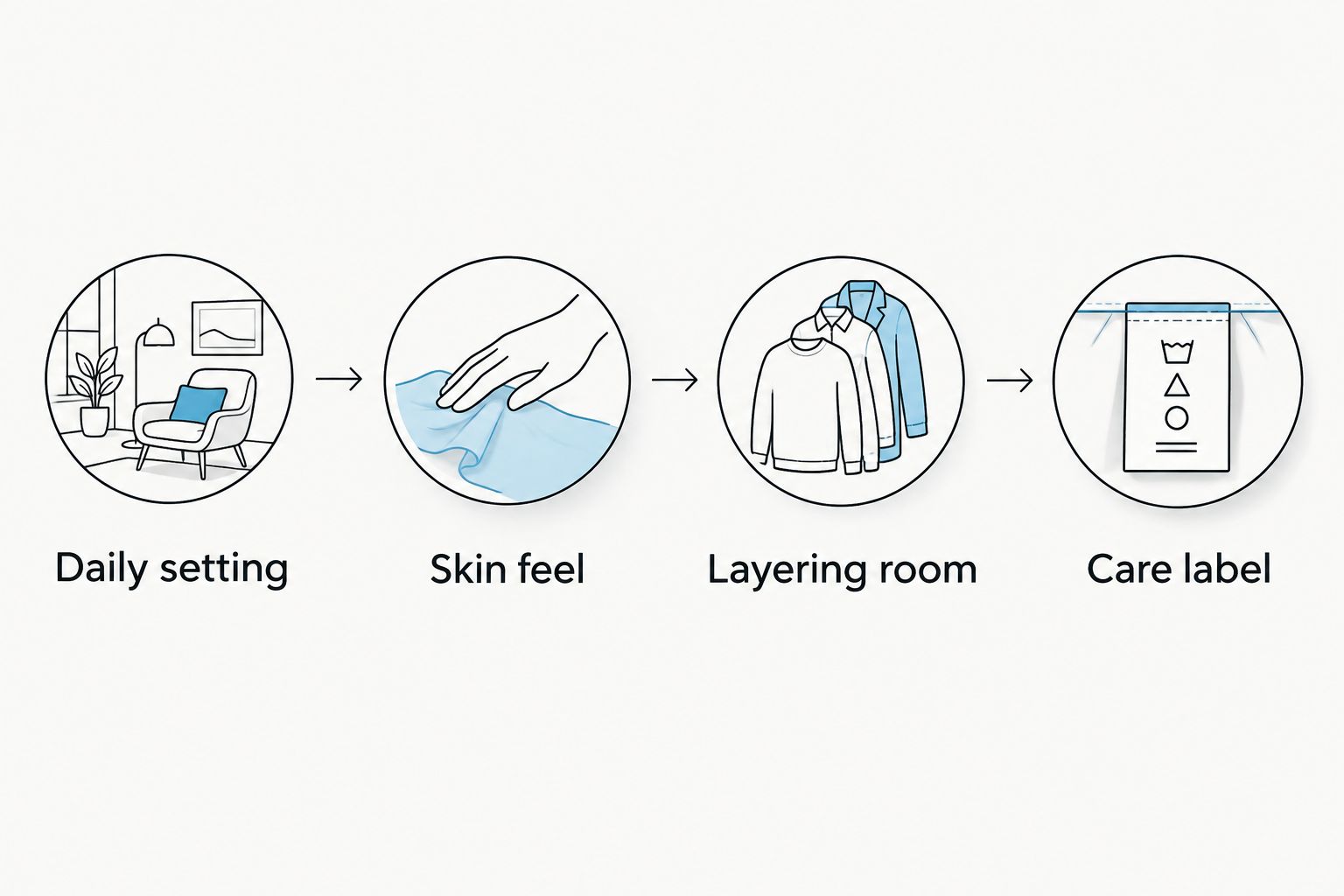
Use a short sequence rather than a long list of imagined occasions. Think about the outfit you will repeat: the trousers, the shirt underneath and the coat you reach for at the door. Then check whether the sweater fits that combination.
- Daily setting: Decide whether you mainly need comfort indoors, a mild-weather layer or additional insulation in colder conditions.
- Skin feel: Consider whether wool against your neck and wrists bothers you. Check an unfamiliar fibre or texture in person when possible.
- Layering room: Compare the garment measurements with a sweater that fits over your usual shirt without pulling.
- Care label: Confirm that you can follow the washing and drying instructions before making the garment part of your weekly wardrobe.
The order matters. A sweater that fails your daily setting or comfort needs does not become the right choice because its colour is appealing. Keep those practical checks ahead of the finishing details.
What does the manufacturing country actually tell you?
A manufacturing country tells you where a stated production stage took place. It does not, by itself, prove better craftsmanship, fair working conditions or a lower environmental impact. For purchases in 2026, ask what the product description verifies about the garment, not what a country name suggests.
Apply the same standard to knitwear made in Peru, Turkey, Portugal or China. Look for the material composition, the stated production location and evidence supporting any claims about factory conditions or certifications. A broad statement about a country is not product-level evidence.
Keep production stages separate, too. The origin of the cotton fibre, the location where fabric is made and the location where a garment is assembled are different details. Evidence about one stage does not establish the others.
For a documented cotton option, Onewednesdayshop’s The Cotton Crewneck is described as 100% cotton, knit in Peru by female artisans. That establishes the stated composition, knitting location and artisan description; it does not establish Pima cotton, a specific certification or measured environmental savings.
Onewednesdayshop cotton knitwear is best for shoppers seeking a cotton sweater with stated Peruvian knitting provenance. The trade-off remains the same as for the category: choose it for cotton’s role in your wardrobe, not as a substitute for wool’s insulation. Follow the product’s own care label.
Are cotton sweaters warm enough for winter?
Cotton sweaters work in winter as part of a suitable layered outfit, especially when much of your day is indoors. Wool is the more useful starting point when insulation is the main requirement. Neither fibre alone makes a sweater adequate for every winter condition.
Think about the whole outfit. A sweater worn beneath a weather-appropriate coat serves a different purpose from a sweater worn as your outermost layer. If your cotton knit is comfortable indoors but insufficient outside, adjust the outer layers rather than expecting the sweater to do every job.
Is cotton better than wool for sensitive skin?
Cotton is a sensible alternative when wool feels prickly against your skin. It is not a guarantee against irritation: dyes, finishes, seams and individual sensitivities also matter. Choose based on your own response to the finished garment.
If you are buying a gift, ask about fibre preferences rather than guessing. Someone who avoids wool deserves a cotton option; someone who values warmth above everything else deserves a sweater chosen with that priority in mind.
FAQ
What's better for everyday wear, cotton or wool sweaters?
Cotton suits mild-weather layering and indoor outfits; wool suits outfits where retaining warmth is the priority. Choose the finished sweater by its composition, fit, construction and care label.
Are cotton sweaters cooler than wool sweaters?
Cotton is generally the more useful starting point for mild-weather wear, while wool’s fibre structure supports insulation. Knit density and garment thickness still affect how warm either sweater feels.
Can I put a cotton sweater in the washing machine?
Machine wash a cotton sweater only when its care label permits it. Cotton knitwear can shrink or change shape, so follow the stated washing and drying instructions.
Does every wool sweater need dry cleaning?
Not every wool sweater needs dry cleaning. Some permit washing, but the garment’s care label determines the suitable method.
Does 100% cotton mean Pima cotton?
A 100% cotton label identifies fibre composition, not Pima cotton. Look for an explicit cotton-variety statement rather than inferring it from the material percentage.
Is a sweater made in Peru better than one made in China?
A sweater made in Peru is not automatically better than one made in China. Compare product-level materials, construction and evidence about production practices rather than ranking garments by country alone.
What should I check before giving someone a sweater?
Check the recipient’s fibre preferences, measurements and willingness to follow the care label. Onewednesdayshop’s stated cotton composition and Peruvian knitting provenance answer material and production questions, not the recipient’s fit or comfort preferences.
One last thing
Before adding a sweater to your 2026 wardrobe, lay out the outfit you expect to wear it with. Include the shirt underneath and the coat over it. The best choice is the fibre that works in that real outfit, with care instructions you will follow.
You do not need cotton to replace wool, or wool to replace cotton. Give each garment a clear job, and choose the one whose job matches your day.