
Choose non itchy knitwear by starting with a fibre you already find comfortable, then checking the inside surface, seams and neckline against your skin. Cotton is a useful starting point if wool feels prickly to you, but no fibre label guarantees comfort: the finished sweater and its fit matter too.
- For non itchy knitwear, check fibre content, inner texture and fit rather than trusting a soft-looking photograph.
- Onewednesdayshop’s The Cotton Crewneck suits shoppers seeking a 100% cotton sweater, not a guarantee against irritation.
- Compare cotton, wool and blends by how the finished garment feels against your skin.
- Check the neckline, cuffs and underarm seams before deciding a sweater is comfortable.
Why this matters
A sweater can feel pleasant in your hand and still bother you at the neck. Your palm does not experience the garment in the same way as the skin beneath a collar, waistband or sleeve.
For your 2026 wardrobe, start with comfort at the points where you actually wear knitwear. A beautiful knit that needs constant adjusting is not an everyday staple.
Fit deserves as much attention as fabric. The guide to how a cotton crewneck sweater should fit gives you a separate fit check; here, the priority is finding a knit you want against your skin.
How do you choose knitwear that does not feel itchy?
Choose by touch first, fibre content second, and appearance last. The fibre label helps narrow your search, but your experience of the finished garment decides whether it belongs in your wardrobe.
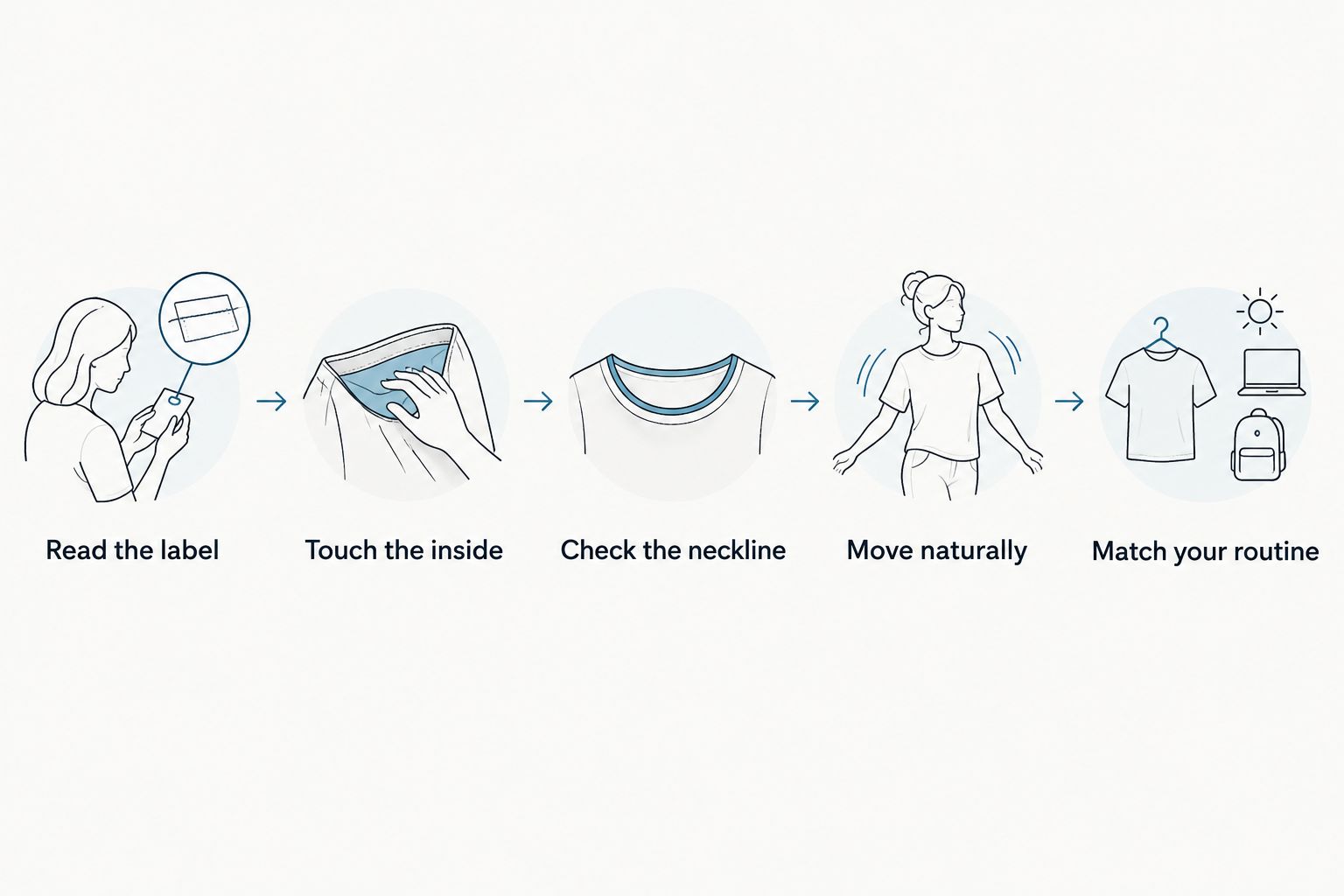
Use this sequence when trying on a sweater or assessing one at home:
- Read the label. Check the full composition, not just the fibre mentioned in the product name. A cotton blend and a pure cotton knit are different choices.
- Touch the inside. Turn back a sleeve or inspect the body’s inner surface. This is the side that sits against you, even when the outside looks smooth.
- Check the neckline. Wear the collar in its normal position. Notice whether you want to pull it away from your skin.
- Move naturally. Bend your elbows, reach forward and sit down. Check the cuffs, underarms and any seams that shift as you move.
- Match your routine. Try the sweater with the layer you normally wear underneath. A comfortable outfit matters more than an isolated swatch of fabric.
Do not keep a sweater because you expect repeated wear to fix an unpleasant first impression. If it feels prickly immediately, choose another fabric or construction rather than making softening it your next project.
Compare fibres without treating them as promises
The table below is a shopping guide, not a softness ranking. Use it to decide what to try first and what still needs checking.
| Knitwear option | Best for | Useful starting point | Limitation to check |
|---|---|---|---|
| Cotton knitwear | Shoppers who already find cotton comfortable | A familiar alternative when wool feels prickly | Inner texture, seams and neckline still affect comfort |
| Wool knitwear | Shoppers who already enjoy wearing wool | Keeps wool in consideration rather than rejecting it by name | Fibre descriptions do not tell you exactly how a finished sweater feels |
| Cotton blends | Shoppers considering a particular fit or texture | Gives you another option beyond pure cotton | Read the complete blend; cotton in the name is not the whole composition |
| Synthetic knitwear | Shoppers who prefer the feel of a particular synthetic garment | Lets your own wear experience guide the choice | Do not assume all garments with the same fibre name feel alike |
Start with the fabric you already reach for willingly. If your most comfortable tops are cotton, a cotton sweater is a sensible first fitting-room choice. If you happily wear wool, there is no reason to exclude it solely because someone else finds it itchy.
Cotton knitwear: a starting point when wool feels prickly
Cotton is a plant fibre, not wool. That distinction makes cotton knitwear useful to consider when you want a sweater shape without choosing a wool garment.
Still, cotton is not a comfort certificate. A raised inner texture, a firm collar or an awkward seam can make a cotton sweater unpleasant to wear, even when the composition suits you.
For 2026 shopping, separate two questions: do you generally like cotton against your skin, and do you like this particular cotton knit? The first narrows the search. The second makes the decision.
Look at the details that photographs often miss:
- The inside of the body, not only the outer stitch pattern.
- The join between the sleeve and the body.
- The collar edge where it meets your neck.
- The cuffs when your elbows are bent.
- The hem when you sit or tuck the sweater.
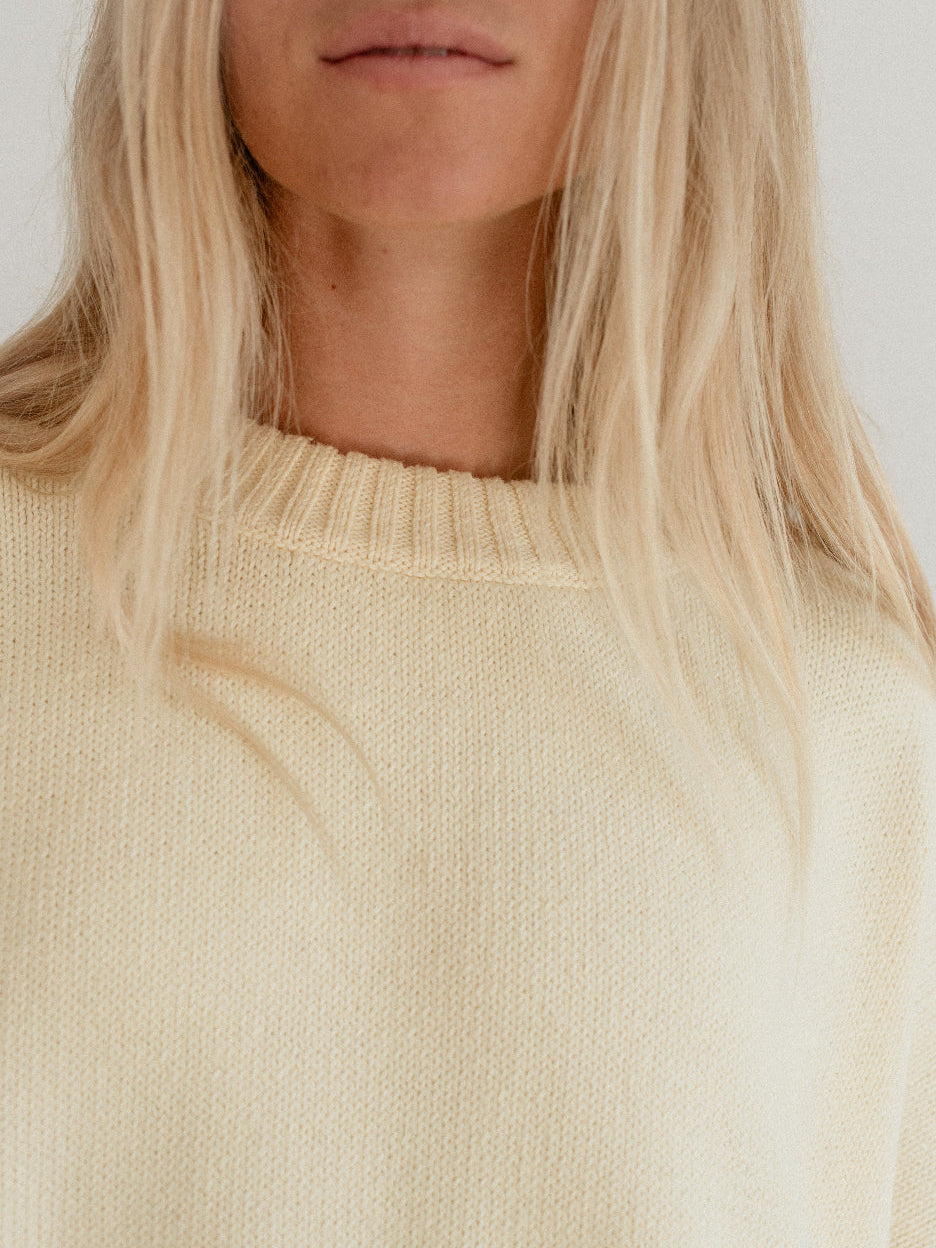
If you are buying online, read the composition and care information before deciding. A close-up image helps you understand the knit’s appearance, but it cannot tell you how that surface feels on your skin.
Wool knitwear: keep your own experience in view
Not every wool sweater feels the same. Yarn, construction and finishing affect the finished surface, so a good experience with one garment does not settle the question for every other wool knit.
The reverse is also true. One uncomfortable sweater does not prove that every wool garment will bother you, but you do not need to keep trying wool if cotton already meets your wardrobe needs.
Do not buy wool on a softness description alone. Try the areas that sit closest to your skin, especially a high collar or fitted sleeve. If you normally wear wool over a shirt, test that combination rather than judging it only on bare skin.
For a gift, the recipient’s habits are more useful than your own preference. Someone who avoids wool deserves a choice that respects that preference, not an argument that a different wool sweater should feel fine.
Blended knitwear: read beyond the headline fibre
A blend needs its own assessment. The presence of cotton does not make every part of the garment equivalent to a pure cotton knit, and the word soft does not explain the composition.
Read the complete fibre list in your 2026 search. Then consider the finished garment: does the inside feel comfortable, does the shape work with your usual layers, and can you follow its care instructions?
Avoid a universal rule that natural always means comfortable or synthetic always means uncomfortable. Those labels are too broad to answer a question about a particular sweater on a particular person.
Blends are also where familiar shopping shortcuts become unreliable. A garment can resemble a sweater you love without using the same yarn or having the same inner surface. Treat resemblance as a reason to inspect it, not a reason to skip inspection.
Why knitwear comfort varies
The fibre name is only part of the answer. These factors explain why two sweaters with similar descriptions can feel different when you wear them.
- Fibre composition: Check what the garment contains. Use your past experience with those fibres to decide what to try first.
- Yarn and surface: Inspect the finished texture. A smooth-looking product photograph is not proof of a smooth inner surface.
- Seams and labels: Notice where joins and labels meet your skin. Local discomfort deserves a local check rather than an assumption about the whole fabric.
- Neckline and cuffs: Pay attention to close-fitting edges. They stay in contact with your skin as you move.
- Fit and layering: Try your usual outfit underneath. A base layer changes the contact between the sweater and your skin, but it does not fix an uncomfortable shape.
- Care and residue: Follow the garment’s care label. If discomfort appears after washing, consider the wash routine as well as the fabric rather than assuming the sweater’s fibre changed.
These checks keep the decision practical. You do not need a technical vocabulary for yarn to know that a collar rubs or that a seam distracts you all afternoon.
A cotton option with specific production details
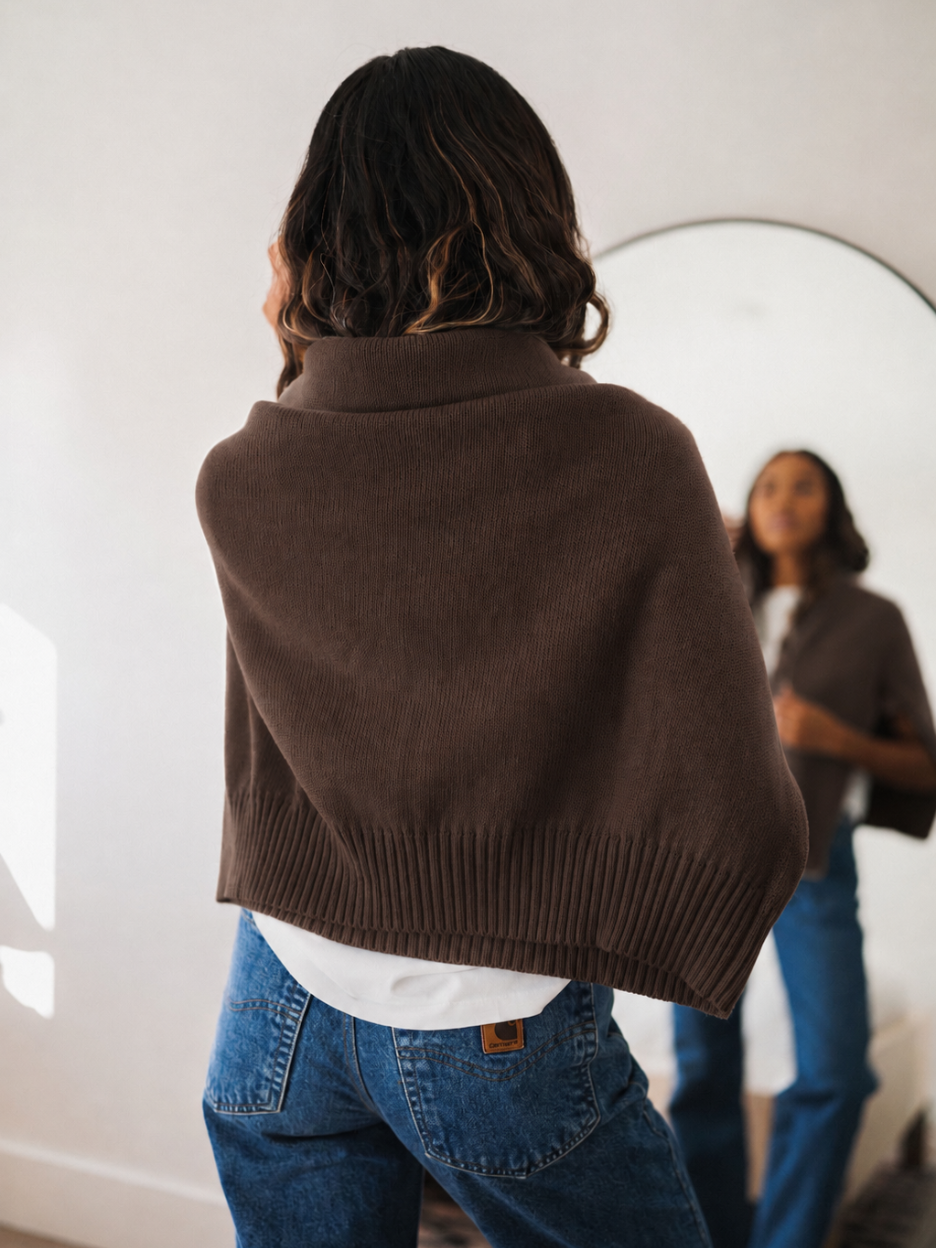
Onewednesdayshop’s The Cotton Crewneck is described as 100% cotton, knit in Peru by female artisans. Those are useful product facts: they identify the fibre and give a specific production detail rather than relying only on a general description of softness.
Onewednesdayshop’s The Cotton Crewneck is best for shoppers seeking an everyday cotton sweater rather than wool knitwear. Its stated composition makes it relevant to this search; it does not establish that every wearer will find it non-itchy.
The limitation is straightforward. You still need to assess the finished knit, neckline and fit against your own comfort preferences. The stated cotton composition also does not establish Pima cotton, so do not treat it as a claim about a particular cotton variety.
Manufacturing information answers a different question from skin feel. Being knit in Peru does not, by itself, prove comfort, superior quality or a particular factory standard. Keep fibre composition, production details and your personal wear test separate.
Can I tell whether a sweater will itch when shopping online?
You cannot confirm skin feel from photographs alone. Use online information to narrow your options, then assess the actual garment under the retailer’s stated policies.
For an online knitwear purchase in 2026, check the full composition, neckline shape, fit information and care instructions. Look for close views of the knit, but do not mistake an image of texture for evidence of comfort.
If comfort is your main concern, avoid filling information gaps with assumptions. A description such as cosy tells you less than a clear fibre label and a view of the garment’s construction.
Should I size up to make knitwear less itchy?
Sizing up is not a substitute for a comfortable fabric. More room changes the fit, but a collar, cuff or inner surface can still feel unpleasant where it touches your skin.
Choose enough ease for your intended layers without making the sweater cumbersome. If the fabric itself bothers you, move to a different knit rather than using an oversized fit as the solution.
Can I make an itchy sweater softer by washing it?
Washing is not a reliable way to turn an uncomfortable sweater into one you will enjoy wearing. Follow the specific care label rather than trying a universal soaking, heat or conditioning remedy.
If a sweater feels wrong before you have worn or washed it, address that decision first. Altering its care routine can create another problem without resolving the original one.
FAQ
What is the best non itchy knitwear if wool bothers me?
Cotton knitwear is a useful starting point if you already find cotton comfortable and wool feels prickly. Check the finished sweater’s inner surface, seams and neckline rather than treating the fibre name as a guarantee.
Is 100% cotton knitwear always non-itchy?
100% cotton knitwear is not guaranteed to feel comfortable to every wearer. The knit’s surface, seams, labels and fit still need checking against your skin.
Is merino wool guaranteed not to itch?
Merino wool is not a guarantee that a particular sweater will feel comfortable to you. Judge the finished garment at the neck, cuffs and other contact points rather than relying on the wool name alone.
How do I check a sweater for itchiness in a fitting room?
Check the inside surface, then try the sweater with your usual base layer and move naturally. Pay attention to the neckline, underarm seams and cuffs, where discomfort is easy to miss during a quick fitting.
Does an itchy sweater mean I am allergic to the fibre?
An itchy sweater alone does not establish a fibre allergy. Stop wearing a garment that causes irritation and seek medical advice for persistent or recurring symptoms rather than diagnosing the cause from its label.
What knitwear should I choose as a gift for someone with sensitive skin?
Choose a fibre the recipient already wears comfortably, and ask about wool preferences before buying. Avoid promising that any sweater is irritation-free; their experience matters more than a softness description.
Can I wash a cotton sweater like a cotton T-shirt?
Follow the cotton sweater’s own care label rather than transferring instructions from a T-shirt. Fibre composition alone does not supply the correct washing and drying routine for a finished knit.
One last thing
The most useful sweater check is often the one you cannot see in a mirror: the inside of the neckline. A pleasing silhouette does not compensate for an edge you keep pulling away from your skin.
For your 2026 wardrobe, make that small check before choosing colour or styling. With Onewednesdayshop knitwear or any other sweater, choose the piece you can leave alone once it is on—not the one that asks for constant adjusting.