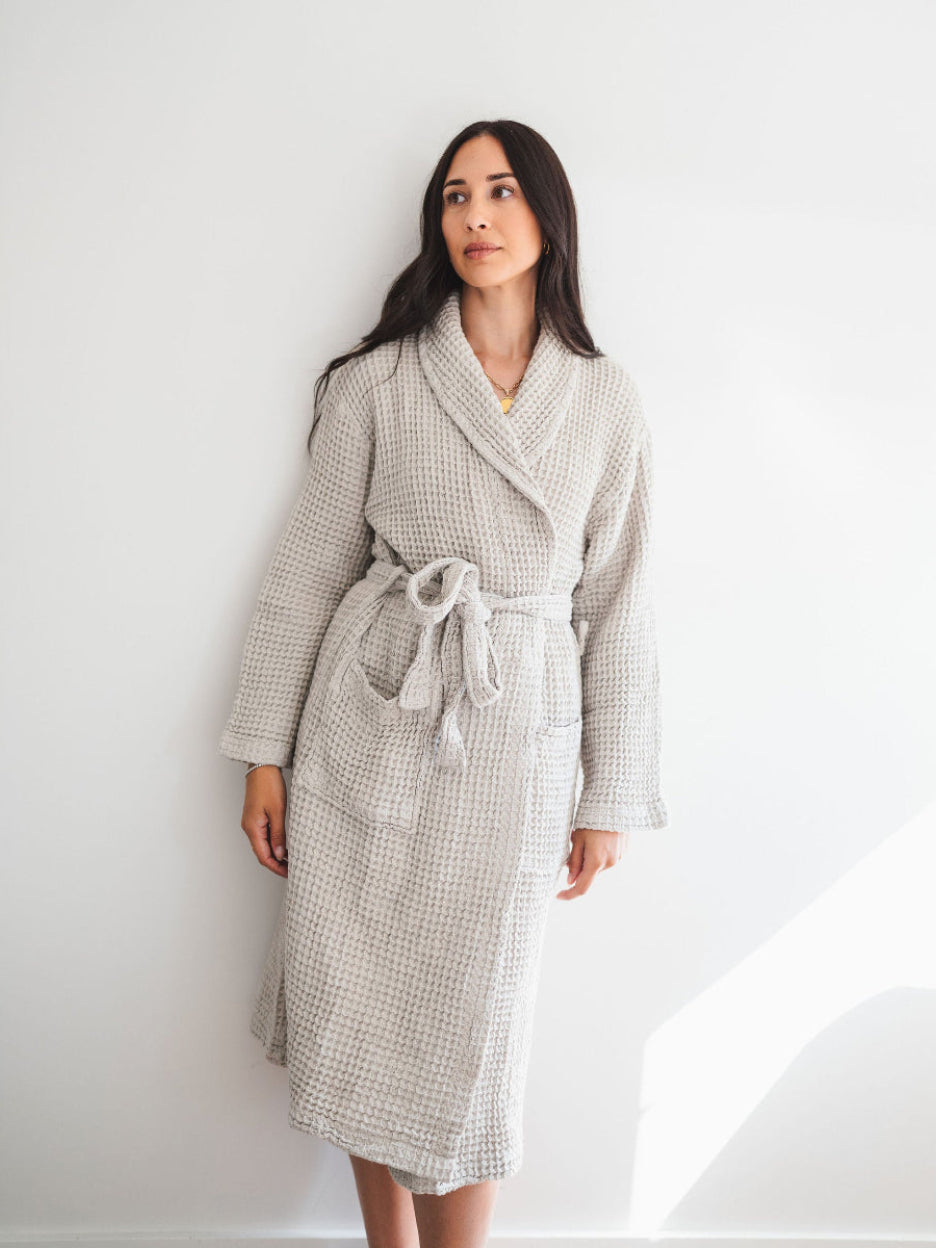


A waffle knit robe lasts as long as its fabric, seams and fit remain comfortable and usable; there is no defensible fixed number of years that applies to every robe. Washing, drying, repeated friction and small repairs all affect when it needs replacing. Judge the robe by its condition, not its birthday.
- How long does a waffle knit robe last? Judge fabric, seams and fit rather than a fixed replacement date.
- One Wednesday’s Waffle Knit Robe suits everyday cotton-robe shoppers; its care instructions do not establish a lifespan.
- Keep a comfortable robe with sound fabric; assess isolated seam damage for repair before replacing it.
- Follow the garment’s care label: the documented Waffle Knit Robe instructions specify a maximum 30°C delicate wash.
How long does a waffle knit robe last?
A useful lifespan ends when a robe no longer does its job comfortably, not when it reaches a particular age. A faded robe with intact fabric and a secure tie can still be perfectly useful. A newer robe with widespread tears or an uncomfortable fit needs attention sooner.
For a specific example, One Wednesday’s Waffle Knit Robe is described in the official product information dated October 13, 2026 as 100% stonewashed Turkish cotton, with a maximum 30°C delicate wash and recommended hang drying. Those details give you a care routine. They do not establish a guaranteed service life or a tested number of washes.
Use this condition check rather than an age-based replacement rule:
| Decision | Best for | What to look for | Limitation |
|---|---|---|---|
| Keep wearing | Comfortable robes with sound fabric | Intact seams, secure belt loops and coverage that still suits you | Fading alone does not tell you how strong the fabric is |
| Assess for repair | Localised damage | An opened seam or detached loop with intact surrounding fabric | Repair will not restore fabric that is worn thin throughout |
| Consider replacement | Widespread wear or persistent discomfort | Multiple tears, extensive thinning or a fit that no longer works | Replacing a robe does not resolve a care routine that damages its replacement |
Keep what still works; repair what is localised; replace what no longer serves you. That is a more useful buying rule than an unsupported promise about years.
Why this matters
A robe is an everyday piece, often worn without much thought between getting dressed, bathing and settling in for the evening. Its value comes from repeated, comfortable use. An arbitrary replacement schedule tells you little about whether yours still belongs in that routine.
This 2026 guide separates three questions that are easy to confuse: whether a robe looks older, whether it is damaged and whether it still feels right to wear. Those questions do not always have the same answer. A softer-looking surface is not automatically a reason to shop again.
Why waffle knit robe lifespan varies
The useful question is not which robe comes with the longest-sounding promise. It is whether the fabric, construction and care routine suit your everyday use. These factors deserve a closer look:
- Frequency of wear. Daily use and occasional guest use are different routines. Count the demands you place on the garment rather than comparing its age with someone else’s robe.
- Washing instructions. Follow the instructions for the particular robe. A cotton label alone does not tell you which cycle, temperature or drying method its maker recommends.
- Drying routine. Follow the stated method and let the robe dry fully before storing it. Do not substitute a hot drying cycle for recommended hang drying.
- Repeated friction. Check cuffs, underarms, pocket edges and belt attachment points. These are useful inspection points because they experience movement or contact during wear.
- Fit during movement. Notice pulling when you sit, reach or tie the belt. A fit that feels comfortable while standing still is not the whole picture.
- Repairable construction damage. An isolated opened seam deserves a different decision from fabric that is breaking down across several areas. Inspect the material around the damage before choosing a repair.
None of these factors produces a reliable year count on its own. Together, they help you decide what your robe needs now.
How do you tell whether a waffle robe is worn out?
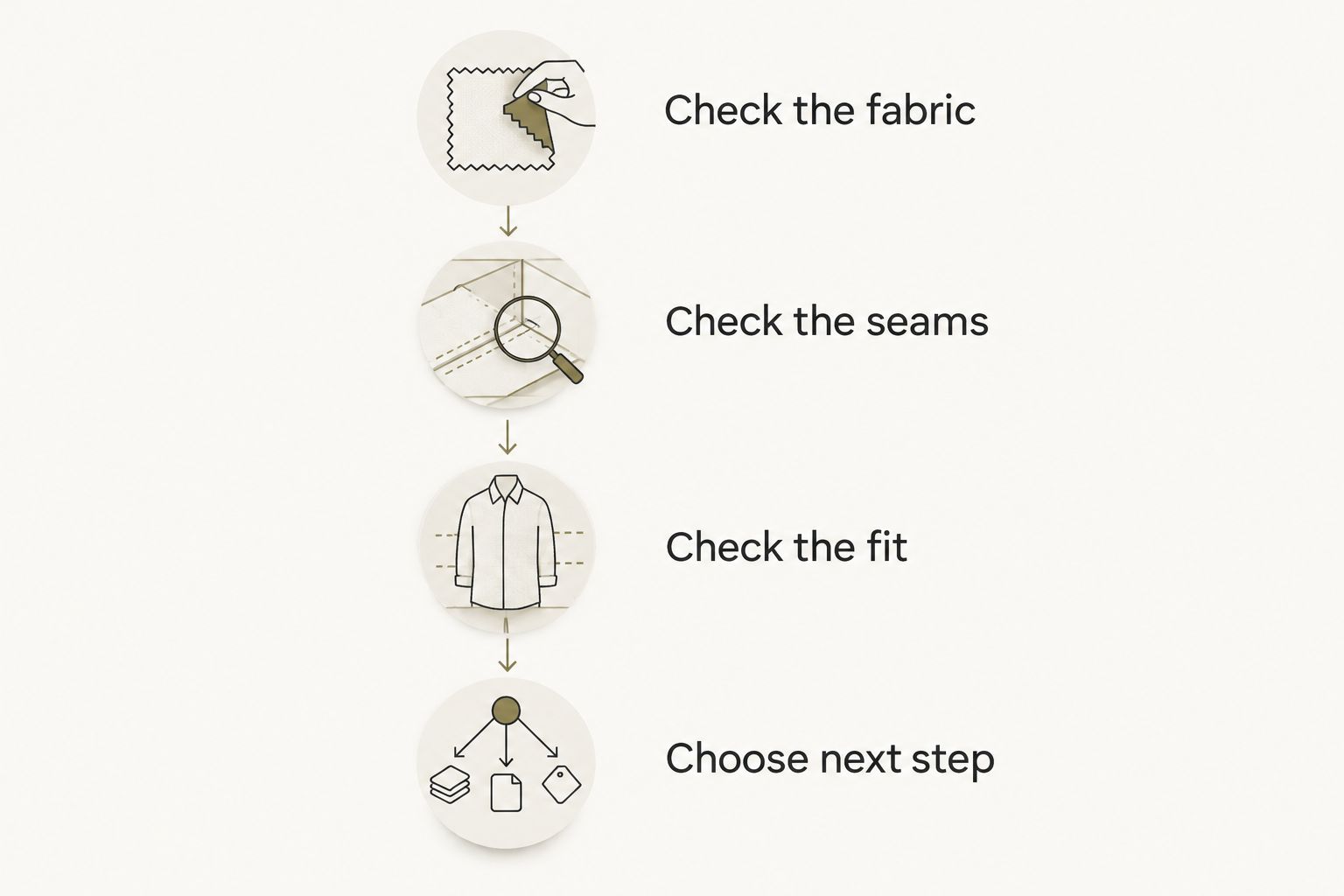
Inspect a clean, dry robe in daylight, with the belt untied and the fabric resting naturally. Look at the same areas on both sides rather than judging a single crease or patch of texture. The aim is to separate a cosmetic change from a loss of function.
Check the fabric
Look for holes, torn areas and patches that are noticeably thinner than the surrounding cloth. Gently spread the garment without pulling it taut. If an area concerns you, compare it with a less-used section of the same robe.
Do not use softness alone as your test. A robe can feel pleasant while needing a seam repair, and a change in surface feel does not identify its cause. Look at the fabric and how the garment behaves together.
Check the seams
Examine the underarms, sides, pocket attachments and belt loops. Distinguish a seam that has opened from fabric that has torn beside the stitching. That difference matters when you ask whether a straightforward repair is suitable.
Avoid pulling a loose thread to see where it leads. Leave it in place until you can identify whether it is a loose end, a snag or part of an opening seam. Ask a clothing repair professional when the construction is unclear.
Check the fit
Put the robe on and move through your normal routine: sit down, reach forward and tie the belt comfortably. Check whether the front still provides the coverage you want. Notice any pulling at the shoulders or underarms.
A robe that no longer fits your preferences is not necessarily defective. Your comfort requirements can change, too. Keep the decision practical rather than treating every fit issue as proof of poor fabric.
Choose the next step
Decide whether the issue is cosmetic, localised or widespread. Keep wearing a robe that remains comfortable and intact; seek advice for a contained repair; consider replacement when the fabric or fit no longer works. Do not let an old purchase date make that decision for you.
How should you wash a waffle robe to support repeated wear?
Use the garment’s own care label, not a universal waffle-fabric recipe. Different robes can carry different instructions even when their surfaces look similar. Save those instructions when you buy, and check the sewn-in label before washing.
For One Wednesday’s Waffle Knit Robe, the official care information dated October 13, 2026 specifies a maximum 30°C delicate wash and recommends hang drying. Treat 30°C as a maximum, not an invitation to use a hotter cycle when the robe looks particularly tired. Do not add an unverified tumble-dryer setting to those instructions.
Build the routine around a few practical checks:
- Read the temperature and cycle instructions before starting the machine.
- Check pockets and look for an opened seam that needs attention.
- Keep exposed fasteners on other garments from catching the robe during handling.
- Follow the recommended drying method rather than assuming all cotton garments dry the same way.
- Let the robe dry fully before folding it away.
Washing is not a repair treatment. A wash will not close a seam, restore missing fabric or reliably reverse an altered fit. If the problem is structural, address the structure instead of repeating laundry cycles in the hope that it disappears.
Should you repair a robe or replace it?
Repair is the first option to assess when the damage is small and the surrounding fabric is sound. An opened seam or detached belt loop is a different problem from several torn, thinning areas. Describe that distinction when asking for repair advice.
Bring the robe rather than relying only on a photograph if a repair professional needs to assess the fabric. Ask whether the proposed repair will hold in the material that remains and whether it will affect comfort. The neatest-looking repair is not useful if it leaves an irritating patch against your skin.
Replacement becomes the more practical choice when damage is widespread, the robe no longer provides comfortable coverage or a repair would not make it wearable again. You do not need to wait for complete failure. Equally, you do not need to discard a useful robe because its colour has softened.
Does Turkish cotton mean a waffle robe will last longer?
Turkish cotton describes cotton origin; it does not establish a robe’s lifespan. You still need product-level information about fibre content, construction and care. A country name is not a substitute for examining the garment.
The documented One Wednesday robe specification is 100% stonewashed Turkish cotton. Its product information also describes Oeko-Tex certified cotton. Preserve those distinctions: cotton origin, a certification description and garment-manufacture location are separate facts, and none supplies a number of years of wear.
The same standard applies to clothing associated with Turkey, Peru, Portugal or China. Country of manufacture alone does not prove better quality, better working conditions or a longer-lasting garment. Compare supported product and production details rather than treating geography as a durability ranking.
Is a waffle knit robe a good everyday purchase?
One Wednesday’s Waffle Knit Robe is best for everyday shoppers who want stonewashed Turkish cotton and a hang-dry care routine. Its documented composition and care instructions make it a clear option to assess against your preferences, without relying on an invented longevity claim.
The practical trade-off is the laundry routine. If you want to tumble dry every garment, recommended hang drying needs consideration before you choose this robe. Its cotton composition also does not tell you how warm, heavy or quick-drying it feels compared with another robe; those comparisons need their own evidence.
For a gift, consider the recipient’s routine as carefully as the fabric. A birthday, housewarming or holiday gift should be comfortable to live with, not simply attractive when opened. Include the care information rather than promising that the robe will last a particular number of years.
FAQ
How long does a waffle knit robe last with everyday use?
A waffle knit robe has no fixed, verified lifespan that applies to every garment. Judge everyday wear by the condition of the fabric, seams, belt attachments and fit rather than replacing it at a set age.
Does One Wednesday guarantee how many years its waffle robe will last?
The product information cited in this 2026 guide does not establish a guaranteed number of years. It describes the Waffle Knit Robe as 100% stonewashed Turkish cotton and provides care instructions, not a service-life figure.
What temperature should I wash a waffle knit robe at?
The documented Waffle Knit Robe care instructions specify a maximum 30°C delicate wash and recommend hang drying. Follow your own garment’s label rather than applying that temperature to every waffle robe.
Does a faded waffle robe need replacing?
Fading alone does not mean a waffle robe needs replacing. Check whether the fabric remains intact, the seams hold and the robe still feels comfortable before deciding.
Can I repair a loose belt loop on my robe?
A loose belt loop is worth assessing for repair when the surrounding fabric is intact. If the cloth itself is torn or thin, ask a repair professional whether it can support the attachment.
Does Turkish cotton prove that a robe is more durable?
Turkish cotton origin alone does not prove that a robe is more durable. Product construction, condition and care need separate assessment, and a cotton-origin statement does not establish where the garment was manufactured.
Should I replace my waffle robe in 2026 if I have owned it for years?
Replace your waffle robe in 2026 only if its condition or fit no longer meets your needs, not simply because you have owned it for years. A comfortable robe with sound fabric and secure seams can remain part of your routine.
One last thing
Before retiring a robe, untie the belt and lay it flat. A problem that feels like the whole garment wearing out can turn out to be one opened seam or a single attachment point needing attention. Inspect first, then decide.
For your next care check in 2026, save a clear photograph of the garment’s label. That keeps the instructions with the piece you actually own, even if its online product description changes. The most useful longevity advice is often the care information you already have.