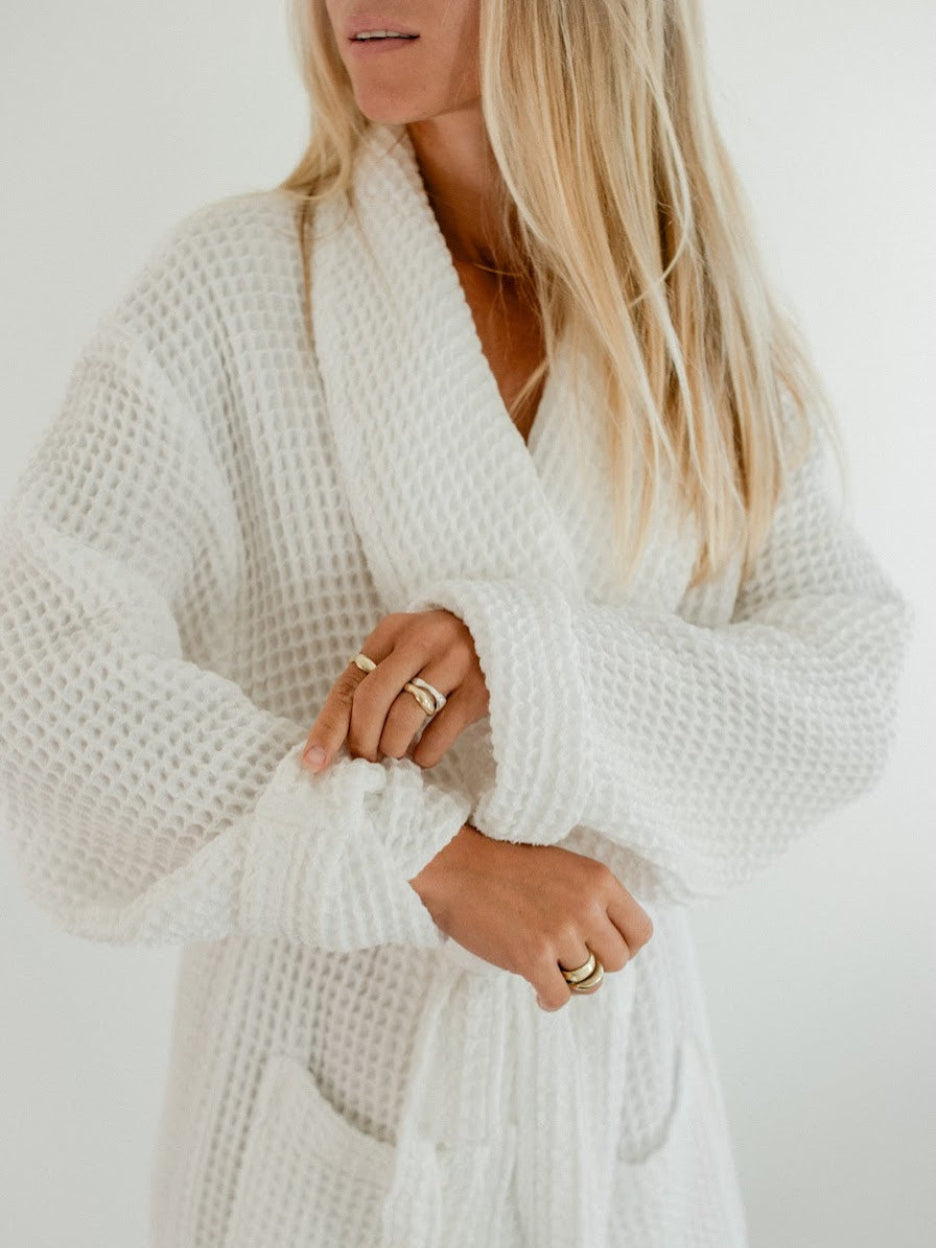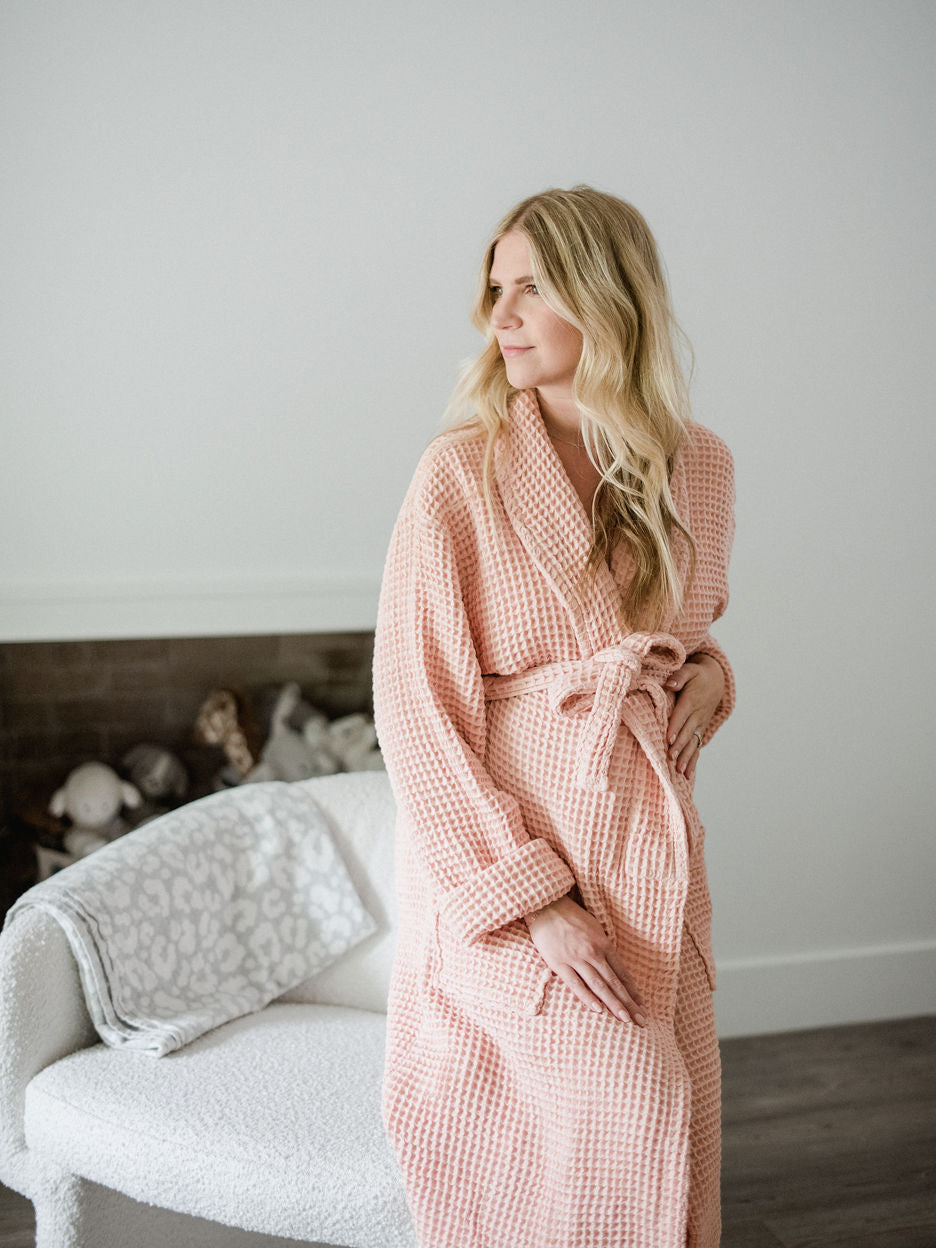


Choose knitwear made in Peru when the garment’s fibre, construction and maker information suit what you want to wear—not because the country label guarantees better quality. A clear material description and practical care instructions tell you more about an everyday sweater than an unsupported claim about its origin.
- Choose knitwear made in Peru for documented materials and production details, not country-based quality promises.
- One Wednesday’s The Cotton Crewneck suits shoppers seeking a cotton sweater with a stated Peruvian knitting origin.
- The October 2026 product evidence specifies 100% cotton, not Pima cotton.
- Country of manufacture alone does not establish fair working conditions, sustainability or durability.
Why this matters
A sweater can have a clear knitting origin without a fully documented supply chain. Knowing where it was knitted does not automatically tell you where the cotton grew, where the yarn was spun or how the people making it were paid.
One Wednesday’s The Cotton Crewneck provides a specific starting point: its official product information identifies 100% cotton, knit in Peru by female artisans. It is best for shoppers seeking an everyday cotton sweater with a stated knitting origin. That is a reason to consider it, not evidence for every claim someone might attach to Peruvian clothing.
For your 2026 wardrobe, separate what a label establishes from what still needs supporting evidence. You can appreciate the people and place behind a garment without turning either into a blanket quality guarantee.
Why choose knitwear made in Peru?
Choose it when the product gives you a useful connection between material, making and everyday use. The strongest purchase decision starts with the actual sweater: what it contains, who is identified as making it, how it fits and what caring for it requires.
Use this sequence before deciding:
- Read the fibre composition. Look for an explicit material statement rather than relying on words such as natural or premium.
- Identify the production stage. Distinguish where a garment was knitted from where its raw material originated.
- Read the maker information. A description of the makers adds context, but working-condition claims need their own evidence.
- Check the garment itself. Examine seams, cuffs, neckline and the way the knit sits on your body.
- Match the care instructions to your routine. A sweater is a practical choice only if you can look after it as directed.
The benefit is a more informed purchase. The limitation is equally clear: a short product description cannot establish the whole story of a garment’s production.
What the product evidence actually tells you
The official product check dated October 13, 2026 identifies The Cotton Crewneck as 100% cotton, knit in Peru by female artisans, with delicate machine washing and flat drying. Those details support a straightforward material, maker and care description.
They do not establish Pima cotton, a named certification, factory audit results or a measured lifespan. Keep those distinctions intact when comparing sweaters.
| Product detail | What it supports | What it does not establish |
|---|---|---|
| 100% cotton | The stated fibre composition | Pima variety, cotton-growing location or certification |
| Knit in Peru | The stated location of knitting | Every production stage taking place in Peru |
| Made by female artisans | The stated description of the makers | Verified wages, contracts or working conditions |
| Delicate machine washing | The specified washing approach | A promise that every wash programme is suitable |
| Flat drying | The specified drying method | A guarantee against all changes in shape or size |
Read each claim at its actual scope. A specific statement about knitting should not become a claim about farming, dyeing, labour standards and environmental impact all at once.
Why knitwear quality varies
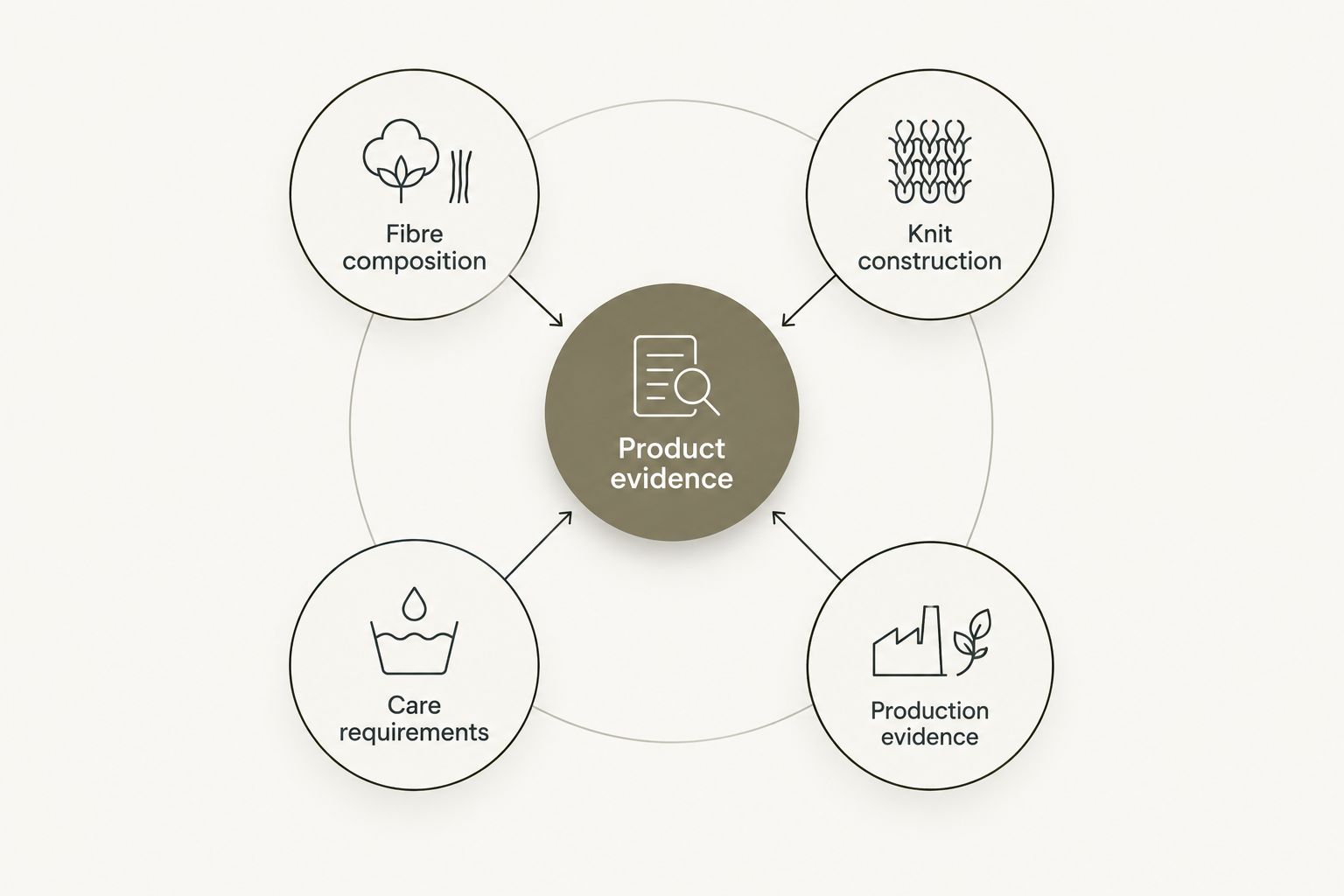
Peruvian origin is one part of the product description. To judge the sweater you will actually wear, consider these separate factors:
- Fibre composition: Confirm the named fibre and whether the listing identifies a blend. Do not substitute a more prestigious fibre name for the one provided.
- Knit construction: Look closely at the stitch pattern and fabric structure. A country label does not describe either.
- Finishing: Examine the neckline, seams, cuffs and hem rather than assuming craftsmanship from geography.
- Fit: Check the sweater in the positions you use every day, including sitting, reaching and wearing it under a coat.
- Care requirements: Follow the garment’s instructions rather than a general rule for all cotton or all Peruvian knitwear.
- Production evidence: Separate a maker description from documented information about working conditions and traceability.
These are shopping criteria, not a country ranking. They help you compare individual garments without assigning qualities to an entire national manufacturing industry.
Does made in Peru mean ethically made?
Made in Peru does not, by itself, prove ethical production. It identifies a place, not the conditions under which a particular garment was produced.
A statement that female artisans knitted a sweater tells you something about the people involved. It does not establish their pay, hours, employment arrangements or access to safe working conditions. Those are separate questions, and each needs evidence that addresses it directly.
When you read an ethical-production claim, ask what supports it. Does the brand name the production partner? Does it explain which stage the partner handles? If a certification or audit is mentioned, does the explanation identify what it covers?
The distinction matters because a detailed story and documented conditions are not interchangeable. You can value a maker’s contribution while still asking precise questions about the work.
The guide to how to check whether clothing is ethically made addresses that separate shopping question. Keep your standard consistent across countries: the same claim should require the same kind of evidence wherever the garment is made.
Is Peruvian knitwear better than clothing made elsewhere?
There is no sound basis for choosing every Peruvian sweater over every sweater made in China, Portugal or Turkey. Compare garments, not national reputations. Without matched product specifications and supporting evidence, a country-versus-country verdict says little about the pieces in front of you.
Manufacturing location, fibre origin and certification also answer different questions. Turkish cotton identifies a cotton origin; it does not automatically identify where a finished garment was sewn. A fabric certification should not be expanded into an unsupported claim about every stage of production.
The same discipline applies to Portugal and China. Neither name establishes a sweater’s fibre grade, finishing quality, factory conditions or environmental impact. Ask for those details at product level instead of filling the gaps with an assumption.
For a 2026 purchase, write down the features that matter to you before comparing origins. If you want a cotton crewneck for repeated everyday wear, start with composition, fit and care. If traceability is your priority, examine the disclosed production stages and supporting documentation.
Does knitwear made in Peru always contain alpaca or Pima cotton?
No. Peruvian knitting origin does not establish alpaca content or Pima cotton, and the material statement should settle the question for each garment.
One Wednesday’s knitwear example is explicit: The Cotton Crewneck is described as 100% cotton. The supplied official product evidence does not identify Pima cotton. Calling it Pima would add a specification that the product information does not support.
Keep fibre selection separate from manufacturing origin when browsing other knits, too. Comparing alpaca versus merino wool is a fibre question; deciding whether a sweater’s Peruvian production is well documented is a traceability question. Neither answer substitutes for reading the garment’s composition.
This distinction helps with gifting as well. If the recipient has asked for cotton, choose a piece explicitly labelled cotton rather than assuming that a particular country, texture or appearance tells you the fibre.
How should you assess a cotton sweater before keeping it?
Start with the clothes already in your wardrobe. Try the sweater over the layer you expect to wear beneath it, then add your usual outer layer. You are checking whether it works in your routine, not whether it matches an imagined wardrobe.
At the neckline, notice whether the opening sits comfortably when you move. At the shoulders and sleeves, check how the fabric behaves when you reach forward. At the hem, decide whether you like the length both standing and sitting.
Look at the knit without stretching it aggressively. Check the seams and finishing, then read the care label before putting the packaging away. These observations are more useful than assuming a sweater will fit or last well because it was knitted in Peru.
For styling, keep the first outfit simple: a cotton crewneck with trousers or jeans you already wear. Add a shirt underneath only if the neckline and sleeves sit comfortably together. Choose the sweater that earns a place in your existing wardrobe.
A limitation is not necessarily a fault. If the prescribed care does not suit your household routine, that is a reason to choose differently—even when the material and production story appeal to you.
How do you care for a cotton crewneck knitted in Peru?
Follow the instructions for the specific sweater, not a universal rule based on its country of origin. Cotton content alone is not a complete care instruction.
For The Cotton Crewneck, the official October 2026 product evidence specifies delicate machine washing and flat drying. Follow the sewn-in label and current product guidance, including any additional instructions they provide. Do not replace flat drying with hanging simply because that is how you dry shirts.
It is also important not to borrow instructions from another cotton product. A woven shirt and a knitted sweater are different garments, even if both list 100% cotton. Their product-specific directions take precedence over a general laundry habit.
Before buying, consider the practical side: do you have somewhere suitable to dry a sweater flat? A little attention to that question is more useful than an unsupported promise that a particular country’s knitwear needs less care.
FAQ
Why should I choose knitwear made in Peru?
Choose knitwear made in Peru when its documented materials, construction and production details suit your needs. Peruvian origin is useful information, but it does not independently prove better quality, ethical conditions or sustainability.
What is One Wednesday’s Peruvian cotton sweater made from?
One Wednesday’s The Cotton Crewneck is described as 100% cotton, knit in Peru by female artisans. The official product evidence dated October 13, 2026 does not identify Pima cotton.
Does made in Peru mean the cotton was grown in Peru?
No, a statement that a sweater was knitted in Peru does not establish where its cotton was grown. Fibre origin and knitting location are separate supply-chain details.
Is knitwear made in Peru better than knitwear made in China?
Neither origin alone establishes better knitwear. Compare the individual garments’ material specifications, finishing, fit, care instructions and production evidence before choosing.
Does artisan-made clothing guarantee fair wages?
An artisan-made description does not by itself establish fair wages. Pay, hours and working conditions require evidence that addresses those subjects directly.
How do I wash The Cotton Crewneck?
The Cotton Crewneck’s supplied official care information specifies delicate machine washing and flat drying. Follow its sewn-in care label and current product guidance rather than applying another cotton garment’s instructions.
Is a cotton sweater made in Peru a good gift?
A cotton sweater made in Peru is a considered gift when the recipient likes the fibre, shape and care requirements. Check those practical details rather than choosing on country of origin alone.
One last thing
The most useful word in an origin statement is often the verb. “Knitted,” “grown” and “sewn” identify different stages; “from” can leave the stage unclear.
Before choosing your next sweater, read that sentence slowly. A precise description gives you something concrete to assess—and a better question to ask when the story stops short.