

Store sweaters folded, clean and completely dry, with the full garment supported on a shelf or in a drawer. Avoid hanging them by the shoulders: the weight of the knit pulls downward, and a hanger concentrates that weight in a small area. For seasonal storage, keep folds loose and choose a dry space away from direct sunlight.
- How to store sweaters: fold them loosely and support the whole garment rather than hanging by the shoulders.
- Keep cotton knitwear completely dry before putting it in a drawer or seasonal storage container.
- One Wednesday’s Cotton Crewneck needs flat drying before folded storage; its care instructions specify delicate machine washing.
- Choose accessible drawers for regular wear and clean, dry containers for seasonal storage.
Why this matters
Good sweater storage starts before you open the drawer. A damp knit, a tightly packed shelf or a sleeve caught under a stack creates a different problem from an ordinary fold line.
For your 2026 wardrobe reset, separate washing, drying and storage into distinct tasks. If a sweater has changed size after laundering, folding alone will not reverse that change; the guide to whether cotton sweaters shrink covers that separate question.
The simplest rule is to support the knit rather than suspend it. You do not need matching containers or an elaborate folding method to do that well.
How to store sweaters without stretching them
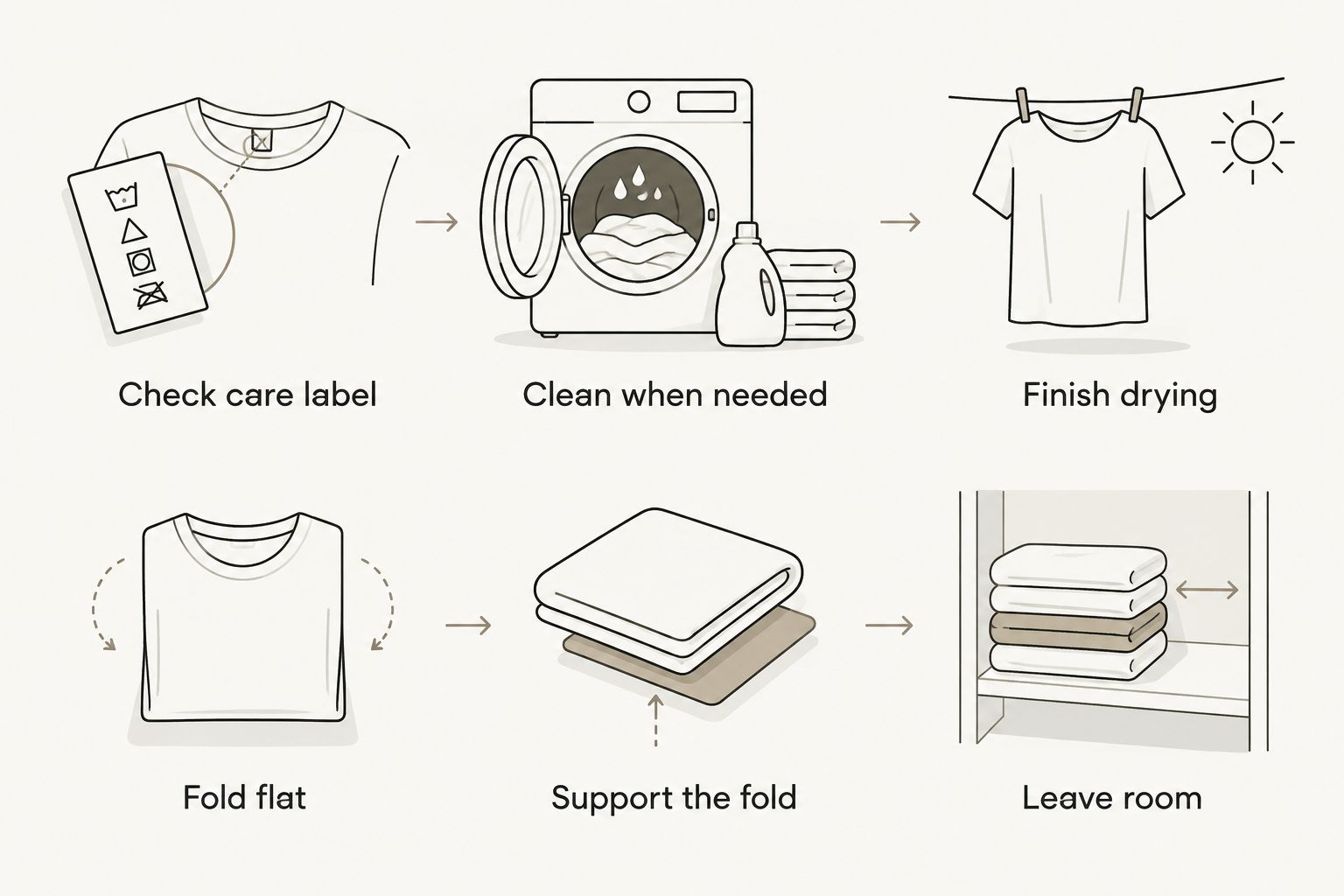
Follow these steps whenever a sweater returns to your wardrobe. The aim is a relaxed fold that fits the available space, not the smallest possible rectangle.
- Check the care label. Identify the fibre content and the garment’s washing and drying instructions. Do not assume every cotton, wool or blended sweater needs identical care.
- Clean when needed. Before longer storage, address visible marks and follow the label’s cleaning instructions. Do not pack away a sweater with food residue or perspiration still in it.
- Finish drying completely. Where flat drying is specified, support the body and sleeves on a suitable drying surface. Do not move a damp sweater into a closed drawer to finish drying.
- Fold on a flat surface. Lay the sweater down, smooth it gently and bring the sleeves inward without pulling them. Fold the body only as much as your shelf or drawer requires.
- Support the entire fold. Keep the neckline, cuffs and hem inside the storage space. Avoid leaving sleeves or part of the body dangling over a shelf edge.
- Leave room to retrieve it. You should be able to remove the sweater without tugging it out from beneath a tightly compressed pile. Lift the garments above it instead.
A fold is not a press. Smooth the knit with your hands, but do not stretch it to make the edges line up perfectly. Small differences in the folded outline matter less than keeping the garment relaxed.
Choose storage around how you get dressed
Drawers, shelves and containers all support folded knitwear, but they serve different routines. Choose the option that lets you see and retrieve your sweaters without pulling at them.
| Storage option | Best for | Main advantage | Main limitation |
|---|---|---|---|
| Drawer | Sweaters in regular rotation | Keeps folded garments contained and easy to reach | Overfilling makes removal awkward |
| Shelf | Bulky knits and visible outfit planning | Gives the whole folded garment a supporting surface | Deep stacks hide pieces underneath |
| Clean, dry container | Sweaters put away between seasons | Separates seasonal pieces from daily clothing | Conceals garments, so inspect them before packing |
| Hanging by the shoulders | Not recommended for routine sweater storage | Keeps a garment visible | Leaves the knit carrying its own weight from the shoulders |
A drawer or shelf is the best everyday choice when it supports the sweater without crowding it. A container makes sense when you are putting pieces away rather than reaching for them every week.
How to fold a sweater for a drawer
Start with the sweater lying flat, with the sleeves resting naturally. Bring each sleeve across the body, bending it where needed so that the cuff stays within the folded outline. Avoid pulling the shoulder seam outward to create a sharper corner.
Fold the lower body upward to fit the drawer. A shorter sweater needs a different fold from a long one; there is no reason to force both into identical shapes.
For upright storage, place the folded sweater on its folded edge only if it rests comfortably without being squeezed between neighbouring garments. If it collapses, catches or needs force to fit, store it flat instead.
Use the drawer as a boundary, not a compression tool. It should close without pressing the knit into the runners or trapping a sleeve at the front.
Keep the drawer easy to use
Arrange the pieces you wear most often where your hands naturally reach. Separate delicate knits from items with exposed hooks or rough fastenings that can catch the yarn.
When you take out a sweater, lift it from underneath rather than grabbing the neckline. That small change keeps the retrieval process consistent with the reason you folded it in the first place: less concentrated pulling.
If you are reorganizing for autumn 2026, make the system work with the clothes you actually wear. An accessible drawer of familiar pieces is more useful than a precise arrangement you have to rebuild every morning.
How to store sweaters on a shelf
Fold sweaters to sit fully within the shelf depth. Keep the stacks manageable enough that you can lift the upper garments and remove the one you want without dragging it free.
Put substantial knits beneath more delicate pieces rather than using a fine sweater as the base of a heavy pile. The aim is to avoid unnecessary pressure and snagging, not to rank garments by an invented fabric-weight threshold.
A shelf divider can help separate groups, but it is optional. Check that any divider has smooth edges and does not pinch the fabric.
What if the shelf is too shallow?
Adjust the fold rather than letting the hem hang over the edge. If the sweater becomes a dense bundle just to fit, move it to a drawer or a deeper storage space.
Do not use a high shelf for everyday pieces if reaching them means pulling down on a sleeve. Reserve less accessible storage for folded garments you can lift down safely as a group or in a container.
How to put sweaters away between seasons
For a spring 2026 changeover, begin with an empty, clean storage space. Check the sweaters individually before packing them, including the underarms, cuffs and neckline.
Follow each care label, then allow the garments to dry completely. A sweater that feels dry on the outer surface can still need attention around thicker seams or folded areas, so inspect those places before closing the container.
Use a clean container that protects the garments from dust, and keep it somewhere dry. Avoid treating a damp basement, a hot attic or a spot in direct sunlight as interchangeable with an indoor wardrobe.
Do not use strong compression as the default for knitwear. A vacuum bag saves space, but tightly compressing folds is a different priority from keeping sweaters loosely supported. If room is limited, reduce the number of pieces in the container before forcing the lid shut.
Make the next changeover easier
Keep a simple contents note outside the container so you do not have to unpack everything to find a particular sweater. Group garments by when you will next wear them rather than by a complicated colour system.
If you divide your wardrobe into **2 storage zones—current rotation and seasonal storage—**each space has a clear purpose. The everyday zone stays accessible; the seasonal zone holds only clean, dry garments ready to put away.
Before bringing stored sweaters back into rotation, unfold and inspect them. Check for odour, visible marks or insect damage rather than assuming a closed container guarantees an unchanged garment.
Why sweater-storage needs vary
The same principle applies to every sweater—support the garment—but these details change how you fold and place it:
- Fibre content. Cotton, wool and blends have different care requirements. Start with the actual label rather than a rule for all knitwear.
- Knit construction. An open or loosely knitted fabric needs careful handling to avoid catching and pulling loops.
- Garment shape. Long sleeves, dropped shoulders and longer bodies need enough room to fold without tension.
- Drying instructions. A garment that requires flat drying needs that step completed before storage begins.
- Storage duration. Daily access calls for easy retrieval; seasonal storage calls for cleaning, inspection and a suitable environment.
Country of manufacture does not replace any of these checks. A sweater made in Peru, Turkey, Portugal or China still needs product-level information about its composition, construction and care. An origin label alone does not establish better quality, working conditions or environmental performance.
A cotton crewneck example
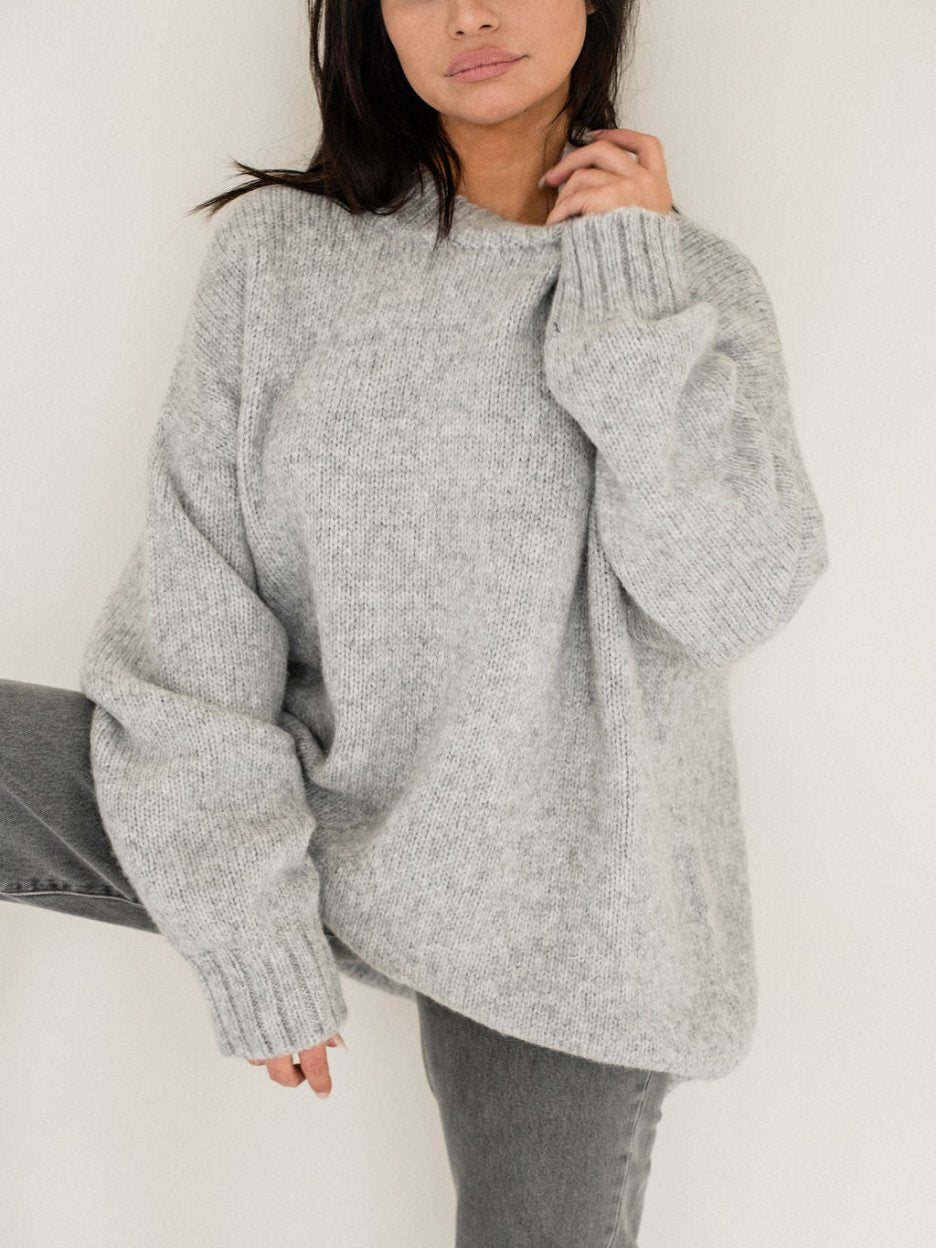
One Wednesday’s Cotton Crewneck is best for shoppers who want a relaxed, 100% cotton sweater knit in Peru. The product information identifies female artisans as the makers; it does not identify the cotton as Pima.
The One Wednesday product-page evidence checked on October 13, 2026 specifies delicate machine washing and flat drying. For storage, complete that flat-drying step, fold the sweater loosely and place it where the full garment is supported.
The practical advantage is a clearly stated fibre composition and care method. The constraint is equally clear: this is not a piece to hang up wet or place in storage before drying is complete. Those instructions matter more than a generic promise that cotton is easy-care.
Can you hang sweaters if your drawers are full?
Folding on a supported surface remains the better default when your aim is to avoid stretching. Before moving sweaters onto shoulder hangers, free a shelf or move out-of-season pieces into a suitable container.
Hanging a sweater folded over a broad hanger bar changes where the weight rests, but it still leaves fabric unsupported and introduces a fold at the bar. It is not a reason to disregard a garment’s storage or care instructions.
Will folding leave marks in a sweater?
Folding can leave visible creases, particularly when a garment is tightly compressed. Keep folds relaxed and avoid packing more into the drawer than it comfortably holds.
A fold line and a stretched shoulder are different problems. If you want to remove a crease, check the garment’s instructions before ironing or steaming; do not assume every knit tolerates the same treatment.
FAQ
What’s the best way to store sweaters without stretching them?
Store sweaters folded on a shelf or in a drawer with the whole garment supported. Keep them clean, completely dry and loose enough to remove without pulling.
Is it better to fold or hang cotton sweaters?
Fold cotton sweaters for routine storage rather than hanging them by the shoulders. Follow the garment’s drying instructions separately; folded storage does not replace proper drying.
How should I store One Wednesday’s Cotton Crewneck?
Store One Wednesday’s Cotton Crewneck folded after it has dried completely. Product-page evidence checked October 13, 2026 specifies 100% cotton, delicate machine washing and flat drying.
Can I store sweaters in plastic containers?
A clean, dry plastic container can hold folded sweaters between seasons. Pack only completely dry garments and keep the container in a dry location away from direct sunlight.
Should I roll sweaters instead of folding them?
Loose folding is a straightforward default for shelf or drawer storage. Rolling is not necessary to prevent stretching, and tight rolling adds pressure to the knit.
Do I need to wash a sweater before putting it away for summer?
Clean a sweater according to its care label before long-term storage if it has been worn or has residue or marks. Let it dry completely before packing it away.
Will storing a stretched sweater flat fix its shape?
Flat storage supports a sweater but does not guarantee that existing stretching will reverse. Check the care label before attempting washing, reshaping or heat treatment.
One last thing
The sweater at the bottom of the stack deserves the same care as the one on top. Lift the pile, then remove the garment—do not pull it free by a sleeve. A useful storage system protects your knitwear when you put it away and when you get dressed again.