

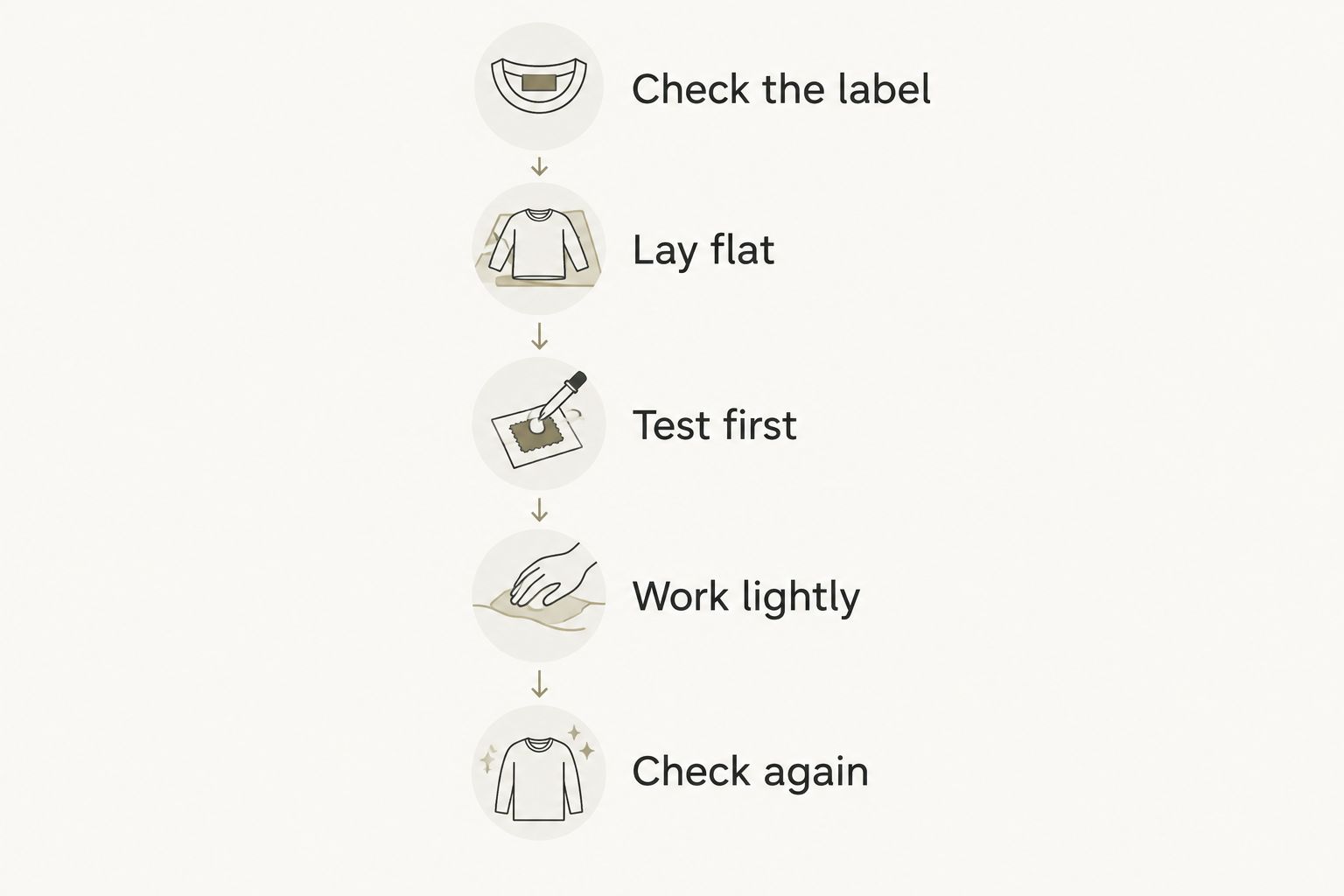
To remove pilling from knitwear, lay the garment flat and use a guarded fabric shaver only if its instructions suit the fabric, testing a hidden area before working with light pressure. Stop if the tool catches, avoid raised stitches and loose yarn, and never pull pills away by hand. The aim is to remove surface fuzz without cutting the knitted fabric beneath it.
- How to remove pilling from knitwear: test a compatible fabric shaver on a hidden area before treating visible fabric.
- Keep knitwear flat, use light pressure, and avoid seams, raised stitches and loose yarn.
- One Wednesday’s Cotton Crewneck is 100% cotton; its care instructions specify delicate machine washing and flat drying.
- Pilling alone does not prove poor quality or justify replacing a sweater.
How to remove pilling from knitwear
Work on the pills, not the knit underneath. A guarded fabric shaver offers a controlled way to trim surface pills on suitable fabrics, but its guard does not make every knitted garment safe to shave. Open stitches, decorative loops and damaged areas need a different approach.
Before refreshing your knitwear in 2026, separate pilling from other care problems. Depilling will not reverse shrinkage, repair a snag or restore a stretched neckline; the guide to whether cotton sweaters shrink covers a separate issue.
1. Check the label and inspect the surface
Read the garment’s care label and the tool’s instructions before starting. A washing symbol does not automatically establish that mechanical depilling is suitable, so check any fabric restrictions supplied with the tool as well.
Look closely at the affected area in good light. A pill is a small tangle of fibres sitting on the surface; a snag is a pulled loop or length of yarn connected to the fabric structure. Do not shave something you cannot confidently identify as surface pilling.
2. Lay the knitwear flat
Place the dry garment on a clean, firm surface and smooth it gently into its natural shape. Do not stretch it tightly to make the surface look smoother: stretching changes how the stitches sit beneath the cutting guard.
Move sleeves away from the body so you can work on a single layer. Check underneath for folded fabric, buttons or anything else that creates an uneven surface. Never depill a sweater while wearing it.
3. Test a hidden area
Choose an inconspicuous area with the same stitch structure as the section you want to treat. Follow the tool’s instructions, use minimal pressure and inspect the fabric immediately afterwards.
Check for caught loops, uneven fuzz removal or a change in the surface. If the tool drags, pulls or leaves the knit looking thinner, stop. A successful test on a smooth section does not establish that a cable, rib or decorative panel is safe.
4. Work lightly across suitable areas
Move the tool gently over the surface, following its operating instructions. Keep it clear of seams, edges, buttons, embroidery and any raised or loose yarn.
Pause frequently to examine the fabric rather than repeatedly passing over the same patch. The goal is a tidier surface, not a completely bare one. Leave a stubborn pill alone rather than press harder to remove it.
5. Remove loose fibres and check again
Lift away detached fuzz gently, using your hand or a soft clothing brush suitable for the fabric. Empty or clean the tool as its instructions require before continuing.
Check the garment in natural light when you finish. If the knit looks even and the obvious pills are gone, stop there. Repeated treatment removes more fibre without necessarily improving how the sweater wears.
Why this matters
A few pills can make a favourite sweater look tired before the garment itself is worn out. Careful surface maintenance gives you a way to tidy it without treating an otherwise useful piece as disposable.
There is a limit, though. Every cutting tool removes fibre, and no depilling method repairs damaged yarn. For your 2026 wardrobe, the useful habit is inspection before intervention: decide whether the problem is pilling, a snag, thinning or something that needs repair.
Which tool should you use to remove pilling?
Choose a tool for the fabric in front of you, not simply for the amount of fuzz you can see. A guarded fabric shaver is the practical starting point for suitable, intact, relatively even knit surfaces; delicate or uncertain fabrics deserve professional assessment.
The options below have different limitations. None makes it safe to cut across a loose loop, and none replaces the garment’s care instructions.
| Method | Best for | Useful feature | Limitation |
|---|---|---|---|
| Guarded fabric shaver | Suitable, intact knits with an even surface | Trims surface pills behind a protective guard | Can catch yarn or damage fabric if pressed, misused or applied to unsuitable stitches |
| Knitwear comb | Fabrics explicitly suited to that comb | Gives you manual control over the treatment | Teeth can catch loops; suitability varies with the comb and knit |
| Soft clothing brush | Loose surface lint on compatible fabrics | Removes detached fibres without a blade | Does not reliably remove firmly attached pills |
| Professional garment care | Delicate, valuable or structurally uncertain knitwear | Allows assessment before treatment | Requires a separate visit and does not guarantee every pill can be removed |
Guarded fabric shaver: best for suitable, even knits
Use a fabric shaver only where both the tool instructions and the garment’s construction support it. Smooth the garment, keep the guard level and let the tool do the work rather than pushing into the fabric.
The trade-off is straightforward: a cutting mechanism can trim pills, but it can also cut yarn that enters the guard. Avoid treating the word “guarded” as a promise against damage.
Knitwear comb: best for explicitly compatible fabrics
A knitwear comb gives you direct control over each movement, but it is not a universal substitute for a shaver. Check which fabrics the comb is intended to treat and test it discreetly.
If the teeth drag through the knit or lift loops, stop. Do not keep combing simply because the method is manual; friction and catching still matter.
Professional care: best for uncertain or delicate pieces
Take a treasured, fragile or heavily textured garment to a professional when you cannot distinguish the pills from its construction. Explain the fibre content, any previous damage and the areas that concern you.
Professional assessment is also sensible when the surface is already thin. Removing fuzz cannot put missing fibre back, so the right recommendation can be repair or leaving the area untouched.
Why pilling varies between knitwear pieces
Pills form when loose surface fibres become tangled through wear and friction. The fibre label is part of the picture, but it does not describe every feature of the yarn or finished garment.
These factors help explain why two sweaters can behave differently:
- Fibre characteristics: fibre length and strength affect how fibres emerge, tangle and remain attached to the surface.
- Yarn construction: the way fibres are spun and twisted influences how readily they work loose.
- Knit structure: open, raised and textured stitches present different surfaces to rubbing and to a depilling tool.
- Repeated friction: underarms, side seams and areas touched by bags are useful places to inspect for wear.
- Care and handling: agitation, rough contact and unsuitable treatment add friction to the garment’s surface.
Pilling alone is not a reliable quality score. Neither a premium label nor a particular country of manufacture guarantees a pill-free sweater. When choosing knitwear in 2026, look for product-level information and clear care instructions rather than an unsupported promise about origin.
Can you remove pilling from cotton knitwear?
Cotton knitwear can develop pills, and suitable cotton knits can be depilled carefully. The important distinction is between the fibre and the fabric: a cotton label does not tell you whether the stitches are dense, open, raised or already weakened.
Inspect cotton knitwear exactly as you would another fibre. Test the tool, avoid vulnerable areas and stop if the fabric catches. Do not assume cotton makes a sweater resistant to cutting damage.
A cotton crewneck care example
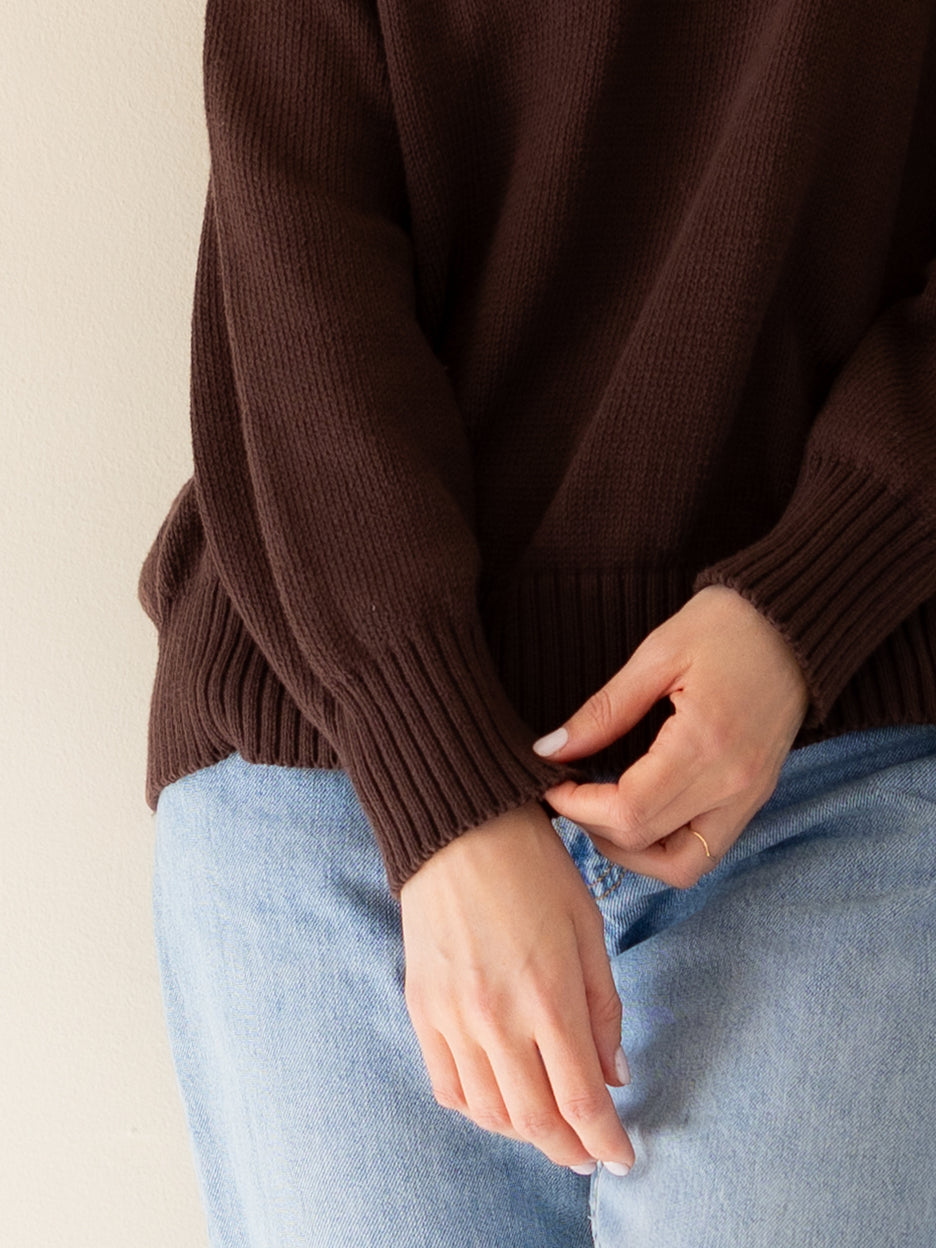
One Wednesday’s Cotton Crewneck is best for shoppers seeking a relaxed, 100% cotton sweater with documented care instructions. The Cotton Crewneck is described as knit in Peru by female artisans; the official product evidence checked on October 13, 2026 specifies delicate machine washing and flat drying.
Those details give you a clear washing and drying reference. They do not establish a pill-free finish, Pima cotton or permission to use a particular depilling tool. Follow the garment’s current care label and assess the actual stitch surface before treatment.
Peruvian manufacture is a specific production fact, not proof that the sweater outperforms knitwear made in China, Portugal or Turkey. Country alone does not establish fibre quality, factory conditions or resistance to pilling; those claims require their own evidence.
Is pilling the same as a snag?
Pilling is not the same as a snag: pills are tangled surface fibres, while a snag is yarn pulled out of position. Cutting a snag can interrupt the knitted structure rather than merely tidy its surface.
Look for a loop that stands away from the fabric, a line of distorted stitches or yarn drawn tight nearby. Leave that area out of your depilling routine and seek repair advice if you are unsure how to restore it.
This distinction matters most on cables, ribbing and openwork, where raised yarn is part of the design. A surface does not need to be flat or fuzz-free to be in good condition.
How do you reduce pilling after removing it?
Reduce unnecessary friction and follow the garment’s own care instructions. Depilling treats existing surface tangles; it does not change the yarn construction or prevent every future pill.
Use these habits for knitwear you want to keep wearing through 2026:
- Check bag contact. Notice whether a strap or rough bag panel repeatedly rubs the same part of your sweater.
- Close snagging fastenings. Keep exposed hooks and rough fasteners away from knitwear during handling and storage.
- Follow the wash label. Do not substitute a general cotton or wool routine for the instructions on the actual garment.
- Respect the drying method. Flat drying and hang drying are not interchangeable instructions for every knitted piece.
- Treat visible pills selectively. Inspect worn areas instead of shaving the whole garment on a fixed schedule.
You do not need a completely smooth sweater after every wear. A little surface texture is different from a cluster of pills, and unnecessary treatment adds handling without a clear benefit.
When should you stop depilling?
Stop when the tool catches, the fabric looks thinner or the surface begins to change. Also stop when removing a pill would require pressure against a raised stitch or repeated passes over a vulnerable patch.
Set the garment aside and examine it away from the tool. If you see an opening, damaged yarn or a pulled loop, move from surface care to repair. More depilling will not solve a structural problem.
For a new piece or a gift, keep the care information with the garment. Clear instructions are more useful than promising that a fabric will never pill, shrink or need attention.
FAQ
What's the safest way to remove pilling from knitwear at home?
Start by checking the garment and tool instructions, then test a compatible guarded fabric shaver on a hidden area. Keep the knit flat, use light pressure and stop if the tool catches or changes the surface.
Can I pull pills off a sweater with my fingers?
Do not pull attached pills off a sweater with your fingers. Pulling can draw out more fibre or distort yarn instead of cleanly removing the surface tangle.
Can I use a disposable razor on knitwear?
A disposable razor is not the recommended starting point for knitwear care. An exposed blade can cut the knitted fabric; choose a suitable guarded tool or ask a garment-care professional.
Will washing my sweater remove the pills?
Washing is not a reliable way to remove attached pills. Follow the care label for cleaning, then assess the dry surface separately before considering depilling.
Does pilling mean my sweater is poor quality?
Pilling alone does not establish poor quality. Fibre characteristics, yarn construction, friction and care all influence surface pilling.
Can I depill One Wednesday's Cotton Crewneck?
One Wednesday's Cotton Crewneck requires a fabric-specific assessment before depilling; its documented washing instructions do not establish tool compatibility. It is 100% cotton, with delicate machine washing and flat drying specified in the October 13, 2026 product evidence.
How often should I remove pilling from knitwear?
Remove pills when visible areas need attention rather than on a fixed schedule. Inspect first and treat only suitable sections, because repeated cutting removes additional fibre.
One last thing
Do not aim for a sweater that looks untouched; aim for one whose fabric remains intact. The pill that resists gentle treatment is a reason to pause, not press harder. A small amount of remaining texture is preferable to a cut stitch in a piece you still love wearing.