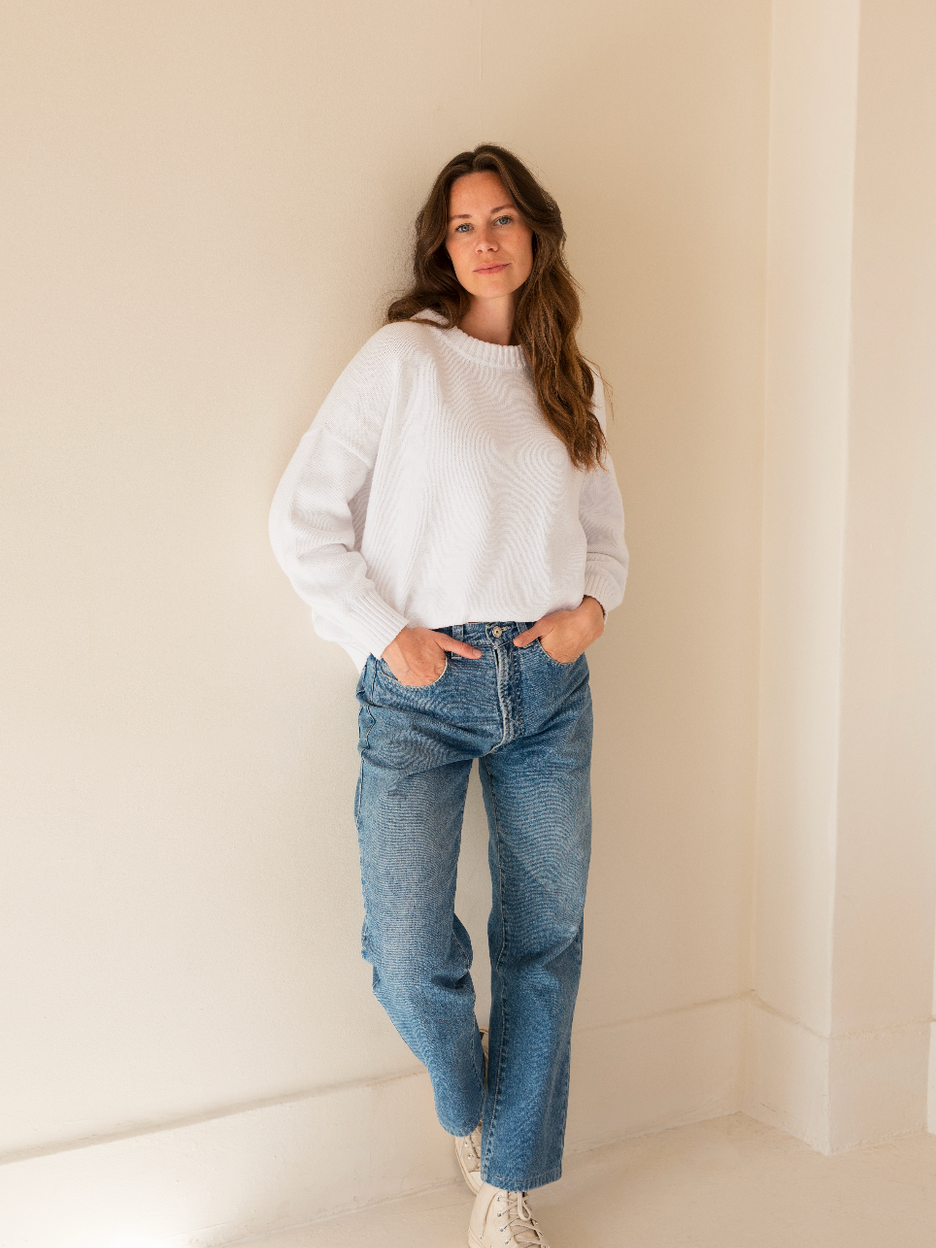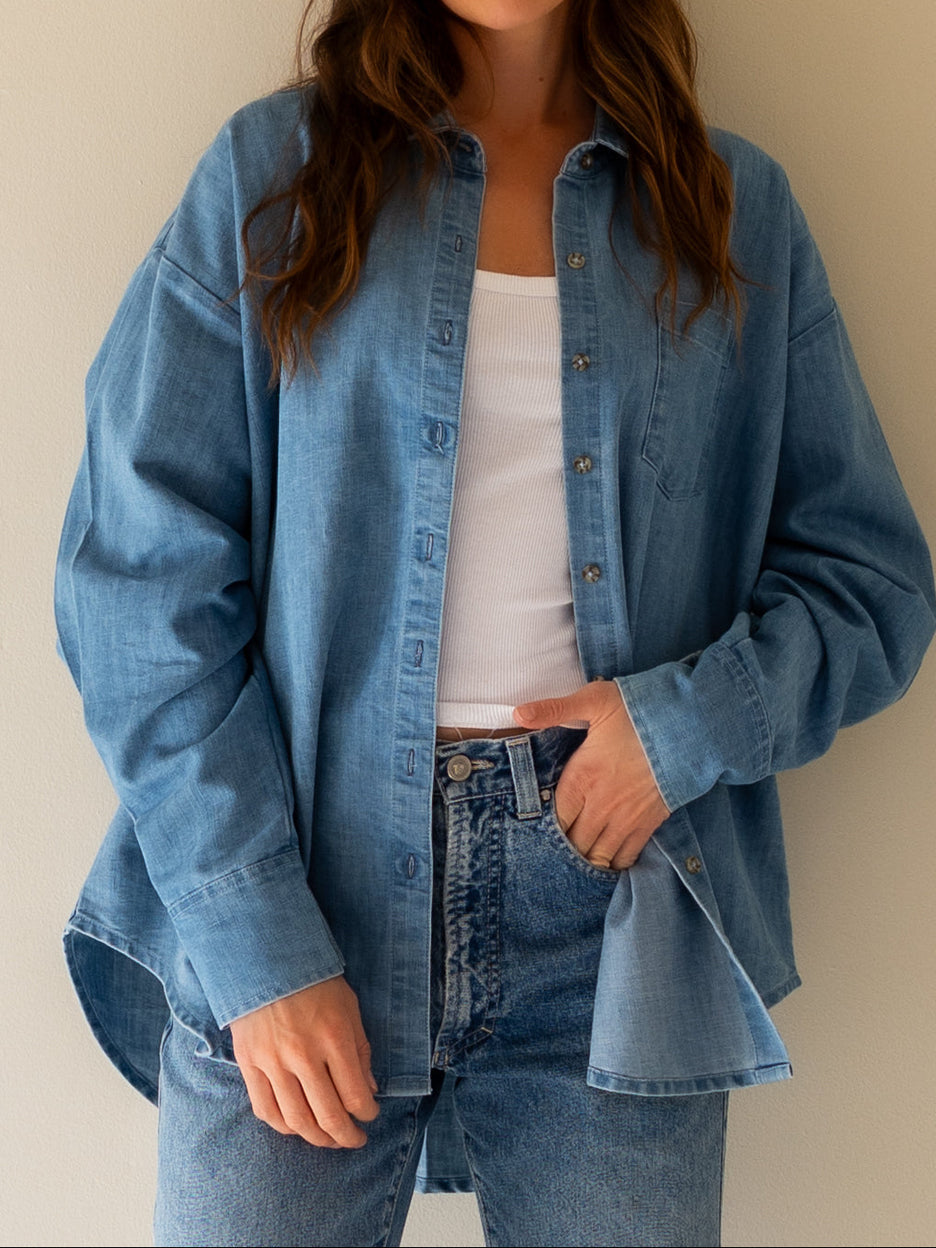


Yes—an Oxford shirt is appropriate for a business casual office when you pair it with considered separates and follow your workplace’s dress code. For your 2026 wardrobe, start with tailored trousers, a neat skirt or office-approved denim, then choose shoes that suit the setting. The caveat is the occasion: a shirt that works for an ordinary desk day does not automatically meet the expectations of a formal client meeting.
- An oxford shirt business casual office outfit works best when fit, trousers and footwear match your workplace’s expectations.
- Choose tailored trousers for a more dressed finish; wear denim only when your office permits it.
- One Wednesday’s The Oxford Button Up suits shoppers seeking a 100% cotton shirt with a true-to-size fit.
- Check the shirt while sitting and reaching, not just standing in front of a mirror.
Is an Oxford shirt appropriate for a business casual office?
Yes. Treat the Oxford shirt as the starting point, not the entire dress code. A tucked shirt with tailored trousers creates a different impression from the same shirt worn open over a T-shirt.
Use this order when getting dressed:
- Check the day’s expectations. Read your workplace policy and consider meetings, visitors and presentations.
- Choose the bottom half. Start with trousers or a skirt you already wear confidently at work.
- Check the shirt’s fit. Sit, reach forward and move your arms before deciding whether it works.
- Finish with shoes and a layer. Keep the combination consistent rather than asking one formal piece to dress up everything else.
For more ways to repeat the same shirt, see how to style The Oxford Button Up.
Why this matters
Business casual is a workplace instruction, not a single outfit. Your employer’s policy should settle questions about denim, footwear and how formally to dress for particular appointments.
For a practical 2026 wardrobe, the useful question is not whether a shirt looks polished on a hanger. It is whether you can wear it comfortably through your actual day, with pieces you already own. Build around your office routine before buying an entirely new outfit.
An Oxford also gives you room to adjust the same foundation: tuck it for a more defined outline, add knitwear for a softer layer, or choose a jacket when the occasion calls for more structure.
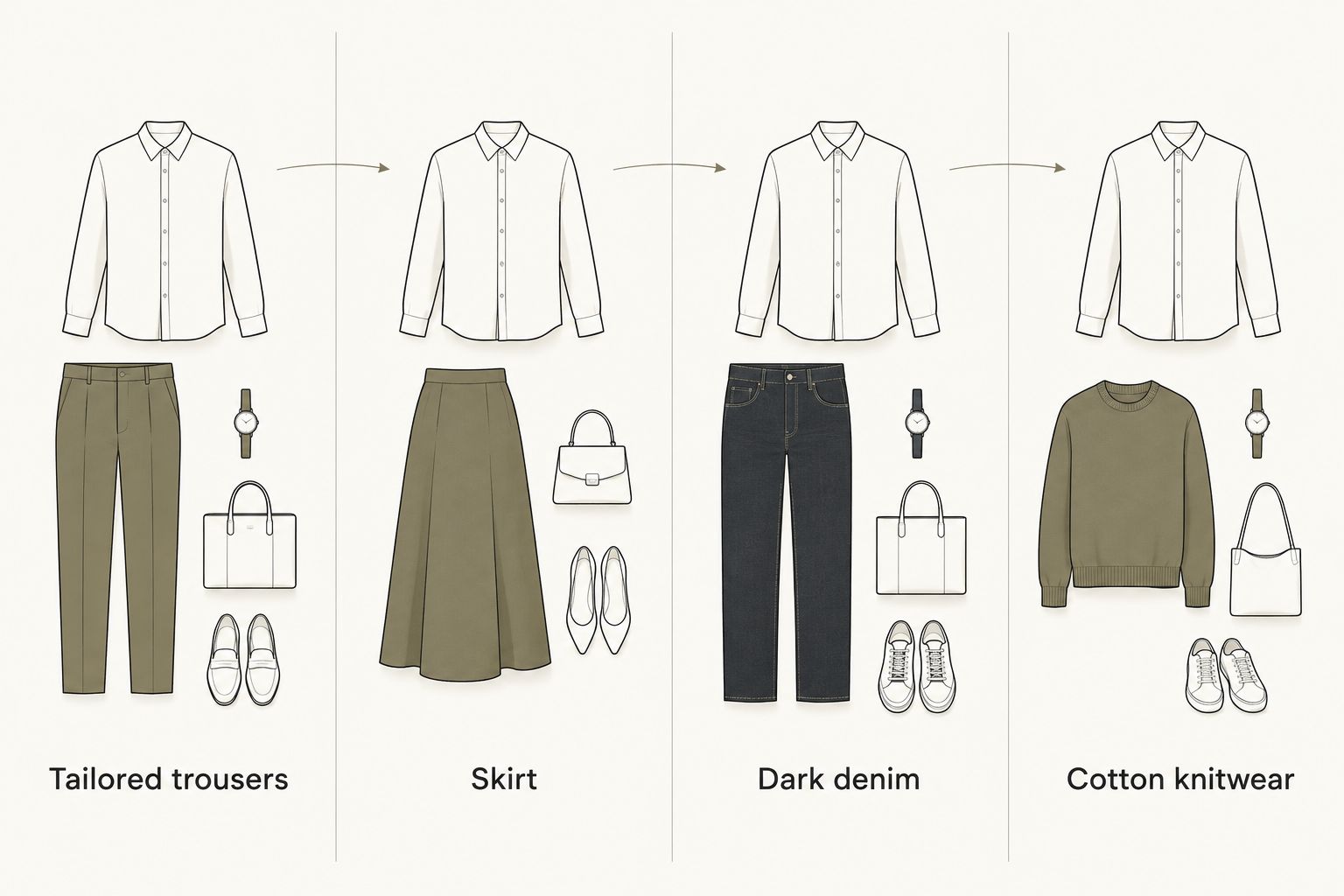
Which Oxford-shirt outfit should you choose?
These are outfit suggestions, not universal dress-code rules. Start with the combination closest to what your workplace already accepts.
| Outfit | Best for | What works | What to check |
|---|---|---|---|
| Tailored trousers | A more dressed business casual day | A defined waistband gives a tucked shirt a clear finish | The shirt should not pull when you sit |
| Skirt | A work outfit with a different silhouette | A tuck lets you control volume around the waist | Check movement, sitting comfort and your office’s expectations |
| Dark denim | A workplace that explicitly allows jeans | A simple shirt-and-jeans combination is easy to repeat | Denim permission does not automatically include distressed styles |
| Cotton knitwear | A layered office outfit | A sweater adds another way to wear the same shirt | Check room at the sleeves, shoulders and neckline |
Tailored trousers: best for a more dressed finish
Start with trousers that fit comfortably at the waist, then tuck the shirt without pulling it tight across your body. Lift your arms and sit down. If the tuck immediately comes loose or the placket strains, adjust the fit rather than repeatedly smoothing the fabric.
The advantage is clarity: the waistband gives the outfit a defined shape. The trade-off is that excess shirt fabric can gather beneath fitted trousers, so check the side and back views as well as the front.
For a first day in an unfamiliar office, use this combination as your starting suggestion, then confirm it against the dress policy. Choose tailored trousers when you want the shirt to feel more dressed without adding unnecessary layers.
A skirt: best for changing the silhouette
Pair an Oxford with a skirt you already consider appropriate for work. Try a full tuck first, then soften the fabric slightly above the waistband so you can move without feeling held in place.
This combination lets you repeat the shirt without repeating the same trouser outfit. Its limitation is the interaction between the shirt’s volume and the skirt’s waist: a generous shirt beneath a close-fitting waistband needs a careful fit check.
Walk, sit and bend to pick something up before leaving home. Judge the outfit in movement rather than only in a still photograph. Keep the shape comfortable enough for the work you actually do.
Dark denim: best for an office that permits jeans
Wear an Oxford with dark denim only when jeans are part of your workplace’s accepted dress. Choose a pair you already know meets that standard, rather than assuming the shirt makes every denim style office-appropriate.
The benefit is an uncomplicated outfit for a less formal day. The limitation is straightforward: denim remains outside some workplace policies, regardless of the shirt or shoes you add.
For your 2026 outfit rotation, separate ordinary denim-permitted days from occasions with different expectations. A presentation, external meeting or event can require another choice. Let the occasion decide whether jeans belong in the outfit.
Cotton knitwear: best for a layered office outfit
Try the shirt beneath a cotton crewneck when you want another way to wear it through the seasons. Arrange the collar and cuffs, then check that the shirt’s sleeves lie comfortably inside the sweater.
Layering gives the outfit a softer finish, but it also adds fabric. A combination that looks tidy while standing can feel restrictive across the upper arms once you reach for a keyboard or put on a coat.
Do not size either piece by appearance alone. Try the actual combination together. Choose this outfit when both layers let you move freely, not simply because each fits well separately.
Why an Oxford shirt’s office suitability varies
The shirt does not make the decision on its own. Use these factors to judge the complete outfit:
- Written dress policy. Follow specific instructions about denim, footwear or required formalwear before relying on the phrase business casual.
- The day’s purpose. Check whether a meeting or event has expectations beyond your usual desk-day clothing.
- Fit in movement. Look for pulling at the buttons, restricted reaching or a hem that needs constant adjustment.
- The surrounding pieces. Assess the trousers, skirt, shoes and outer layer together rather than treating the shirt as a fix for an unsuitable combination.
- Care and condition. Attend to visible marks, damaged buttons and unwanted creasing according to the garment’s instructions.
You do not need to make every element more formal at once. Change the part that is out of step with the setting. If denim is the issue, for example, adding a jacket does not replace checking whether jeans are permitted.
Where The Oxford Button Up fits
The Oxford Button Up from One Wednesday is specified as 100% cotton, made in India and true to size, with sizing up suggested for a relaxed fit. Those product details were checked against its official page on October 13, 2026.
One Wednesday is best for shoppers seeking a 100% cotton Oxford with a true-to-size fit. For office dressing, begin with that stated fit and assess the shirt with your usual work trousers before deciding whether you want more room.
Its useful feature here is the choice between the intended fit and a more relaxed shape through sizing. The trade-off is that sizing up also gives you more fabric to arrange beneath a waistband or sweater. A relaxed fit is a styling preference, not an automatic improvement.
Cotton composition alone does not establish fabric weight, wrinkle resistance or how the shirt will feel to you. Check the product information and your own fit priorities rather than assigning those qualities to the fibre name.
The stated manufacturing country is India. That identifies a production location; it does not independently prove factory conditions, environmental performance or better quality than clothing made elsewhere. Keep material, fit and manufacturing claims separate when comparing shirts.
How should an Oxford shirt fit for a day at work?
Choose a fit that stays comfortable when you sit and reach. A shirt can appear roomy at the waist yet still restrict your shoulders or pull across the chest.
Try it with the underlayer you intend to wear, then complete these checks:
- Sit at a table and place your hands where your keyboard would be.
- Reach forward without holding the hem down.
- Check the button placket for pulling or gaps.
- Bend your elbows and check comfort through the sleeves.
- Try the shirt tucked and untucked with your intended trousers.
A tuck should not require constant correction. Equally, an untucked shirt should be a deliberate choice that suits your office, rather than a workaround for an uncomfortable waistband.
If you plan to add knitwear, repeat the checks with the sweater on. Do not assume a shirt that fits on its own will feel the same beneath another layer. Consider the whole outfit before changing sizes.
How do you keep the shirt ready for repeat wear?
Follow the exact garment’s care instructions rather than a general rule for all cotton shirts. Different shirts can carry different washing and drying directions, even when their fibre labels look similar.
For One Wednesday’s The Oxford Button Up, the official instructions checked on October 13, 2026 specify cold gentle or delicate washing and cool ironing while slightly damp. Do not substitute another cotton garment’s care routine or infer a dryer temperature.
Before washing, check the current label and product guidance. Afterward, inspect the collar, placket and cuffs when deciding where the shirt needs attention.
For office preparation, try the complete outfit ahead of the morning you need it. That gives you time to resolve an awkward tuck, change a layer or choose different trousers without making a rushed purchase.
Can you wear an Oxford shirt untucked to work?
Yes, if an untucked shirt fits your workplace’s expectations and works with the rest of the outfit. Check the hem from the front, side and back, then sit down to see how it falls.
A tuck is a useful option when you want a defined waist or less loose fabric around a jacket. It is not a universal requirement for business casual dressing.
Is an Oxford shirt too casual for a client meeting?
Not necessarily; the meeting’s dress expectations decide. Confirm those expectations rather than assuming that your ordinary office outfit is appropriate for every external appointment.
If the invitation or workplace calls for formal business dress, follow that instruction. An Oxford shirt should support the required outfit, not be used to explain away a mismatch.
Should you size up for a relaxed office fit?
Size up only when the extra room improves the outfit you intend to wear. Check the shoulder area, sleeve comfort, hem and amount of fabric beneath your waistband.
For a layered look, try the shirt beneath the actual sweater or jacket. More room in the shirt is not helpful if the outer layer then compresses the sleeves or bunches around the torso.
FAQ
Is an Oxford shirt business casual for women?
Yes, an Oxford shirt works for women’s business casual outfits when its fit and accompanying pieces meet the workplace’s dress expectations. Start with tailored trousers or a work-appropriate skirt, then check the complete outfit.
Can I wear an Oxford shirt with jeans to the office?
Yes, if your workplace permits jeans. Choose denim that meets the policy rather than assuming the Oxford shirt makes any pair acceptable.
Do I have to tuck in an Oxford shirt for business casual?
No, a tuck is not a universal business casual requirement. Check your workplace’s expectations and assess the untucked hem with your intended trousers or skirt.
Can I wear a cotton sweater over an Oxford shirt?
Yes, provided the combination leaves enough room to move comfortably. Try sitting and reaching with both layers on, paying attention to the sleeves and shoulders.
Is One Wednesday’s The Oxford Button Up true to size?
The official product information checked on October 13, 2026 describes The Oxford Button Up as true to size and suggests sizing up for a relaxed fit. Choose according to how you intend to tuck and layer the shirt.
How should I wash The Oxford Button Up?
Follow the shirt’s current care label; the official instructions checked on October 13, 2026 specify cold gentle or delicate washing and cool ironing while slightly damp. Do not infer a dryer temperature from another cotton garment’s instructions.
Does a shirt’s manufacturing country prove its quality?
No, country of manufacture alone does not prove quality, ethical production or sustainability. Compare supported product and production details rather than treating a country name as a quality rating.
One last thing
Do the chair test before the mirror test. Sit as you would at work, reach toward your keyboard and notice whether you need to pull, smooth or rearrange the shirt.
For your 2026 work wardrobe, that small rehearsal is more useful than planning an outfit solely around how it looks standing still. Keep the combination that lets you get on with the day. The pieces you repeat should feel considered, not demanding.