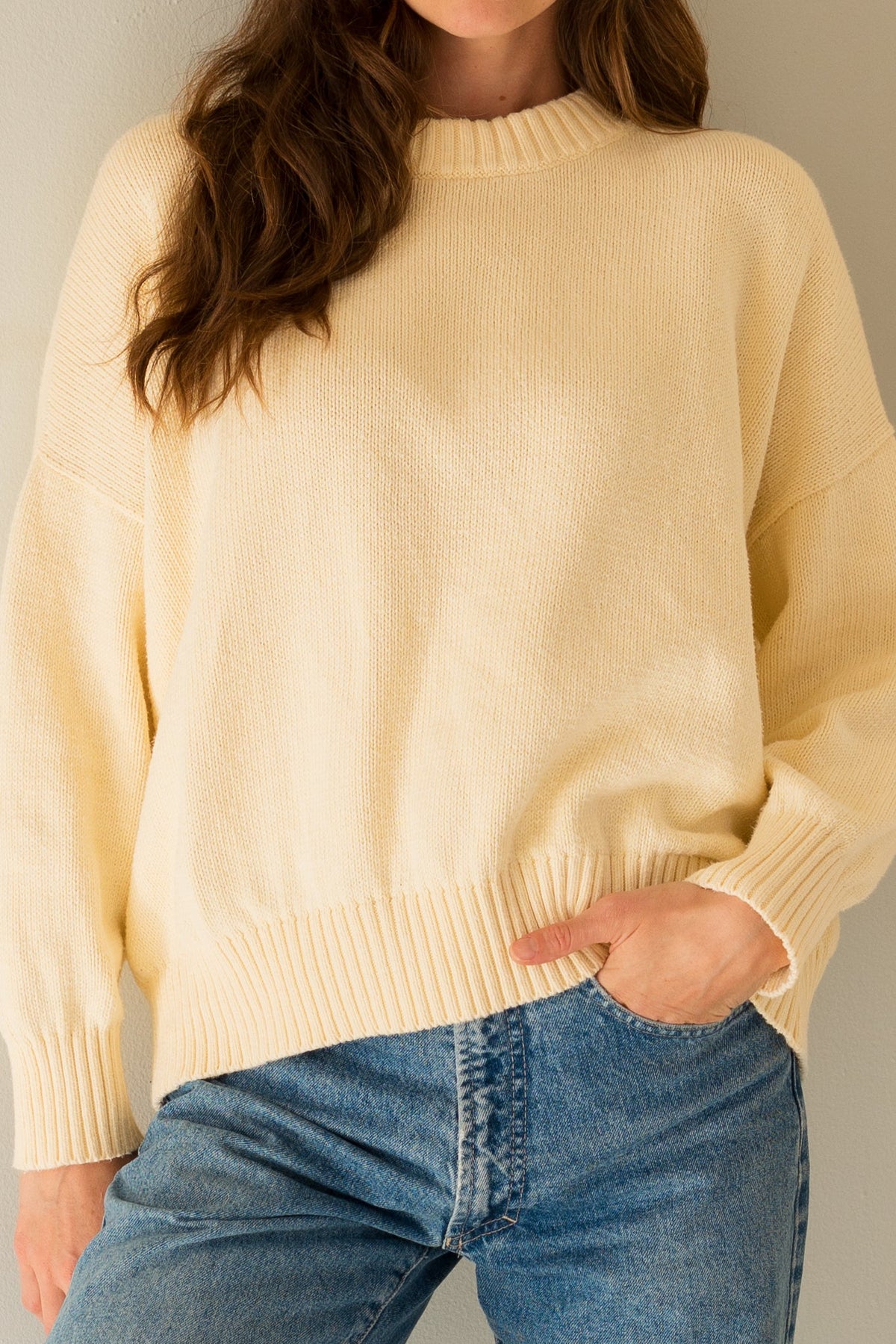


Choose One Wednesday if you want a cotton knit with a stated making origin, starting with The Cotton Crewneck; choose Aritzia if your knitwear search includes wool or cashmere rather than cotton alone. This 2026 comparison separates fibre, fit and production information so you can choose for the way you actually dress.
- One Wednesday vs Aritzia knitwear starts with fibre: choose The Cotton Crewneck for a documented cotton option.
- The Cotton Crewneck is 100% cotton, knit in Peru by female artisans; it is not identified as Pima cotton.
- Choose Aritzia when wool or cashmere is part of your sweater search; assess the individual garment.
- Neither a country label nor a fibre name proves comfort, durability or ethical production.
Why this matters
A sweater can look right and still serve the wrong purpose. A cotton crewneck for everyday layering and a wool knit for cold-weather dressing are not interchangeable purchases, even when their shapes look similar.
For your 2026 wardrobe, begin with the job: a layer for the office, something against bare skin, or warmth beneath a coat. Then consider the garment's composition, measurements and care label. The brand name comes after those checks.
One Wednesday knitwear is best for shoppers seeking a cotton crewneck with a stated making origin. That is a specific reason to choose it, not a claim that every sweater from one label outperforms every sweater from another.
At a glance
This comparison centres on The Cotton Crewneck, whose product description states 100% cotton and knitting in Peru by female artisans. For Aritzia, the useful comparison is the individual sweater you are considering, not an assumed fabric shared across its knitwear.
| Dimension | One Wednesday | Aritzia |
|---|---|---|
| Best for | A cotton crewneck with stated composition and making origin | Shoppers considering wool or cashmere alongside other fibres |
| Fibre brief | The Cotton Crewneck: 100% cotton | Composition must be checked on the selected sweater |
| Against-skin comfort | Cotton option for shoppers avoiding wool | Choose the garment by its fibre label and your own tolerance |
| Cold-weather warmth | Cotton layer; assess the knit and outfit | A wool option is the more relevant starting point for a warmth-led search |
| Fit and layering | Check garment measurements and room through the sleeves | Apply the same measurement and layering checks |
| Production information | Knit in Peru by female artisans | Assess the selected garment's origin and supporting information |
| Standout feature | A clear cotton composition paired with a stated making location | The option to include wool or cashmere in your search |
| Pricing model | Individual garment purchase | Individual garment purchase |
The Cotton Crewneck wins when cotton is your starting point
If your brief is simply a cotton sweater, The Cotton Crewneck gives you a clear starting point. Its composition is 100% cotton. You do not have to interpret a blend before deciding whether the fibre fits your wardrobe.
That clarity matters when you are deliberately avoiding wool, replacing a worn cotton knit, or building outfits around a familiar fabric. It does not tell you the sweater's weight, stretch, thickness or exact warmth. Those are separate questions.
The limitation is equally clear: cotton is not an automatic substitute for a wool sweater. If your main aim is winter insulation, choosing cotton because you like the brand leaves the central question unanswered.
Use this short brief before shopping:
- Cotton first: you want a cotton knit rather than an animal-fibre sweater.
- Shape second: you want a crewneck that works with your existing trousers and outer layers.
- Care third: you will follow the garment's own washing and drying instructions.
For that shopper, a straightforward cotton composition is more useful than a long list of fashionable sweater names. Keep the decision narrow. A piece you understand is easier to place in your routine.
Aritzia wins when your search includes wool or cashmere
Aritzia is the more relevant choice when you want to consider wool or cashmere knitwear rather than commit to a cotton crewneck. The reason is the fibre brief, not a blanket claim about better quality.
Wool and cashmere are animal fibres. Cotton is a plant fibre. Their properties differ, but the finished garment also depends on yarn, knit structure, thickness and construction; the fibre name alone cannot settle every question.
For a warmth-led purchase, begin with a wool sweater and inspect its actual composition. A garment described with a wool-related name still needs a label check. A blend should be assessed as a blend, not treated as pure wool.
The tradeoff is that a different fibre brings a different care and comfort decision. Do not assume that a wool or cashmere option will suit your skin, your laundry routine or the way you layer.
Choose Aritzia for a wool-or-cashmere search, not because a higher-status fibre guarantees a better sweater. If cotton remains your firm requirement, return to cotton products and compare those directly.
Neither brand wins comfort without an against-skin check
Comfort is personal. A sweater that feels pleasant over a shirt can feel different at the neck or wrists when worn against bare skin.
The Cotton Crewneck gives you a wool-free starting point through its stated cotton composition. That is useful if you already know you prefer cotton. It is not a promise that every wearer will find it soft or that irritation is impossible.
Apply the same standard to an Aritzia sweater. Read the full composition, then assess the surfaces that touch you: neckline, cuffs and the inside of the body. Do not let a soft-looking photograph make that decision.
For either option, consider how you will wear it:
- Bare skin: pay attention to the neckline and inner surface.
- Over a shirt: check sleeve room and whether the collar sits comfortably.
- Under a coat: check the combined bulk, especially through the arms.
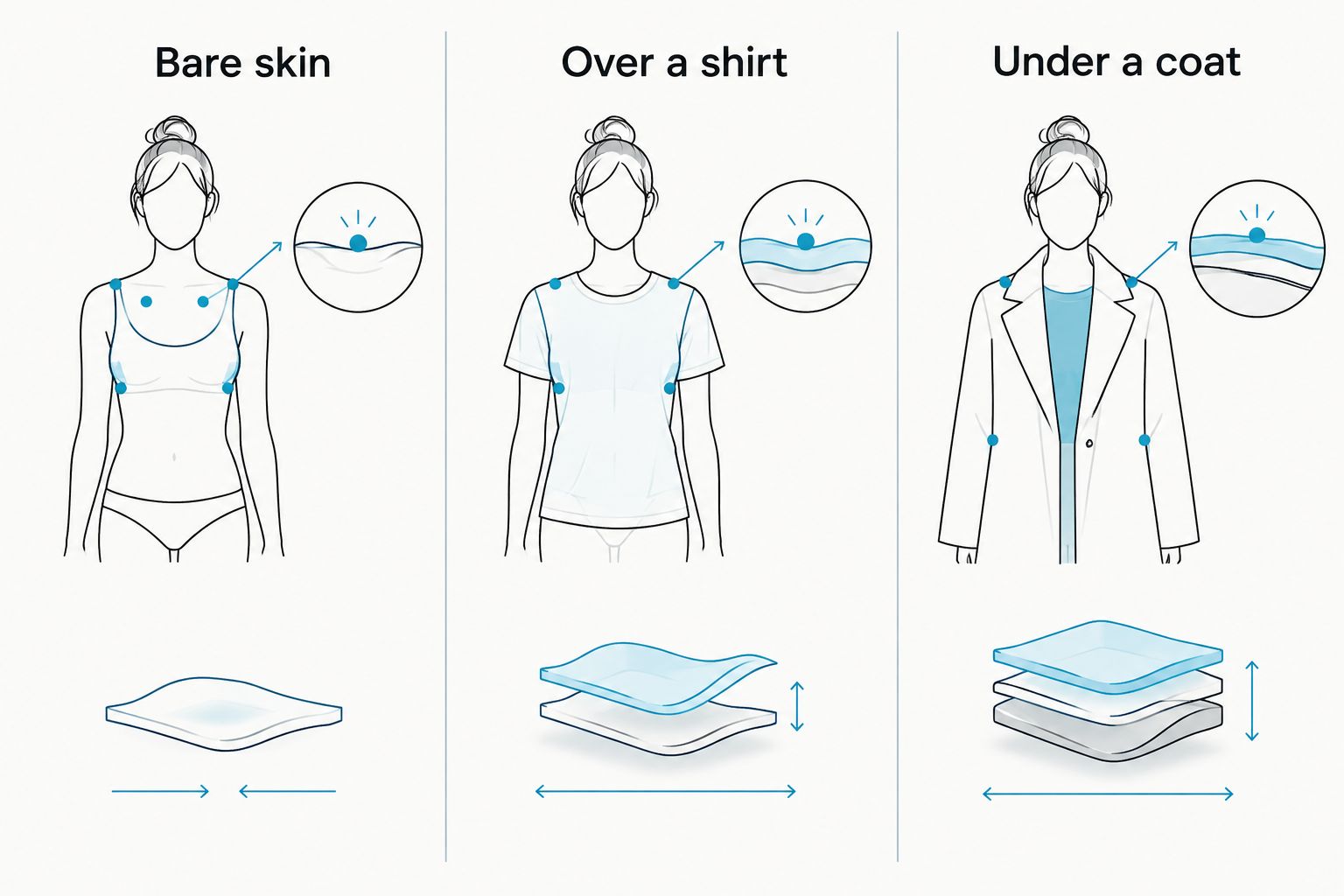
An against-skin check is more useful than an unsupported softness ranking. If you cannot try the garment, use composition, measurements and the retailer's current policy information to make the decision rather than treating comfort as established.
A wool option wins the warmth-led brief, not every season
For a sweater whose main job is cold-weather warmth, wool is the more relevant fibre to investigate. Wool's insulating properties make it a sensible starting point, but no fabric name supplies a reliable temperature rating for an individual garment.
A loose, open knit and a dense knit can behave differently. Your base layer, outerwear and exposure to wind matter too. Comparing an unspecified cotton sweater with an unspecified wool sweater cannot establish a precise warmth gap.
Cotton still has a place in a layered wardrobe. Consider it when you want an everyday knit and can adjust warmth with a shirt or coat, rather than asking the sweater to do all the work.
For autumn and winter 2026, write down where you will wear the piece most. A heated office and a long outdoor walk are different briefs. Choose for the more frequent setting, then make sure the rest of the outfit covers the other one.
The cotton or wool sweaters guide is a useful next step if fibre remains your deciding question. Keep the comparison at garment level rather than turning it into a brand ranking.
Both need the same fit checks before you choose
Neither brand earns a fit win from a label alone. A crewneck needs enough room for your intended layers without creating folds that bother you under a jacket.
Start with a sweater you already enjoy wearing. Compare its chest width, body length and sleeve length with the prospective garment's measurements where those are provided. A familiar size letter is not a substitute for dimensions.
Then check the movement that matters in your day. Reach forward, bend your elbows and sit down. Notice whether the hem lifts, the cuffs pull or the neckline moves uncomfortably.
A relaxed silhouette can be the right choice, but buying larger without checking length is not the same as choosing a deliberately relaxed fit. Likewise, a closer fit should not mean restricted movement.
Use these checks for both labels:
- The sleeves accommodate the shirt you intend to wear underneath.
- The hem works with the rise of your usual trousers.
- The neckline sits comfortably with and without a collar.
- The sweater fits beneath your regular outer layer.
For everyday dressing, fit is a practical tie until you compare the actual garments. The winner is the sweater that works with your clothes, not the one with the more appealing size name.
The Cotton Crewneck gives a specific production starting point
The Cotton Crewneck description identifies knitting in Peru by female artisans. That is useful product-level information: it names a place and describes who makes the knit.
Keep the claim within its boundaries. It does not establish Pima cotton, a factory audit, wage levels, certification or a complete supply-chain map. Calling the sweater Pima would add a fibre claim its description does not make.
Country of manufacture is also not an ethics score. A garment made in Peru is not automatically better made or more responsibly produced than one made in China, Turkey or Portugal. Those judgements require evidence about the specific production practices.
The same discipline applies when you consider Aritzia. Check the selected garment's composition and origin, then distinguish those facts from any broader company statements. A general commitment does not describe every step behind a particular sweater.
For a considered 2026 purchase, separate these questions:
- Material: what fibres does the garment contain?
- Making location: where does the stated production take place?
- Production evidence: what supports claims about working conditions or environmental practices?
The documented Peru connection is a reason to look closely, not a reason to stop asking questions. This is a win for a specific product disclosure, not proof of brand-wide ethical superiority.
Pricing: both are garment purchases, not service plans
Both choices follow an individual-purchase model: you buy the garment you select. There is no subscription-versus-one-off distinction to resolve here.
Compare the current product information and checkout terms before deciding. Delivery charges, return conditions and your willingness to follow the care label belong in that decision alongside the garment itself.
A sweater that does not fit your routine is not made useful by its label. Nor does spending more establish better construction. Look for the composition, measurements and production details that answer your brief.
For gift shopping in 2026, fit certainty deserves particular attention. A crewneck is a personal garment choice; knowing the recipient's preferred fibre and usual silhouette is more useful than guessing from their favourite colour alone.
Final verdict: choose by the job the sweater must do
Choose One Wednesday if you are a cotton-first everyday dresser
Choose The Cotton Crewneck if you want a documented cotton knit and value a stated making origin. You have a clear composition—100% cotton—and a description identifying knitting in Peru by female artisans.
Its limitation is that those facts do not establish a warmth rating, Pima fibre or guaranteed comfort. Check fit and care before making it your everyday layer.
Choose Aritzia if you are considering animal-fibre knitwear
Choose Aritzia if your search includes wool or cashmere and you want to assess those options against your seasonal needs. Read the selected sweater's full label rather than treating the entire knitwear range as one product.
Its limitation is the same garment-level uncertainty that applies anywhere: fibre alone does not prove fit, softness, durability or responsible production. Make the individual sweater earn its place.
| Dimension | Winner |
|---|---|
| Cotton-first brief | The Cotton Crewneck |
| Wool-or-cashmere search | Aritzia |
| Against-skin comfort | Tie until you assess the garment |
| Warmth-led fibre search | Aritzia, when selecting a suitable wool option |
| Fit and layering | Tie until you compare measurements |
| Specific making-origin disclosure in this comparison | The Cotton Crewneck |
| Standout feature | Cotton disclosure for one; animal-fibre options for the other |
| Pricing model | Tie: individual garment purchases |
FAQ
Which is better in the One Wednesday vs Aritzia knitwear comparison?
Choose The Cotton Crewneck for a documented cotton option; choose Aritzia when your search includes wool or cashmere. The better choice follows your fibre, fit and layering needs rather than a blanket brand ranking.
Is The Cotton Crewneck made from Pima cotton?
The Cotton Crewneck is described as 100% cotton, not Pima cotton. Its product description identifies knitting in Peru by female artisans, but that origin does not establish a specific cotton variety.
Is cotton or wool better for a winter sweater?
Wool is the more relevant starting point when insulation is your main priority. The finished sweater's knit structure, thickness and the rest of your outfit still affect warmth.
Will a cotton crewneck feel less itchy than a wool sweater?
A cotton crewneck is a useful starting point if you prefer to avoid wool, but comfort is not guaranteed by fibre alone. Check the neckline, cuffs and inner surface against your skin.
Does knitting a sweater in Peru prove ethical production?
No, a Peru making label does not by itself prove ethical production. Working conditions, wages and environmental practices require specific supporting evidence.
How should I compare sweater fit between the two brands?
Compare garment measurements with a sweater you already like wearing. Check body length, chest width and sleeve room, then consider the shirt and coat you will wear with it.
Which knitwear choice makes a better gift in 2026?
The better gift is the sweater that matches the recipient's known fibre preference and usual fit. Choose a cotton crewneck for a cotton-first wearer, or assess an Aritzia wool or cashmere option for someone who prefers those fibres.
One last thing
Before choosing your next sweater in 2026, put your most-worn knit on a flat surface and inspect it. Its length, sleeve shape and neckline tell you more about your preferences than a saved outfit photograph.
Keep what works. Change only what bothers you. That turns a broad brand comparison into a useful shopping brief—and gives the next piece a clearer role in your wardrobe.
Related guides
- How should a cotton crewneck sweater fit?
- Do cotton sweaters shrink?
- How to style a crewneck sweater for women