

To wash a cotton sweater, follow its care label, use the permitted gentle wash method, and reshape it before drying it flat if the label directs. Cotton content alone does not tell you the correct temperature, machine cycle or drying method; the knit and garment instructions matter too.
- How to wash a cotton sweater starts with its care label, not a universal cotton setting.
- One Wednesday’s Cotton Crewneck care instructions specify delicate machine washing and flat drying.
- Support wet knitwear, avoid wringing, and reshape the neckline, sleeves and hem before flat drying.
- For your 2026 wardrobe, keep each sweater’s washing instructions separate from your cotton shirts’ instructions.
How do you wash a cotton crewneck sweater?
Read the label, wash gently as directed, support the wet knit, and dry it in its intended shape. Do not assume that a cotton crewneck belongs in the same load as cotton jeans or shirts.
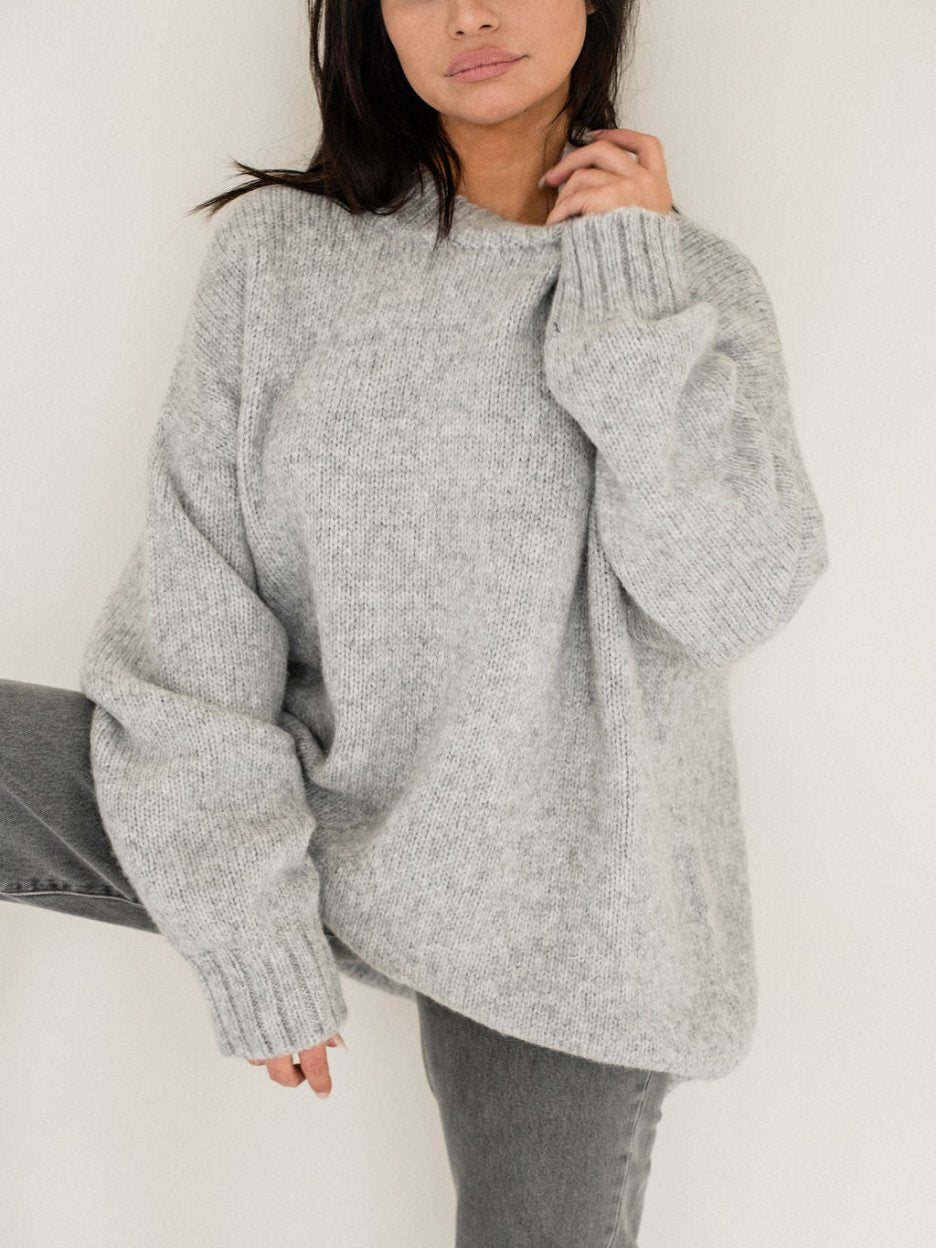
For a specific reference, One Wednesday’s Cotton Crewneck is 100% cotton, knit in Peru by female artisans. Its product-page care instructions, documented on October 13, 2026, specify delicate machine washing and flat drying.
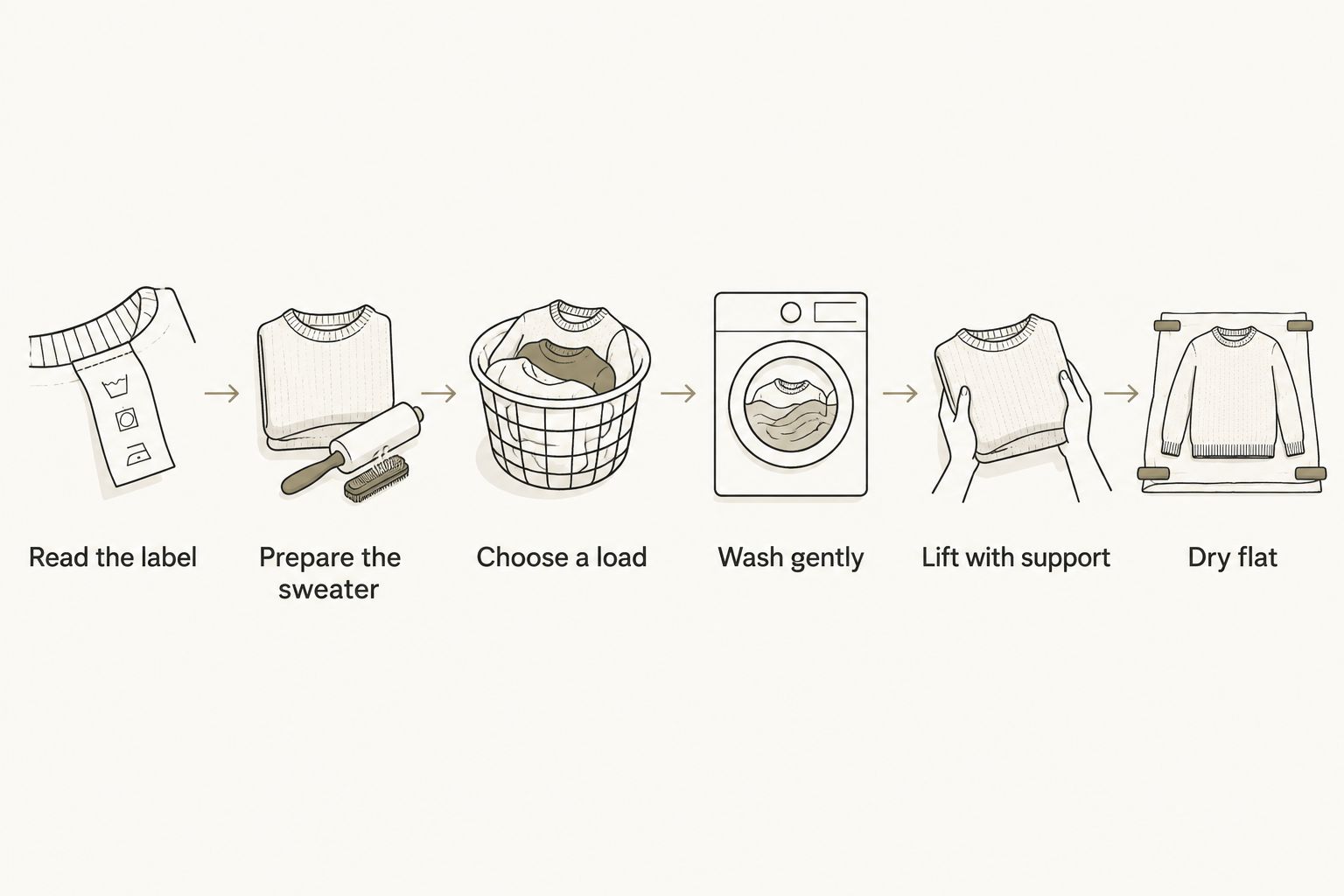
Use this sequence for a cotton sweater whose label permits that method:
- Read the full care label. Check washing, temperature, bleaching, drying and ironing instructions before choosing a programme.
- Prepare the sweater. Inspect marks, turn the garment inside out, and keep it away from snagging hardware.
- Choose a suitable load. Wash with compatible colours and similarly gentle garments, without crowding the drum.
- Use the permitted delicate programme. Follow the garment’s temperature instructions and your detergent’s dosing directions.
- Lift with support. Hold the body and sleeves together rather than lifting the wet sweater by its shoulders.
- Reshape and dry flat. Arrange the sweater on a clean, flat drying surface, following the garment’s drying instructions.
A delicate programme is not permission to ignore the rest of the label. Temperature, spin settings and drying instructions remain separate decisions.
Why this matters
A cotton sweater is not simply a cotton T-shirt with longer sleeves. Its knitted structure needs attention during washing, lifting and drying, especially when the garment is wet and heavy.
The aim is straightforward: clean the sweater without unnecessarily changing its fit. A careful wash loses its value if you then pull the wet garment from the drum by the neckline or leave it hanging from narrow shoulders.
Choose the whole care routine before starting the wash. Have a flat drying space ready, not just an empty washing machine. That small preparation keeps you from improvising with a hanger when the cycle ends.
Before washing: check the garment, not just the fibre
Look at the label sewn into your sweater rather than relying on a remembered instruction from another knit. Even garments with the same cotton percentage can have different care requirements.
If the label has faded, check the maker’s instructions for that exact garment. A product name, composition and care statement together are more useful than a broad search for cotton washing advice.
For a sweater bought in 2026, save its care instructions alongside your purchase information. Keep the sewn-in label as the reference for the garment you own, particularly if a later product version has changed.
Inspect marks before the wash
Find any visible stain before placing the sweater in the machine. Check whether a proposed stain treatment is suitable for both the fabric and the garment’s care instructions, and follow the treatment’s directions.
Do not scrub knitted fabric aggressively. If a mark needs specialist treatment, address that question before committing the entire sweater to a wash; repeated washing is not a substitute for identifying the stain.
Separate colour and surface risks
Choose companions by more than colour alone. Exposed zips, hooks and rough surfaces create avoidable contact with a knit, so keep those items out of the load.
Turning the sweater inside out reduces direct rubbing on its outer surface. It does not make an unsuitable wash programme safe, and it does not replace sorting the load properly.
Machine washing: use the programme the label permits
Machine wash a cotton sweater only when its care label allows it. A delicate programme is the relevant starting point for a garment labelled for delicate machine washing, not a standard cotton cycle selected because the fibre is cotton.
Set the water temperature according to the garment instructions. Do not translate the word “delicate” into an invented temperature, and do not assume that every machine gives similarly named programmes identical settings.
Check the programme before pressing start:
- Temperature: match the garment’s stated instruction.
- Programme: use the permitted gentle or delicate setting.
- Load: leave room for garments to move rather than packing the drum.
- Detergent: use a suitable product and follow its dosing guidance.
- Spin: follow any garment-specific restrictions and check what the selected programme includes.
Adding extra detergent does not make a delicate wash more careful. Dose for the product and load rather than pouring by eye, and avoid adding treatments the garment instructions prohibit.
When the cycle finishes, remove the sweater and prepare it for drying. Do not leave it bundled in the drum while deciding where it will go.
Hand washing: an alternative only when permitted
Hand washing is not automatically the correct answer for every cotton sweater. Start with the care label, then consider whether you can handle and rinse the garment without twisting or dragging it.
When hand washing is permitted, use water at the instructed temperature and a suitable detergent prepared according to its directions. Move the garment gently through the water rather than rubbing sections against each other.
Rinse carefully and support the sweater as you lift it. Do not wring a wet knit to make it lighter. Press out excess water gently, using a clean towel if appropriate, before laying the garment flat.
The trade-off is practical: hand washing gives you direct control over handling, but a wet sweater still needs careful lifting and thorough rinsing. A permitted delicate machine wash can be simpler; neither method removes the need for correct drying.
| Method | Best for | Useful feature | Limitation |
|---|---|---|---|
| Delicate machine washing | Sweaters labelled for delicate machine washing | Follows a defined washing programme | You still need to check temperature, load and spin settings |
| Hand washing | Sweaters whose care instructions permit hand washing | Lets you control handling directly | Requires careful rinsing and support while lifting |
| Professional care advice | Unclear labels, difficult stains or uncertain trims | Helps resolve a garment-specific problem | General cotton advice cannot settle the question |
Flat drying: support the shape you want to keep
Lay the sweater on a clean, flat surface suitable for drying knitwear. Support the whole garment rather than draping the body over a narrow rail with the sleeves hanging down.
Gently arrange the shoulders, neckline, sleeves and hem. Smooth folds without stretching the fabric outward, and check that the sleeves are resting naturally rather than pulled longer than the body.
If you use an absorbent towel beneath the sweater, replace it when it becomes wet. Choose a drying location with airflow, and follow any label restrictions concerning sunlight or heat.
There is no useful universal drying time for a cotton sweater. The knit, retained moisture, room conditions and drying surface all affect the process, so check the garment rather than promising it will be ready that evening.
Before folding, feel the thicker areas, including cuffs, neckline and hem. Put the sweater away only when it is fully dry. A dry-feeling surface does not establish that every part has finished drying.
Why cotton sweater care varies
Different cotton sweaters need different routines because the finished garment is more than its fibre label. These are the details that should guide your decisions:
- Fibre composition: a cotton blend is not the same composition as a 100% cotton garment.
- Fabric construction: knitted sweaters and woven cotton shirts are different structures; do not exchange their care instructions.
- Garment details: trims, embellishments and other components need to be considered alongside the main fabric.
- Colour instructions: follow any directions about washing separately or with similar colours.
- Maker’s care guidance: use the instructions for the exact garment rather than a general rule based on its appearance.
Country of manufacture does not replace any of these checks. A sweater made in Peru, Turkey, Portugal or China still needs product-level information about its materials and care; a country name alone proves neither better quality nor stronger ethical standards.
Can I put a cotton sweater in the tumble dryer?
Only tumble dry a cotton sweater when its care label permits it. If the instruction is to dry flat, use a flat drying surface rather than substituting a low-heat tumble cycle.
Cotton knitwear can change size or shape during laundering. Heat and mechanical action are reasons to treat drying instructions seriously, but no fixed shrinkage percentage applies to every sweater.
For the Cotton Crewneck, the documented 2026 care instruction is flat drying. That instruction is more useful than a general claim that cotton is suitable for a tumble dryer.
Should I wash a cotton sweater after every wear?
Wash a cotton sweater when it needs cleaning, rather than following a fixed wear count. Check for odour, visible marks and how the garment has been worn; a sweater worn over a shirt has different contact with your skin than one worn directly against it.
Let a clean sweater air between wears before folding it away. Airing is not a treatment for a visible stain, and it does not replace washing when the garment needs it.
What if my cotton sweater changes shape after washing?
Start by checking the wash and drying instructions against what happened. Note whether the sweater was hung wet, twisted, washed on a different programme or exposed to drying conditions the label did not permit.
Do not promise yourself a home remedy will restore the original dimensions. Rewashing, stretching or applying heat adds another treatment without establishing that the garment can tolerate it.
For more detail on fit changes, read whether cotton sweaters shrink. Keep the distinction clear: preventing an avoidable care mistake is different from reversing a change that has already happened.
A cotton crewneck for repeated wear
One Wednesday’s Cotton Crewneck is best for shoppers seeking a relaxed, 100% cotton sweater with a documented delicate-wash, flat-dry routine. Its product information identifies cotton knit in Peru by female artisans; it does not establish Pima cotton or a particular certification.
The practical benefit is a clear care direction. The limitation is equally clear: flat drying needs space and planning, so this is not a wash-and-tumble routine.
For a gift, pass along the garment’s care instructions rather than a generic cotton-care card. That makes the everyday upkeep part of choosing a thoughtful piece, not a surprise after the first wash.
FAQ
What is the best way to wash a cotton sweater in 2026?
The best way to wash a cotton sweater is the method specified on its care label. Check the washing programme, water temperature and drying instructions separately rather than choosing a standard cotton cycle.
Can I machine wash a 100% cotton sweater?
You can machine wash a 100% cotton sweater when its care label permits machine washing. Fibre composition alone does not establish the right programme or temperature.
How do I wash One Wednesday’s Cotton Crewneck?
One Wednesday’s Cotton Crewneck product-page instructions documented on October 13, 2026 specify delicate machine washing and flat drying. Follow the sewn-in label for the garment you own.
Should I use hot water to wash a cotton sweater?
Use only the water temperature permitted by your cotton sweater’s care label. Do not choose hot water simply because the garment is cotton or has a visible mark.
Can I hang my cotton sweater up to dry?
Do not hang a cotton sweater to dry when its instructions specify flat drying. Lay the garment flat with its body and sleeves supported, and reshape it gently.
How long does a cotton sweater take to dry flat?
A cotton sweater has no universal flat-drying time. Check the cuffs, neckline, hem and body, and wait until the entire garment is dry before storing it.
Is hand washing always safer for a cotton sweater?
Hand washing is not automatically safer for every cotton sweater. Follow the garment’s instructions, and avoid twisting, scrubbing or lifting the wet knit without support.
One last thing
The easiest care mistake happens after the washing is finished: lifting a water-heavy sweater by its neckline. Gather the body and sleeves together, support their weight, and move the garment straight to its prepared drying surface.
Set up the drying space before you start the machine. It is a small habit that makes the rest of the routine easier to follow.